Vents MagaZine Music and Entertainment Magazine
Related Articles
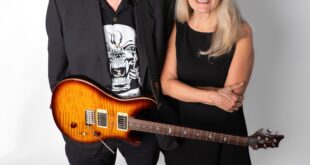
Your introduction asks, “Who the hell is Sean Shiff?” and points out that you don’t have a band, perform, or sing on your recordings. What inspired you to build a musical project around your lyrics and ideas rather than becoming a traditional performing artist, and what do you think this unconventional approach allows you to accomplish creatively?
I started writing songs without thinking of ever performing them. Frankly, I’m not that good of a musician or singer. I initially wrote songs and made home recordings on a tape cassette, but in 2008 I was introduced to a multi-talented musician (Patrik Tanner) who not only understood my vision for a particular song but, in 3 to 4 hours, could lay down drums, bass, and guitar that paired perfectly with the story. Then I’d find a vocalist that I thought fit the song well, often times writing the song with that voice in mind. My focus all along has mostly been in writing the songs (lyrics and melody), stick to the thing you know. Having Patrik and other musicians and vocalists to turn a spark of an idea into a professional sounding, finished product allows plain lyrics on a page to transform into something greater than the sum of its parts.
Your new EP, No (Country for Old) Kings, takes a more explicitly political direction, bringing together humor, empathy, and urgency. What recent events pushed you to channel your songwriting into political territory, and did you find yourself approaching these songs differently from your earlier, less overtly political work?
Some of my songs prior to this EP have veered into social or political issues. But those were about general topics (race, LGBTQ, climate change). Here we’re talking not only about one individual who continues to this day to wreak unprecedented havoc but the psychology of the segment of our population that gradually accepted the degradation, adjusting incrementally along the way to the point where we live in a society made up of two separate realities. That is to say nothing of the daily intentional torture inflicted on cities like Minneapolis with illegal and brutal tactics, the extortionist relationship between the President and those in his party, and countless other things that demanded a written response in the form of a song. Maybe I’ll go back to non-political writing when this is finally over. But until then…
You describe your lyrics as direct while leaving enough room for interpretation, allowing listeners to fill in the blanks with their own imaginations. How do you strike that balance between making your message clear and trusting your audience to draw their own conclusions, particularly when writing about subjects as divisive as politics?
That is a very tough task. How to be direct without being direct. Or, put another way, how to make a case without trying to make a case. In an odd way, I’m not always trying to persuade; just trying to lead the horse to water. Sometimes the point is clear, whether because the facts are undeniable or the conclusion is inescapable, but the listener ultimately is the arbiter of his or her own truth.
One of the more intriguing aspects of No (Country for Old) Kings is your intention to reach beyond an audience that already agrees with you, including people whose political views may be evolving. How do you write songs that might encourage someone to reconsider a deeply held belief without making them feel immediately alienated or attacked?
That, too, is a slim line to hold. It can be hard to make a point when any word phrase could be a trigger. While you can’t please everyone (and some segment will are too far gone and could never receive these songs), you don’t have to intentionally make enemies. But the gist of this question is how to tell the emperor that he has no clothes. With subtlety and carefully chosen words.
Rather than relying on a permanent band, you collaborate with musicians and vocalists from around the Twin Cities, including Doyle Turner, Nikki Lemire, Nate Dungan, and Blucollr. How do you choose the right voices and musicians for each song, and how much does a collaborator’s interpretation change the meaning or emotional impact of lyrics you’ve already written?
Originally, I sought a sound to match the vibe of the song, or at least how I heard it in my head. Later, I would write songs with a particular vocalist in mind, letting me hear how it might sound in advance (again, in my head). But each time, the vocalist brings his or her own unique quality to the studio and you don’t know exactly how it’ll sound until you’re there, going from take to take. Usually by the 3rd or 4th time through, you get a few nuggets of how they interpreted your song differently or a harmony that makes you shiver. The difference between how I feel about a song before the recording session and afterwards is remarkable, and so much of that is attributable to the talent I get to work with.
The EP moves between different musical approaches, from Nikki Lemire’s emotional delivery on “For a Friend” to the country-rap approach of “Dear Republican Leaders.” When you begin writing a song, do you already hear a particular genre or arrangement in your head, or does the musical identity emerge later as you find the right artists to bring the material to life?
Dear Republican Leaders was originally a poem. Then a rap song. Then a country rap song. For this EP, there was definitely a country theme. But in general, I write based off a sound such as a guitar, piano and/or drum track, and that sound often determines the genre. I don’t usually go in thinking I am going to write a folk song, or a country song, etc., but if that’s what I hear, then that’s probably how the story will unfold.
You’re a Minneapolis lawyer by day and a songwriter by night, and you’ve also represented the Minnesota ACLU pro bono in a First Amendment case. How do your experiences in the legal profession inform your songwriting, especially when you’re exploring questions of free expression, civil liberties, and the relationship between individual rights and political power?
Songwriting informs my legal work and vice versa. Not only in the writing itself (because of the overlap and synergies between legal and creative writing), but also that I took the oath to uphold and support the constitution, and that you learn to mix humor in at the right time.
You’ve committed to donating all proceeds from No (Country for Old) Kings through the end of 2026 to the American Civil Liberties Union. What made the ACLU the right organization to support through this project, and how important was it for you to connect the EP’s themes to a tangible contribution beyond the music itself?
I thought of what organization is doing tireless work to protect us from our own President! There are others for sure, but I have faith in the ACLU’s ability to use court system to restrain and hold the administration accountable for its worst impulses.
Political music can quickly become tied to a particular moment, especially when it’s responding to current events. Yet humor and human empathy can sometimes give a song a longer shelf life than its immediate subject might suggest. How do you make sure your songs remain relevant after the headlines fade, and do you see humor as a way to make difficult conversations more approachable or as a tool for exposing contradictions?
Humor keeps us off guard or can let us inspect something we wouldn’t otherwise do. My EP covers a touchy subject, and I had to walk a thin line at all times. But humor kept the temperature down until the medicine kicked in, so to speak.
With No (Country for Old) Kings, you’ve assembled a collection of songs that invites listeners to engage with politics beyond the usual left-versus-right divide. If someone who strongly disagrees with your perspective were to listen to the entire EP, what would you hope they take away from it, and has making this record changed your own understanding of what music can accomplish in a polarized society?
I expect there are many millions of people in our country that strongly disagree with me on this EP. If they listened to it, I think the most I could expect is a good laugh from those with a dark sense of humor, a lot of nodding from those in the know but afraid to leave the pack, and a willingness to keep an open mind. That’s what music can do, transcend boundaries to find common links.