Vents MagaZine Music and Entertainment Magazine
Related Articles


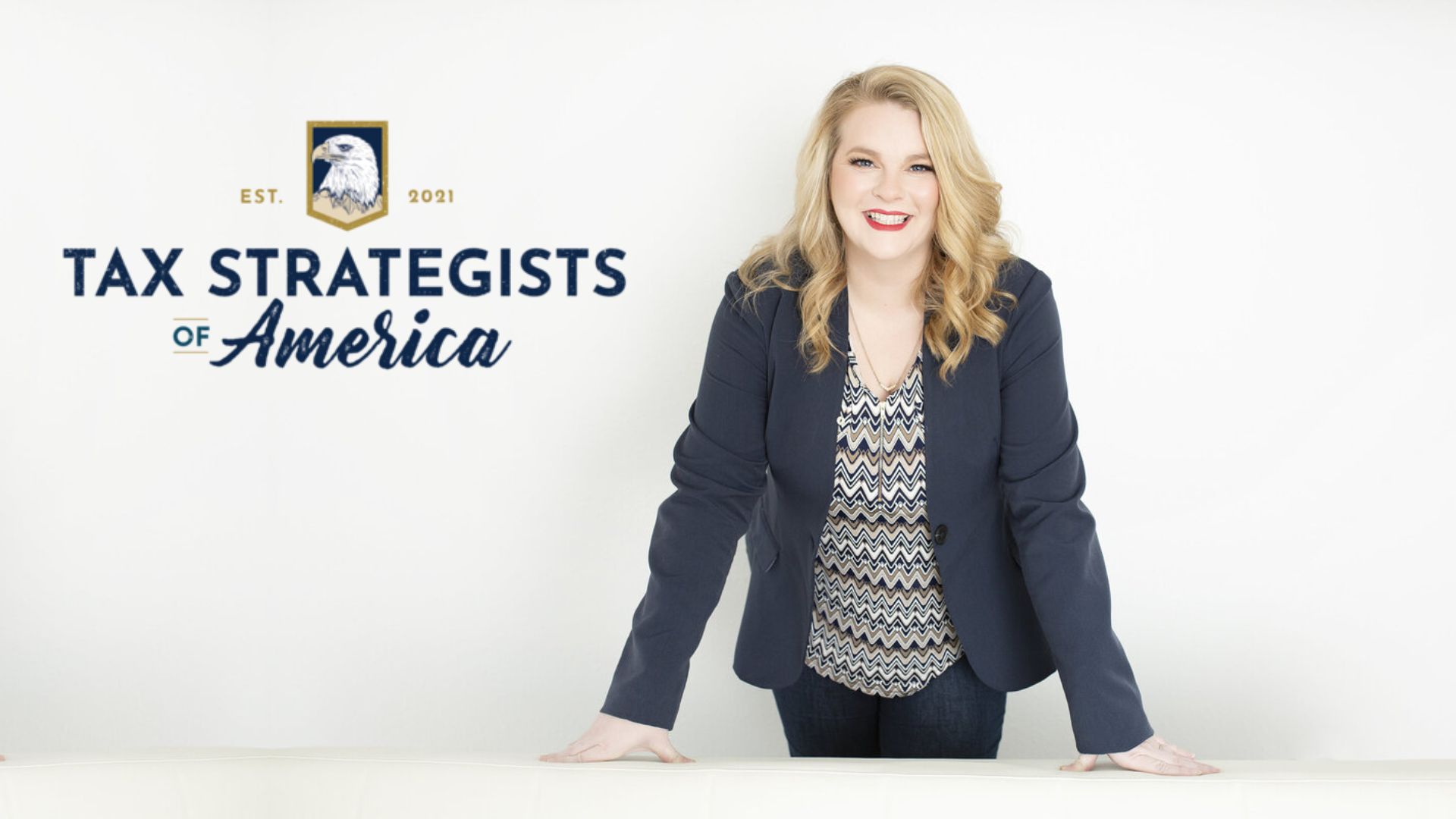
Sarah Vinitz is the founder of Tora and Art Foundation, an international cultural organisation dedicated to fostering dialogue between contemporary art, cultural heritage and universal human values. With years of experience in the contemporary art world, Vinitz has focused her career on developing non-commercial cultural initiatives.
This October, during Art Basel Paris week, Vinitz supported and produced two exhibitions: The Wings of Peace, bringing together five internationally recognised artists (ORLAN, Esther Ferrer, Oleg Kulik, Léa Le Bricomte and Émeric Lhuisset) and Between Us, featuring Marusya Borisova-Sevastyanova and Alexey Kostromin.
We spoke with Sarah about her journey in the art world, the personal experiences that influenced her vision, and the challenges of producing socially engaged art projects.
Why did Tora and Art Foundation decide to support The Wings of Peace?
Our foundation did not simply support this project, we initiated and produced it. Two years ago, we also initiated a project confronting xenophobia. The Wings of Peace continues our commitment to using art to challenge intolerance, defend human dignity, and encourage dialogue.
At a time marked by wars and growing division, we wanted to create a space where artists and audiences could reflect on peace, mutual respect, and our shared responsibility for how we live together.
This time, I also produced a second exhibition alongside The Wings of Peace – Between Us, which explores the interplay between the masculine and the feminine. We had not deliberately conceived a connection between the two exhibitions — war and peace in one, the masculine and feminine in the other — yet a resonance emerged between them, through their exploration of relationships, differences, and the possibility of dialogue.
Why Paris? What, in your opinion, makes the city the right place to launch this project?
I produced my first project in Paris four years ago, when Art Basel arrived in the city. Paris was already a magnet for the international art world through fairs such as FIAC, Paris Photo, and Paris Internationale, but Art Basel’s arrival was a decisive signal for me. Since then, I’ve started producing a project here every two years. The Wings of Peace is my third.
In art-market terms, I see Paris today as the New York of Europe: a concentration of major players, leading galleries, extraordinary museums, and exceptionally high standards. Yet it is also an open-air museum, where art and history form part of everyday life. That combination makes it a compelling place to create exhibitions.
I always aim to coincide with Art Basel Paris, when collectors, curators, and other art professionals gather from around the world. It gives our projects an international audience and creates opportunities for encounters and dialogue.
You produced the exhibition together with Elena Volnykh, while Jean-Baptiste Chantoiseau curated it. How did the collaboration work, and what was your role in shaping the project?
The idea emerged through a dialogue between ORLAN, Jean-Baptiste Chantoiseau, and myself. We wanted to create a timely artistic statement in support of peace and against war. Jean-Baptiste then drew on his curatorial experience to develop that shared idea into a coherent exhibition concept and select the participating artists.
As executive producer and co-author of the initial idea, I worked to bring that vision into reality, overseeing the project’s organisation, partnerships, and communication. Elena Volnykh contributed to the organisational coordination of the exhibition.
What made the collaboration rewarding was the exchange between our different perspectives: ORLAN’s artistic vision, Jean-Baptiste’s curatorial approach, and my work in developing and producing the project.
The exhibition brings together five internationally recognised artists, from ORLAN to Émeric Lhuisset. What was it like to bring artists of such different generations and practices into one project?
Jean-Baptiste Chantoiseau was responsible for selecting the artists. I think his choices were largely shaped by the context in which we were creating the exhibition: we wanted to explore different aspects of war and peace. In my opinion, these five artists allow us to address the subject with particular depth. Some aestheticise war by transforming objects designed to destroy into works of art, proposing another use for destructive power by directing it towards creation. Others reveal war’s devastating consequences or refer to historical situations that are repeating themselves today. I believe the desire to present these different perspectives largely informed the curator’s choices.
As a producer, I found it especially interesting to see different generations and artistic practices enter into dialogue around a shared idea: peace and resistance to violence. Each artist retains their own voice, while the juxtaposition of the works reveals further layers of meaning. Visitors also become part of this dialogue, bringing their own experiences and interpretations.
The show (The Wings Of Peace) deals with war, violence and power at a time of ongoing international conflicts. As a producer, was there any hesitation about taking on such difficult themes?
Above all, I felt a sense of responsibility. When speaking about war and violence, it is important to understand why you are doing so: behind those words are real human lives, pain, and loss.
War is not an abstract subject for me. I am Jewish, born in Russia, and spent every childhood summer in Ukraine, where my grandmother lived. I now live in Germany, where my husband is the rabbi of Karlsruhe. My history and connections to these countries make peace a deeply personal concern. I am acutely aware of its value, and of how political ambitions, economic interests, and human greed lead people to initiate and sustain wars.
It was important to me to create a space where art allows us to speak about what troubles us, even when ordinary conversation makes it difficult to find common ground. We did not expect to offer simple answers. Our artistic statement calls for greater awareness, respect for human dignity, and closer connections between people.
In business, there comes a point when you must acknowledge your losses and stop investing in something that causes further damage. However, imperfect this analogy – a human life cannot be measured in money – the international community needs that same resolve towards war: to recognise the scale of the losses, mourn the dead, preserve the memory of the tragedy, and end hostilities immediately. The suffering that has already occurred must not become a justification for further casualties.
I would like to see instruments of war transformed into art, with human talent, energy, and resources directed towards creation and mutual understanding. This is also how I see my role as a producer: creating the conditions for encounters between people and ideas that can change how we relate to one another.
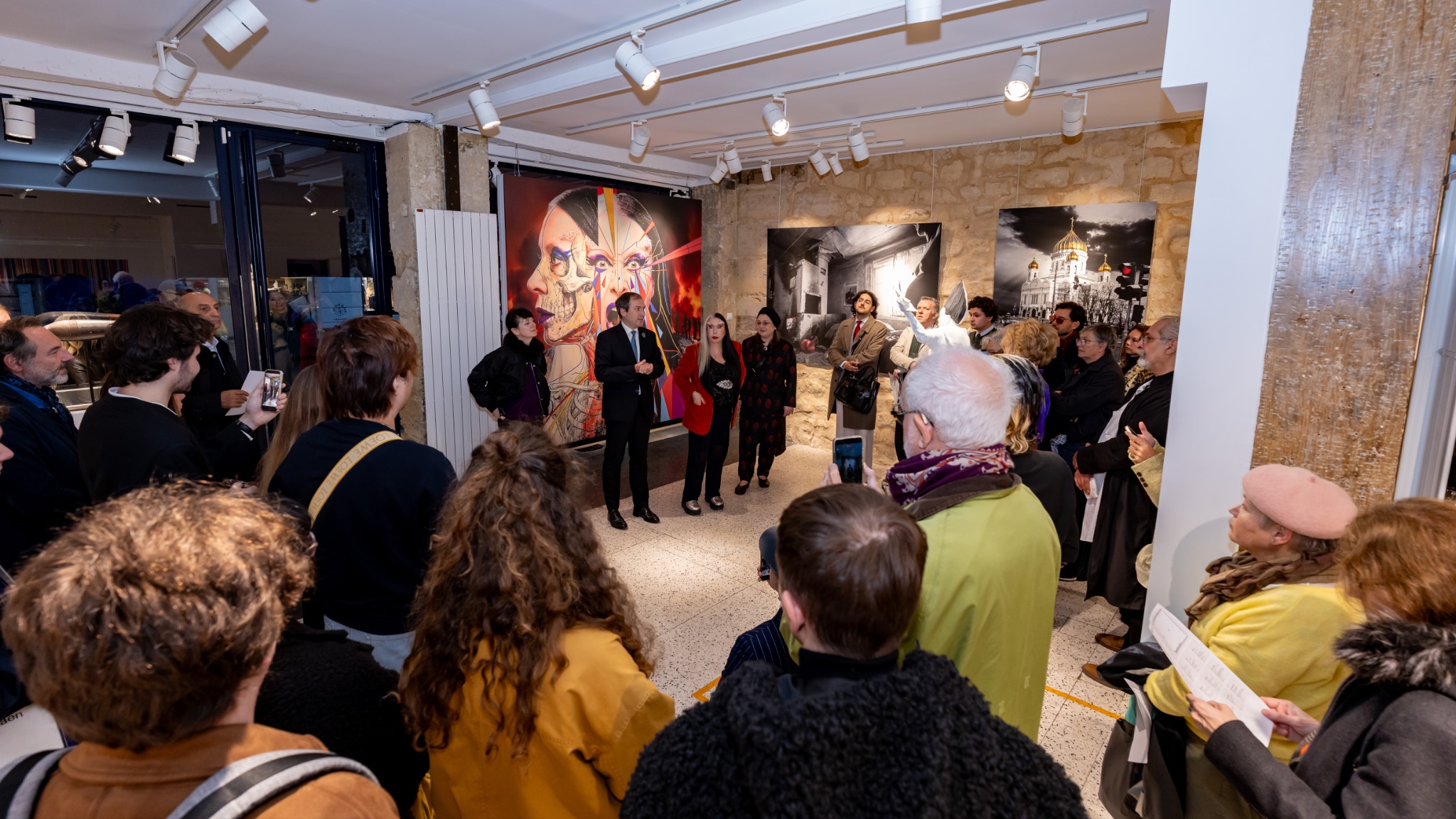
Photo: Ankou
What was the most challenging part of work on this exhibition?
The most challenging part was maintaining calm and confidence when demonstrations began in the city. It was disappointing to learn that some of our international guests had decided against travelling to Paris. They had planned to attend Art Basel Paris, an important event for me in the art world, around which I try to time my projects.
Yet those were also the days when we felt our team’s solidarity most strongly. After the gallery window was damaged, everyone supported one another and worked together to find solutions. Before the next demonstration, we took the precaution of taping the windows. Fortunately, everything remained calm, and it seems that peace is gradually returning to Paris.
We handled these circumstances very well and are delighted with how the exhibition has come together. Guests came and supported us, and there were warm encounters and meaningful conversations. For a project dedicated to peace and bringing people together, that was an especially valuable experience.
The exhibition opened on 19 October. How do you feel the opening went?
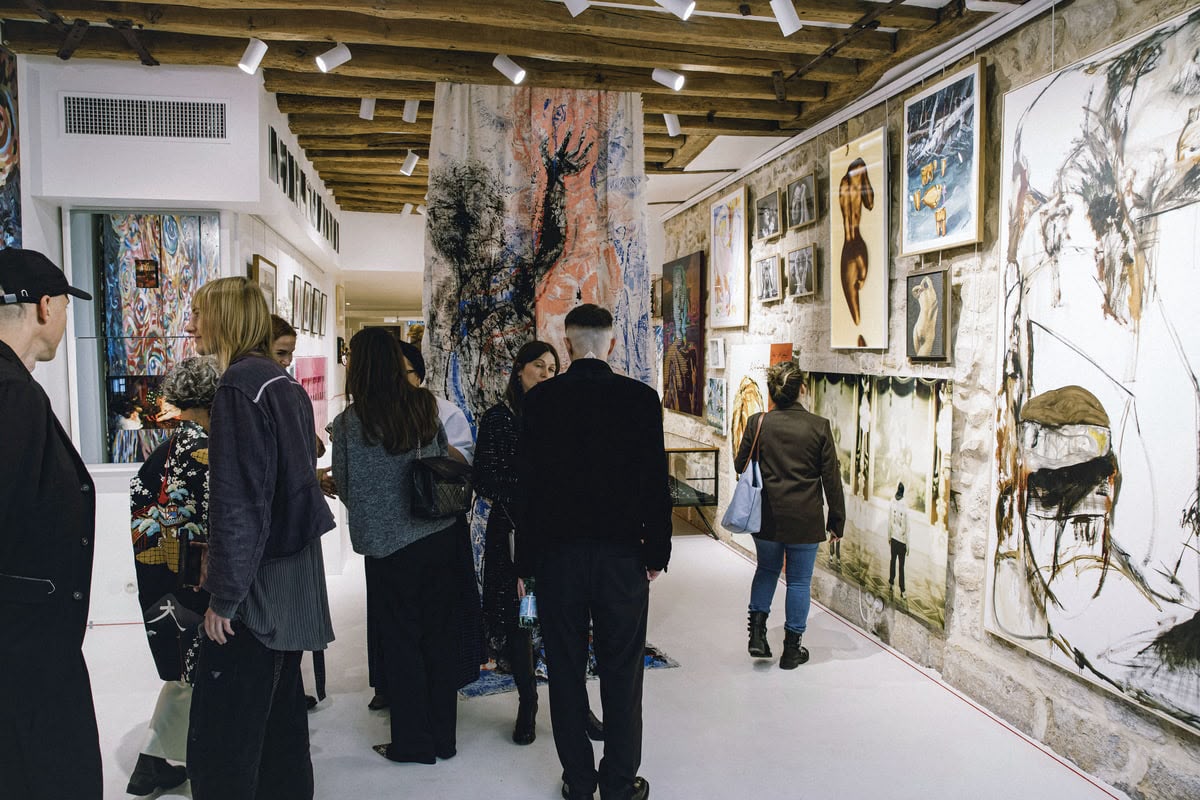
The opening brought me enormous joy. The gallery was full, and the crowd spilled out onto the street. After all the intensive preparation, it was wonderful to see such a response.
I was particularly pleased by the diversity of the audience: very young visitors alongside experienced and respected museum directors, artists, curators, art dealers, and collectors from different generations. They met, talked, and discussed the works, becoming participants in the dialogue we had hoped to create.
I am delighted that such wonderful people came together in our space and continue to visit. Many hear about the exhibition through recommendations, while passers-by stop to look at the windows and come inside. For me, this is an important sign that the exhibition has a life of its own, sparking curiosity and bringing people together.
What do you hope visitors will take away from the exhibition?
I hope visitors leave with a little more attentiveness towards others, and a desire to hear and understand someone whose experience differs from their own. When we talk about war, power, and politics, I hope we continue to see the individual person, their life, and their dignity.
We show how objects associated with destruction can become art. For me, there is hope in that: human energy and ingenuity can serve creation. I would like visitors to sense this possibility of transformation and consider what each of us can do to bring it into our own lives.
I do not expect everyone to reach the same conclusions. Visitors bring their own perspectives and become co-authors of the exhibition. But if someone leaves wanting to continue the conversation, treats another person with greater care, or finds a way to resolve a conflict, that would be a very meaningful outcome for me.
One day, a Holocaust survivor named Daniel Misputen walked into our gallery from the street. He told us his family’s story and asked about the artists whose works were on display. He spoke warmly about the exhibition and even encouraged passers-by to come inside and see it. Encounters like that stay in your heart.
Tora and Art Foundation describes its mission as fostering dialogue between contemporary art, cultural heritage and universal human values. How did the foundation begin, and what led you to create it?
I decided to establish the foundation when I learned that my teacher’s teacher, Rav Shmuel Auerbach, a great righteous man and sage, had passed away. The news made me reflect more deeply on the meaning of life, what I wanted to leave behind, and how I could contribute to the world. I wanted to make it better through every action, thought, deed, and kind wish for another person.
Having worked in contemporary art for many years, it felt natural to seek that possibility within this field, through non-commercial projects addressed to a broad audience.
Contemporary art allows us to raise questions that are fundamental to me: honour and dignity, the ability to defend oneself and help others, respect for individuality, and the right to be oneself. The foundation became a way to connect my professional experience and cultural and spiritual heritage with these universal human values.
I strive to create projects filled with meaning that convey love for the Creator and His creation. That is what motivates me and makes me happy.
What projects is Tora and Art Foundation planning to support in the near future?
Our previous exhibition addressed xenophobia, while the current project speaks out against war. I believe we will continue exploring peace through both group and solo exhibitions.
I am also planning a second season of Art Lift, an animated series about artists. We created the first season last year in collaboration with the Staatliche Kunsthalle Karlsruhe and the Jüdische Kultusgemeinde Karlsruhe. As a mother of two sons, I also have a personal interest in helping children discover art and develop their curiosity. I am drawn to edutainment as a way of presenting art with substance, while making it engaging and accessible to a broad audience.
I would love to develop more projects in Paris. We feel a lively response here and want to continue this dialogue through exhibitions, educational initiatives, and collaborations with local institutions.