Vents MagaZine Music and Entertainment Magazine
Related Articles



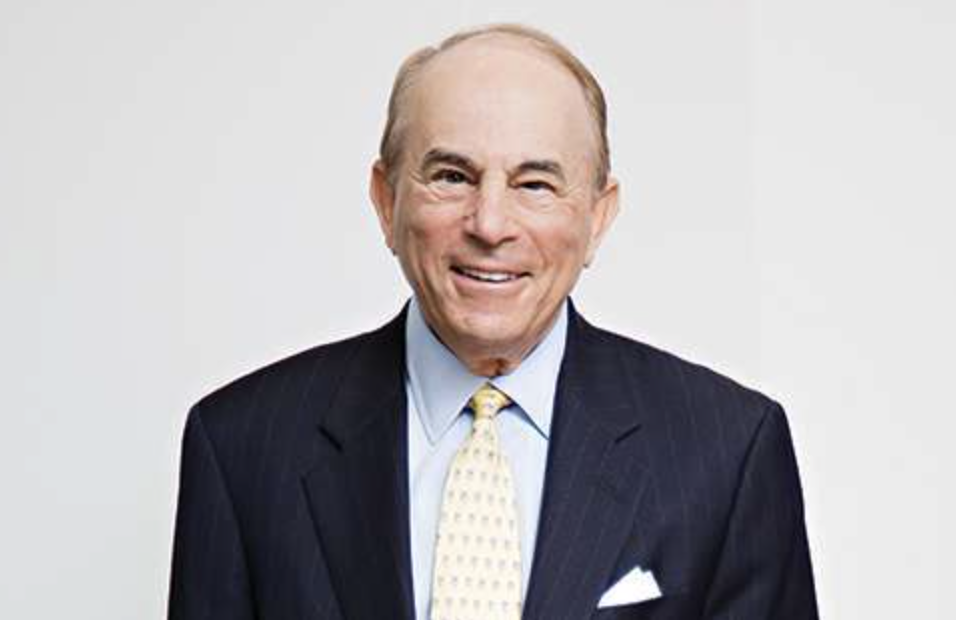
At 90, Ed Hajim has already lived several lives.
There is the childhood that could have defined him, the Wall Street career that ultimately established him as one of the financial world’s most respected executives, the family life he built after growing up without the security of a permanent home, the philanthropic work that has touched education and countless other causes, and the books through which he has spent the past several years turning his experiences into lessons for people navigating their own lives.
Yet what makes Hajim’s story especially compelling at 90 is not simply the distance he has traveled. It is the fact that he continues to look ahead.
His life has never followed a predictable script. Born into circumstances that offered little stability, Hajim was taken from his mother by his father at the age of three, driven from St. Louis to Los Angeles and told that his mother had died. His father subsequently left him in foster care, beginning years in which Hajim moved through foster homes and orphanages and learned early that security could never be taken for granted. By the time he reached adulthood, he had lived in a remarkable number of different places and had experienced a childhood vastly different from the one most people imagine.
That beginning makes the life that followed all the more remarkable.
Hajim eventually attended the University of Rochester, served in the U.S. Navy and earned an MBA with distinction from Harvard Business School. His professional career took him through some of the most prominent names in finance, including E.F. Hutton and Lehman Brothers, before he became chairman and CEO of Furman Selz and went on to hold senior leadership positions at several other financial institutions. He ultimately became chairman of HighVista Strategies.
But reducing Hajim’s life to a traditional success story misses much of what makes it interesting.
The most striking part of his biography is not simply that a child who grew up in orphanages eventually reached the boardroom. It is what he did once he got there.
Throughout his career, Hajim developed a reputation for thinking seriously about decisions, leadership and the long-term consequences of the choices people make. Those ideas eventually became central to his writing. His first book, On the Road Less Traveled: An Unlikely Journey from the Orphanage to the Boardroom, published in 2021, gave readers a deeply personal account of the childhood circumstances that shaped him and the improbable path that followed.
The book also offered a glimpse into the philosophy that has guided him for much of his adult life.
Hajim has spoken about the importance of learning from the people encountered along the way and incorporating the qualities that make them admirable. At different stages, teachers, military leaders, business colleagues and mentors each contributed something to his understanding of how to navigate life. He has also consistently emphasized the importance of partnership, crediting his wife, Barbara, as a central part of the life they built together.
That emphasis on people is important because Hajim’s accomplishments extend far beyond his résumé.
His relationship with the University of Rochester is a particularly significant part of his legacy. He served as a university trustee for nearly three decades and was chairman of the board from 2008 to 2016. In 2008, he made a $30 million commitment to the university, supporting scholarships and the school that now bears his name, the Edmund A. Hajim School of Engineering & Applied Sciences. He and Barbara have also supported numerous scholarships and university programs.
For someone whose own education represented a critical turning point, supporting educational opportunity has a natural significance.
Hajim’s childhood offered few guarantees. Education became one of the mechanisms through which he was able to change the trajectory of his life. His philanthropy has allowed him to help create similar opportunities for others.
That is one of the recurring themes in Hajim’s story: the importance of recognizing that a person’s circumstances at one point in life do not necessarily determine where they will end up.
His own trajectory is proof.
At three, he had no way of knowing that he would one day attend Harvard Business School. He could not have imagined becoming a senior Wall Street executive, university chairman, philanthropist, husband, father, grandfather or author. The boy moving from one temporary home to another had no way of seeing the life ahead of him.
That perspective gives particular weight to the advice he now offers younger generations.
Hajim has continued engaging with students and young people, sharing the lessons he accumulated through decades of professional and personal experience. Rather than presenting success as a perfectly mapped route, his more recent work encourages people to think about the ingredients that can help them construct a meaningful future.
That idea is at the center of his second book, The Island of the Four Ps: A Modern Fable About Preparing for Your Future.
The book takes a very different form from his memoir. Instead of recounting his life directly, Hajim uses a modern fable to explore four concepts he considers important when making decisions about the future: passions, principles, partners and plans. The story follows a young protagonist navigating an allegorical journey while confronting questions about direction, values and the kind of life he wants to create.
The format is revealing.
After spending years in business, Hajim could have turned his experiences into a conventional manual for professional success. Instead, he chose a story. That choice reflects an idea he has articulated about the complexity of life: there is no single formula that works for everyone.
The Four Ps are not presented as a rigid checklist. They are a way of thinking.
Passion asks what genuinely interests and motivates a person. Principles address the values that guide decisions. Partners recognize that major parts of life are shaped by the people with whom we build relationships. Plans acknowledge the importance of preparing for the future while accepting that circumstances will inevitably change.
For Hajim, those ideas were not developed in a vacuum. They emerged from a lifetime of making decisions without having the luxury of certainty.
His early life required adaptability. His career demanded judgment. His philanthropic work required thinking beyond himself. His family life provided a different kind of partnership and responsibility. And now, as an author and mentor, he is using those experiences to help other people think more deliberately about their own futures.
At 90, that may be one of the most interesting aspects of his story.
Hajim is not simply looking backward.
There is certainly plenty to look back on. His professional career spans more than five decades in investment management and financial leadership. He has served on boards, built businesses, supported educational institutions and philanthropic causes, and received recognition including the Horatio Alger Award, which honors Americans who have achieved success despite significant adversity.

He has also built the kind of family life that stands in stark contrast to his own childhood.
The boy who grew up without a dependable home became a husband, father and grandfather. That transformation is perhaps more profound than any corporate title. The professional achievements are impressive, but they do not tell the entire story of what Hajim ultimately built.
His memoir makes clear that adversity left an imprint. But his life also demonstrates that acknowledging the past does not require remaining defined by it.
There is an important distinction between overcoming something and allowing it to become the central identity of a life.
Hajim’s story has never been simply about what happened to him as a child. It is about the choices that came afterward.
He chose education.
He chose a career.
He chose relationships.
He chose leadership.
He chose philanthropy.
And eventually, he chose to write.
Those choices transformed a difficult beginning into a life that has extended far beyond personal achievement.
His approach to philanthropy reflects that same outlook. Through the Hajim Family Foundation and other giving, he and his family have supported education, health care, arts and culture, conservation and other causes.
Giving back, in this context, is not an afterthought to a successful career. It is part of what success means.
That may be why the story of Ed Hajim resonates beyond the financial world.
His experiences speak to a much larger question: How does a person decide what to do with the life they have been given?
There is no straightforward answer. Hajim’s own life demonstrates that circumstances can change dramatically, that plans can be disrupted and that unexpected opportunities can emerge from unlikely places.
His story also suggests that preparation matters, but so does adaptability.
The child who moved from place to place had to learn how to adjust. The young student had to figure out how to create opportunities for himself. The executive had to make decisions in an environment where uncertainty was unavoidable. The philanthropist had to decide where resources could make the greatest difference. The author has had to determine how to translate decades of experience into something useful to others.
Each chapter required a different version of the same skill: figuring out what comes next.
That is particularly relevant at 90.
There can be a tendency to think of age as a period defined primarily by reflection. Hajim’s example offers another possibility. Experience can become a reason to remain engaged rather than a reason to step away.
His continued writing, speaking, mentoring and intellectual curiosity demonstrate that a long career does not necessarily have to culminate in disengagement. It can become the foundation for another stage of contribution.
That may be one of the most valuable lessons of his life.
At 90, Hajim has accumulated something that cannot be taught in a classroom or learned from a business book: perspective.
He has seen careers rise and fall. He has experienced profound personal uncertainty. He has built lasting relationships. He has witnessed the importance of education firsthand. He has occupied positions of considerable responsibility and then used the resources those opportunities created to support others.
And he has had enough time to see which things endure.
Titles change.
Companies change.
Markets change.
Plans change.
What remains are the people, principles and choices that give a life its shape.
That idea runs through both of Hajim’s books. On the Road Less Traveled looks backward to understand the experiences that shaped him. The Island of the Four Ps looks forward, asking readers to consider how they might construct meaningful lives of their own.
Together, they create an interesting portrait of a man who has spent his life moving between two questions: Where have I come from, and where do I go from here?
At 90, the second question has not disappeared.
If anything, it may have become more interesting.
Hajim’s story demonstrates that there is no single age at which a person stops growing, contributing or thinking about what comes next. The milestones may change, but curiosity does not have to.
There is also something fitting about the fact that a man whose earliest years were marked by uncertainty has spent his adult life thinking about how people prepare for the future.
As a child, Hajim had little control over where he would live or what would happen next. As an adult, he became someone who thought deeply about decisions, preparation and personal responsibility. His Four Ps framework reflects that evolution: understand what matters to you, know what you stand for, surround yourself with the right people and make thoughtful plans.
But perhaps the deeper lesson is that no plan can account for everything.
Hajim’s own life certainly did not unfold according to a predetermined blueprint.
That is precisely why his story remains compelling at 90.
It is not a story about following the perfect path. It is a story about responding to the path that appears, making the most of opportunities, learning from difficult experiences, remaining open to people who can change your perspective and recognizing that a meaningful life can take forms you could never have predicted.
For someone who began life without the stability of a permanent home, Hajim has spent his later years helping create stability and opportunity for others.
For someone whose education opened doors, he has opened doors for generations of students.
For someone who once had very little control over his circumstances, he has spent decades helping other people think about how to make deliberate choices about theirs.
And for someone who has already accomplished enough to spend the rest of his life simply looking back, he continues to look forward.
That may be the most fitting way to understand Ed Hajim at 90.
Not as a man defined by the extraordinary circumstances he survived, or even by the extraordinary professional success that followed.
But as someone who has continued to build.
A career.
A family.
Institutions.
Opportunities.
Ideas.
Books.
And, perhaps most importantly, a body of lessons that he can pass on to people who are still at the beginning of their own journeys.
Nine decades is a long time to gather perspective. Hajim’s life suggests that the real value of those years lies not simply in everything a person has experienced, but in what they choose to do with what they have learned.
At 90, he is still asking that question.
And he is still moving forward.
Get inspired at EdHajim.com