Vents MagaZine Music and Entertainment Magazine
Related Articles


When a brand earns a reputation for reliability, the credit usually goes to design, marketing, or customer service. The real foundation, however, is often hidden deep inside the product itself. It is the precision-machined components that determine whether a pump moves fluid efficiently, whether a turbine spins without vibration, or whether a production line runs without interruption for another thousand hours. For industrial technology companies, the quality of these invisible parts is not a detail—it is the brand promise made physical.
The Component That Separates Good Products from Great Ones
Consider the humble impeller. It is a rotating component with blades, found in pumps, blowers, compressors, turbochargers, and turbines across aerospace, energy, automotive, and marine applications. To the end user, it is an anonymous metal disc. To the engineer, it is a precision-critical part where blade geometry, surface finish, and dynamic balance determine the efficiency, noise level, and lifespan of the entire system.
Small deviations in blade profile can reduce flow efficiency, increase vibration, and accelerate wear. A poorly balanced impeller can destroy bearings and seals. In high-stakes environments—an aircraft fuel pump, a medical ventilator, a data center cooling system—a component failure is not an inconvenience. It is a safety event, a regulatory issue, or a costly downtime incident. This is why the manufacturers that produce impellers to exacting tolerances are not just suppliers. They are guardians of their customers’ reputations.
Beyond Impellers: The Breadth of Precision Machined Parts
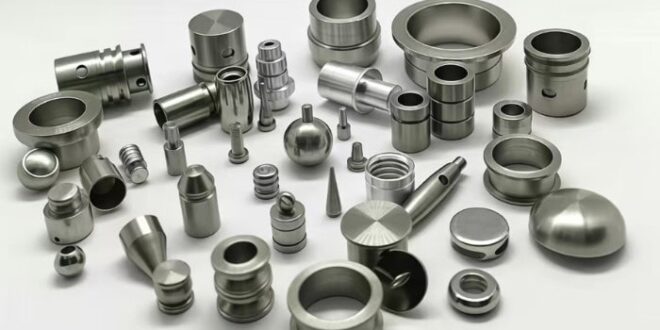
Impellers represent one category of a much broader ecosystem of critical components. Falcon CNC Swiss precision parts manufacturing that enable modern industry include housings that protect sensitive electronics, heat sinks that manage thermal loads, manifold blocks that control fluid flow, spline shafts that transmit torque, and brackets that hold assemblies together with micron-level alignment. Each category presents its own engineering challenges, and each demands a manufacturing partner with the right combination of equipment, process knowledge, and quality discipline.
A heat sink must balance thermal conductivity with geometric precision. A manifold block must maintain internal channel integrity while withstanding pressure. A spline shaft must transmit torque without backlash or wear. These are not commodity parts. They are engineered solutions, and the manufacturers that produce them reliably have built their operations around documented processes, material expertise, and rigorous inspection protocols.
Why Five-Axis Machining Has Become the Standard for Complex Components
The components that define industrial performance—particularly impellers—have geometries that cannot be produced effectively on conventional three-axis machines. Curved blades, variable twist angles, and closed impeller configurations require the cutting tool to approach the workpiece from multiple directions without repositioning. Five-axis CNC machining enables this by moving the tool and the workpiece simultaneously along five axes, producing smooth, continuous surfaces that meet aerodynamic and hydrodynamic requirements.
For manufacturers such as Falcon CNC Swiss Impeller Machining, five-axis capability is not a luxury. It is a requirement for achieving the blade accuracy that high-performance applications demand. Titanium impellers for aerospace turbines, aluminum bronze impellers for marine pumps, and stainless steel impellers for high-pressure industrial systems all benefit from the precision that five-axis machining delivers. The technology also reduces setup time and eliminates repositioning errors, which translates directly to shorter lead times and more consistent quality.
Materials: The Variable That Separates Capable Shops from Exceptional Ones
A manufacturing partner can have the best equipment in the world and still fail if it does not understand materials. Titanium alloys, prized for their strength-to-weight ratio and corrosion resistance, are notoriously difficult to machine. They work-harden rapidly, conduct heat poorly, and tend to gall against cutting tools. Aluminum is more forgiving but demands high-speed machining with careful chip management. Stainless steel requires precise parameter control to avoid work hardening and surface damage.
The shops that succeed across these material families are the ones that have built documented process libraries—tested speeds and feeds, validated tooling strategies, and inspection protocols for each alloy they machine. This institutional knowledge cannot be purchased with a new machine. It must be accumulated through years of production, refined through data, and preserved through documentation. When a customer specifies a titanium impeller for a critical application, the difference between a good supplier and a great one is whether that supplier has already solved the challenges the job presents.
Quality as a Brand Asset
In regulated industries, quality is not an abstract aspiration. It is a documented system with traceability from raw material certification to finished component inspection. The manufacturers that serve aerospace, medical, and automotive customers maintain certifications such as ISO 9001, IATF 16949, and ISO 13485. These certifications are not merely badges; they represent embedded processes for process control, continuous improvement, and risk management.
For the brands that rely on precision components, this quality infrastructure is a form of insurance. A supplier with robust quality systems reduces the risk of recalls, field failures, and regulatory actions. A supplier without them introduces risk that no marketing budget can offset. The most sophisticated industrial brands understand this, which is why they treat manufacturing partners as strategic assets rather than interchangeable vendors.
The Business Case for Precision
The economic logic is straightforward. A component that fails in the field costs far more than the price difference between a low-cost supplier and a capable one. Downtime, expediting, rework, warranty claims, and reputational damage all flow from manufacturing decisions made months or years earlier. Brands that invest in precision manufacturing partners reduce their exposure to these hidden costs. They bring products to market faster because their partners are engaged early and can identify manufacturability issues before they become expensive problems. They build customer loyalty because their products perform as promised.
For industrial technology companies, the message is clear. The components inside the product matter as much as the product itself. The manufacturers who produce those components to exacting standards are not a cost center to be squeezed. They are the foundation of the brand’s credibility. Choosing the right partner—one with the equipment, the material expertise, and the quality discipline to deliver consistently—is one of the most consequential decisions a brand can make.