Vents MagaZine Music and Entertainment Magazine
Related Articles

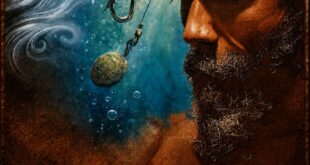
Gimme Truth explores the world of conspiracy culture through the people who live inside it. Rather than setting out to debunk every claim, directors Simon Ennis and Brad Abrahams focus on the human stories behind conspiracy beliefs, asking what draws people into these communities and whether there’s a path back out. We spoke with the filmmakers about uncertainty, identity, empathy, and the challenges of documenting such a complicated subject.
Looking for Meaning in Uncertain Times
VENTS: I watched the documentary, and it seems like when it comes to conspiracy theories, they take advantage of uncertainty and the feeling that anything might be possible. What do you think about that, and how is it reflected in the documentary?
Simon Ennis: So you’re asking if the theories themselves take advantage of that. It’s sort of a weird question because the theories are just theories—they’re just thoughts. But that is definitely where they come from. When people are living in this uncertain world, when they’ve experienced some kind of personal trauma that they’re desperate for answers for because of some kind of pain they’re feeling, a conspiracy theory can very much fill that void and give them these answers.
Even if it’s incorrect, even if it’s harmful, it’s a way of making sense of why something really bad is happening in my life, why I don’t feel so much power. Of course, there are some instincts that go into believing conspiracy theories that are positive. Being skeptical of people in power, governments, and corporations is a very healthy thing. That’s the right way of thinking.
But when you go too far down that track and don’t apply that original critical thinking to the theories you’re believing in, that’s when you can get into trouble. It also gives a sense of meaning and community. As you can see in the film, there are these conferences and online friendships. As you get into that, it really gives you a sense of belonging that maybe you didn’t have before. I think that’s the recipe that can get people on this track.
Brad Abrahams: Yeah, I think a lot of it is rooted in feeling helpless. Like Simon said, with the community, that makes you feel a little less helpless when you realize you’re not totally alone in some of these beliefs.
VENTS: It might make it seem like you’re onto something if these other people are on the same page.
Simon Ennis: Yeah, exactly. That’s getting back a sense of power. If you feel like you have this knowledge that maybe a lot of people don’t have, it’s like you’re onto something and have some answers that are unknown to others.
VENTS: And it might be something good because other people see great things involved in whatever you’re a part of.
Brad Abrahams: Sure. Potentially. Yeah.
Information Overload and Human Stories
VENTS: There’s also this sort of “flood the zone” method, similar to what Steve Bannon has talked about. Life can overwhelm people with contradictions and possibilities. It’s hard to know which narratives are true, which facts are actually facts, and some things are half true. It seems like that feeds into this phenomenon.
Brad Abrahams: Yeah, I don’t think by design—otherwise that’s a conspiracy theory too. But it definitely has that effect. We’re bombarded from every direction with conflicting information and opinions. I think that helps create the short circuit that leaves people going down a path and listening to a source that isn’t trustworthy.
VENTS: What about things like bot farms? They seem to be promoting conspiracy theories, so there is a conspiracy to promote these things.
Brad Abrahams: Sometimes it seems that way, sure, when there’s a specific end, especially during election time if someone wants to sow misinformation or sway public sentiment. But we didn’t really go into that.
Early on, when we were planning the film, we thought we could cover conspiracies that turned out to be true and investigators who uncovered them, but it just didn’t connect with our approach. We were really trying to get the human stories in and not do an investigative report. It could have been a four-hour film.
Simon Ennis: Exactly. As you can tell, our approach was not to debunk or argue with anyone whose beliefs we disagree with. You can tell in the movie that we don’t subscribe to these beliefs, but what we wanted to do was look at the humans. We wanted to see what life is like if you’ve made this search for alternative truths your identity and go in with curiosity and empathy in a way that could bridge the divide.
Many of the beliefs in the movie are things we definitely don’t agree with. Some, like the alien stuff, are pretty tame. Some of the other beliefs are very harmful and we pretty vehemently disagree with them. But we wanted to understand the people and connect with them. That was very much our approach.
Purpose, Adventure, and Identity
VENTS: It’s also true that conspiracy theories are exciting. The movie touches on that because some people say that without this, their lives would be boring or mundane.
Brad Abrahams: Yeah. That was Arcturus Ra. Near the end of the film he imagines a different life where he never subscribed to any of these beliefs, and to him that’s worse than death in a way because he’s now living a sort of intergalactic existence. It is exciting.
The same goes for Justin, the anti-extraterrestrial activist. The idea that you’re crusading for humanity, trying to save people from some nefarious outside force, really gives you purpose. It’s also a source of adventure. I think that’s part of it too. It injects excitement into a life that otherwise might not be filled.
Simon Ennis: Those are the two theories that certainly aren’t harmful. For Ra especially, living with extraterrestrial lineage and fully embracing that life has been a very positive thing for him. He doesn’t seem to harm anyone else.
He sells what he would call his technology at conferences, but is that really any different from an artist selling artwork or crafts at a market? Unless someone bought one of his necklaces thinking it would cure cancer instead of seeking medical treatment—which seems pretty unlikely and low risk—I think Ra, as an artist among other things, has found a way to live life to the fullest, and I give him credit for that.
VENTS: Was there an inspiration from Sun Ra, the jazz musician?
Simon Ennis: I’m sure. Arcturus Ra is definitely into Afrofuturism. I don’t know specifically how into Sun Ra he is, but there’s obviously some crossover there, which is really cool. I love Sun Ra.
Brad Abrahams: There are a lot of figures in the New Age and spirituality movement who take on the moniker “Ra,” too. It’s pretty common.
Music, Talent, and Belief
VENTS: There’s actually a lot of talent on display in this movie, which people might not expect. Someone could even discover these movements because they like a rapper or a reggae artist featured in the film.
Brad Abrahams: Yeah.
Simon Ennis: Brad and I were singing that reggae song to each other on set for years.
VENTS: We still do.
Simon Ennis: We still do.
VENTS: It’s difficult to disprove many of the theories shown in the film because of the old problem of trying to disprove something that isn’t true in the first place.
Simon Ennis: I actually disagree. I think the science is pretty clear on some of the medical stuff we look into, like Mickey Willis’ anti-vaccine stance. There is a lot of academic and scientific literature that goes against what he’s talks about.
Also, Erica Roach, the former conspiracy theorist who got out, believed 9/11 was an inside job, that there might have been CGI planes. That’s pretty easy to disprove. There are quite a few things.
Brad Abrahams: Although we can’t disprove Justin. You can’t disprove that extraterrestrials might be here with nefarious intent. I guess we can’t completely disprove Ra either—we could have extraterrestrial lineage in some way. Technically speaking, it’s hard to disprove them all.
Building Trust Instead of Debating
VENTS: But when it comes to meeting these people face-to-face, it would be tricky to debate them.
Brad Abrahams: Exactly. Simon mentioned it earlier. We were never wanting to do that. We were never wanting to debunk because it’s clear that rarely works.
It also creates an adversarial relationship from the start. We really wanted to get to know them and show what their lives are like. If we’d immediately started challenging them, it would have shut things down pretty quickly.
Instead of saying, “Well, mountains can’t be melted buildings,” it’s more interesting to ask, “Tell me about that. Tell me how you came into that belief.” That makes for a much more compelling story.
Simon Ennis: I’d also add that we never presented ourselves as something we weren’t. Even with Mickey Willis, our very first email said, “Hi there, we disagree with you. We’re independent filmmakers. We disagree with you, but we want to know more about you and your life.”
His response was, “Thanks for saying that. That takes a lot of integrity.” He said a lot of mainstream media try to go undercover, so it was refreshing to hear from people openly saying, “We’re not on your side, but we want to have a conversation.”
That was our general approach. We weren’t running around conferences saying, “We’re not red-pilled,” but we were always straightforward. We never misrepresented ourselves or our intentions.
VENTS: Some of the leaders seem to take advantage of how they appear to be average people, while others have a certain charisma or attractiveness that draws people in.
Simon Ennis: Are you saying Mickey is handsome? He’s pretty handsome.
VENTS: Well, he was going to be a model.
Simon Ennis: Yes, he’s a very charismatic figure. Charming, good-looking. Jon Ronson once said—this didn’t make the cut—that Mickey had “beautiful eyes” or “smoky eyes,” which is journalistically accurate, I think. Thanks, Jon.
Could Any of It Be True?
VENTS: These ideas can make life seem more exciting and make believers feel more special. Which idea covered in the documentary do you think is the most realistic?
Brad Abrahams: I think the one that could have the greatest chance of being true is simply that extraterrestrials could be nefarious. It wasn’t like Simon and I started getting scared while listening to Justin, but it’s much more difficult to disagree with that outright than saying mountains are melted buildings.
We didn’t directly cover Epstein, but Jon Ronson talks about it, and Erica discussed how that was a conspiracy that turned out to be true—that elites were involved in child sex trafficking. It just wasn’t true in the sensationalized way people imagined.
VENTS: It wasn’t just in the basement of a pizza parlor.
Brad Abrahams: Exactly. It was much more out in the open. That’s what confuses a lot of people. It really was all in plain sight.
Simon Ennis: About Justin, we don’t necessarily believe aliens are here, but his approach is a prudent one. As he put it, “Don’t you want to lock your doors if you don’t know your neighbors?” That’s kind of smart. It’s the old stranger-danger idea from when we were kids.
Looking Ahead
VENTS: Is there anything else you’d like to say about the documentary or your experiences making it? Will there be a part two?
Brad Abrahams: I don’t know about a part two, but we filmed quite a lot for a story that never made it into the film. It was about the Kingdom of Canada and its leader, Queen Romana Didulo. We filmed a lot, but it just didn’t fit the story. It was too big and too complicated.
That’s something we could potentially follow up on if people are interested in helping us get there. I could also see this working as a series where you have a whole episode on someone like Justin or on the opposing extraterrestrial movements and really spend more time with them and go a lot deeper.