Vents MagaZine Music and Entertainment Magazine
Related Articles



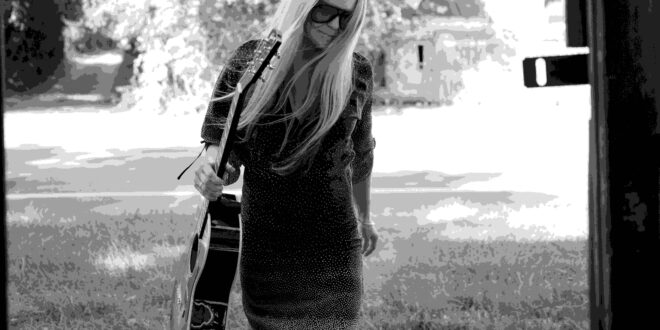
With a little help from Sheryl Crow collaborator Jeff Trott, the former Seven Day Diary singer-songwriter finds something universal in the heartbreak of loving someone who refuses to see you.
Some of the best songs come from the simplest observations. For Pamela Laws, it was a glance over her shoulder while driving down a highway toward New York City. One moment, she was checking her blindspot. The next, she was confronting an uncomfortable truth: Sometimes the person you love most is the one who doesn’t see you at all.
That revelation became “Blindspot,” a sharply written exploration of unrequited love, emotional invisibility, and the exhausting space between holding on and letting go.
Laws is no newcomer to the music business. She first made her mark in Seven Day Diary, the Warner Bros. band whose work involved acclaimed producers Joe Chiccarelli and Gil Norton. Now stepping into the spotlight under her own name, she’s teamed up with some formidable songwriting talent: Jeff Trott, the longtime Sheryl Crow collaborator behind classics like “If It Makes You Happy” and “Soak Up the Sun,” and Jeff Cohen, whose credits include Sugarland, Josh Groban, and the Spin Doctors.
But the real strength of “Blindspot” isn’t its impressive pedigree. It’s the emotional precision of its central metaphor.
“I’m caught in your blindspot / And you ain’t seein’ me,” Laws declares in a refrain that distills the frustration of being emotionally present but utterly invisible. It’s a devastatingly familiar predicament, captured without unnecessary melodrama.
The songwriting is particularly effective when it explores the tiny distinctions that can make or break a relationship. “There’s a fine line from sayin’ goodbye or goodnight,” Laws observes, before delivering an even more telling reflection: “There’s a fine line from thinking you will and hopin’ you might.”
It’s the kind of deceptively simple writing that separates an ordinary breakup song from one that stays with you. The difference between expectation and desperation, certainty and wishful thinking, can be just a few words.
And then there’s the song’s cleverest lyrical turn: “Sometimes those objects appear closer than they seem.” It’s a familiar warning transformed into something considerably more painful. Love can distort perspective, making emotional distance feel like intimacy and possibility feel like promise.
There’s also something compelling about the circumstances behind the song. Laws recalls her father repeatedly warning her about blindspots when teaching her to drive. Years later, that childhood lesson resurfaced during a period when she was struggling to love someone who barely acknowledged her existence. It’s a reminder that songwriting inspiration doesn’t always arrive through grand gestures. Sometimes it appears during an ordinary drive, carrying decades of personal history.
What makes “Blindspot” resonate is its refusal to frame heartbreak as simply the end of a relationship. Instead, it examines something arguably more painful: the experience of loving someone while wondering whether you ever truly mattered to them.
For a songwriter who has spent years honing her craft, Laws has found a metaphor with remarkable emotional mileage.
“Blindspot” isn’t just about the pain of being overlooked. It’s about the moment you finally recognize that being close to someone doesn’t necessarily mean they can see you.
And sometimes, that realization is the hardest collision of all.
https://www.instagram.com/pamelalawsmusic?cplk=MWZhZDhkbTZqeW5t
https://www.facebook.com/share/1Hr17bvKqP/?mibextid=wwXIfr