Vents MagaZine Music and Entertainment Magazine
Related Articles

Hi Anthony, welcome to VENTS! How have you been?
Like Bob Dylan once sang, “feeling like I just climbed out of my casket and grabbed ahold of my picnic basket”.
So your new single “The Dress” takes something as simple as a piece of clothing and turns it into a symbol for an entire period of your life. What was the memory behind the song, and when did you realize the dress could carry that much emotional weight?
Well I was walking down Fillmore St in SF with my girlfriend at the time and she spotted a dress in the window that she liked. A few weeks later, it was her birthday and I decided to go back to the shop and I bought it for her. Shortly after, we ended up splitting up and I never saw her wear the dress. Like is often the case with relationships you can’t understand why they really ended but they really are over, not just the romance but the friendship too. She was my girlfriend from college so to me it really was the end of an era that you’ll never be in again.
You describe “The Dress” as sitting somewhere between nostalgia and closure. How do you approach writing about the past without becoming trapped in it, especially when the memories still carry a lot of emotion?
Well for me, songwriting is often a good way for me to let a feeling out that I might have pushed away. So if anything, I would say the song has a cathartic effect.
The song begins delicately before gradually building into a much bigger emotional release. How did you use the production and arrangement to mirror that movement from memory toward closure?
I think for a lot of us, little moments and random occurrences can trigger a certain memory and then your mind naturally dwells on it. I wanted the song to mirror that process. The repeated question “did you let him take it off of you like I had always wanted to” becomes louder and more unrestrained as the song goes on, kind of like a nagging thought in your head.
You’ve cited the Laurel Canyon singer-songwriter tradition as a major influence, while your newer material incorporates more indie-pop textures and grooves. What attracts you to that era of folk rock, and how do you bring those influences into a sound that feels contemporary?
I love that Laurel Canyon artists could write emotional, contemplative songs but didn’t shy away from swaggering guitar riffs. It’s pretty much that kind of music with an occasional chorus pedal or synthesizer.
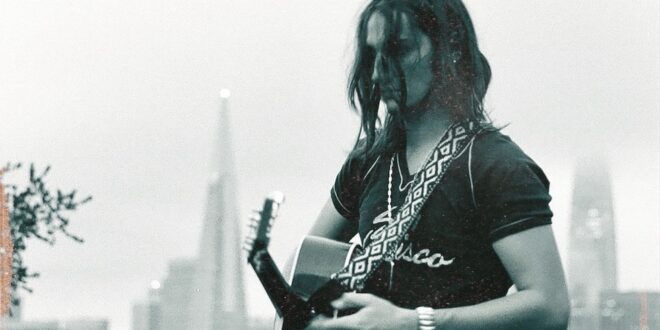
San Francisco seems to be almost another character in your songwriting, with many of your songs reflecting the highs and lows of city life. What is it about living and creating in San Francisco that continues to inspire you?
I dig that way of putting it, because I think you’re right it is a character. SF has an unrivaled beauty. Only 7 by 7 miles, it has finite bounds but its staggering hills and changing winds make it a dynamic place. While lacking seasonal change, on any day and in any specific neighborhood the weather could change from foggy to sunny – it’s temperamental like a person.
You’ve already released four albums, from Going To California through As It Turns Out, and you’re now preparing another record for Spring 2027. Looking back, how do you feel your songwriting has changed from that first album to the music you’re making today?
I used to write more story songs like about a sunken U.S. submarine or a wrongfully-accused Italian immigrant, then I wised up and realized no one is going to listen to that. More seriously, my first albums dabbled in blues, Americana, and some jazz. I still like writing different style songs but I think over the process of these albums I’ve been honing in on an indie folk rock sound that’s distinctly mine.
You were introduced to a national audience at a very young age through The Voice and were later recognized as a Presidential Scholar in the Arts for songwriting. How did those early experiences shape your relationship with music once you began developing your own career outside of that spotlight?
Those early experiences had a lot of freedom – I feel like I just wrote and sang songs and hoped for the best. Now as a career musician, one has to factor in the business side if you want to remain in the spotlight.
You’ve gone from releasing albums to playing more than 150 shows a year across Northern California. How has performing that frequently changed the way you write songs, arrange them, or understand what connects with an audience?
When fans start becoming familiar with a new song, you can definitely tell the lyrics they emotionally relate to by the lines they sing along with. They highlight the gems for you.
You’ve described your live shows as feeling like “twilight on a warm summer evening”—something relaxed and atmospheric, but with the anticipation that something exciting is about to happen. How do you create that balance between intimacy and energy when you perform?
I think a good live set should take you on a journey and have a few valleys and crests. I don’t leave all the high energy songs for the end but I always ease folks into the experience by opening with folkier tunes.
With “The Dress” introducing this next chapter and a new album arriving in 2027, what can listeners expect from the record that they haven’t heard from you before, and what are you most excited to explore as you continue expanding your sound?
Part of the reason I am loving this new album is I think it brings the rootsy quality of my songwriting and guitar playing into a contemporary sound that doesn’t make you cringe from a lack of sincerity but just makes you bop your head and say that’s a banger.
https://www.instagram.com/anthonyjadearya
https://www.facebook.com/anthonyaryamusic
https://www.youtube.com/channel/UCN2SAnp22TJ2tvCksZ4Rh0Q