Vents MagaZine Music and Entertainment Magazine
Related Articles



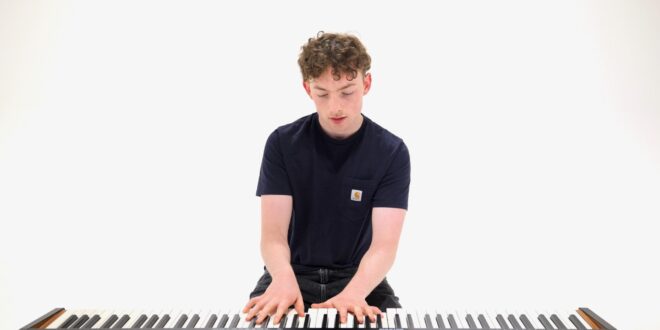
At just 16 years old, modern classical composer and pianist Alexander Laing is already developing a distinctive musical voice, blending expressive piano melodies with cinematic arrangements and atmospheric soundscapes. Having begun composing at the age of 10, Alexander has drawn inspiration from artists including Max Richter, Nils Frahm and Hania Rani, while carving out a style that places melody and emotional storytelling at its heart. His debut album, The Delta Wave, out now via Now Listen PR, explores the fascinating worlds of sleep, dreams and the subconscious through a series of evocative instrumental compositions. Now, with the release of his latest single, “Oceans”, Alexander captures the changing moods and immense power of the ocean, building from a gentle, rolling piano motif to an expansive, dramatic finale.
We caught up with Alexander to discuss the spontaneous inspiration behind the track, translating the ocean’s movement into music, the experience of filming its accompanying music video, and how his sound and ambitions are continuing to evolve as he works towards his next album.
Vents Magazine: You began composing at just 10 years old. Do you remember what first sparked your interest in creating your own music, and how has your relationship with composing changed as you’ve grown as a musician?
Alexander: There has been music in our house in my earliest memories, but I started learning the piano at 7. At 10 I started messing around and improvising, some tunes started to come together so I kept at it. Since then, I’ve been lucky enough to be accepted to the Royal Academy of Music Junior Department to do composition and piano. With practice, getting the chance to learn musical theory, and being around great musicians and composers, I’ve been given a great opportunity to get started at writing and performing.
Vents Magazine: You’ve mentioned artists such as Nils Frahm, Max Richter, Ludovico Einaudi, Arvo Pärt and Hania Rani as influences. What is it about their music that resonates with you, and how do you draw inspiration from them while developing a sound that feels distinctly your own?
Alexander: I find those artists are really great at making classical music in a way that’s modern but also emotional and accessible. There is a lot of atmosphere and expression in their music. I saw both Hania Rani and Max Richter live at a young age and both of those performances had a big impact on me.
In terms of developing my own sound I keep piano and solo performance at the core of what I do. Also, though I’d probably describe what I do as modern classical, I draw a lot of influence from film music and popular or classical songwriting. Quite a few of the pieces are short and, though instrumental, keep to traditional songwriting structures.
Vents Magazine: Your debut album, The Delta Wave, explores sleep, dreams and the subconscious mind. Where did the idea for the album come from, and what drew you to exploring such an imaginative and personal subject through music?
Alexander: I wanted to write an album with an underlying theme connecting the music. I’ve always been really interested in dreams, the subconscious and even the idea of the collective subconscious. I think some of what we remember of our experiences from dreams are quite profound and difficult to articulate in words, so maybe instrumental music might be the best way to express those.
The album starts with a repeating figure as the intro to “Visions” as you enter sleep. The listener then passes through a number of moods and atmospheres. At the end with “Return” there is a sense of reconciliation after the dream and then the opening motif returns as the listener awakens and “comes home”.
Delta Waves are brain waves during the deepest part of sleep when there is building of memory, healing and repair. The cover art is a picture of brainwaves that was created by Moser Associates.
Vents Magazine: Each composition on the album represents an imagined dream experience. When you were writing the pieces, did you have particular images or feelings in mind, and how did you bring those ideas to life through the piano and atmospheric textures?
Alexander: I pretty much always write on my piano, and the pieces come together through improvising.
These songs all developed as solo pieces and then I wrote and layered the strings and other instruments. Overall, I was trying to keep the arrangements simple and keep piano at the core of the album.
The songs on The Delta Wave, for me, have distinct atmospheres and occur in different times and places. Some feel for me like bigger landscapes and are more uplifting. Some are darker or more mysterious.
Vents Magazine: Let’s talk about your new single, “Oceans”. You’ve said the melody came to you spontaneously while you were playing the piano one evening. Do you remember that moment, and what was it about the melody that made you want to develop it into a full composition?
Alexander: The main melody came from improvisation, and I thought it was something I should build on. I then developed the left-hand accompaniment. It’s a rolling figure which evokes the sea. “Oceans” is in ¾ time and a scale called the Dorian mode and this gives it a feel that is more rooted in traditional folk music.
Vents Magazine: The piece gradually moves from a gentle, flowing opening into a much bigger, more powerful finale. How did you approach building that progression, and what techniques did you use to capture the ocean’s contrasting moods, from stillness to crashing waves?
Alexander: The piece opens with the left-hand arpeggio. This is the more gentle waves and the playing here is more restrained. I think the cycling ¾ time gives it a rolling feel. I then introduce the cello which creates more scale and drama. It shifts up again with layered strings and horns for the more powerful waves and a sense of the scale of the ocean. It then breaks into a coda with a descending sequence as more instruments join and the piano becomes more dynamic. It ends with a crescendo on a major chord, which I think gives it a sense of closure, or release, as the waves break.
Vents Magazine: The music video for “Oceans”, directed by Adrian Tanner, was filmed against the backdrop of the ocean itself. How did the visual concept come together, and what was it like seeing the music paired with the very landscape that inspired it?
Alexander: When I told Adrian the song was called “Oceans”, he said, “Great, we are going to the beach!” The video was filmed at the Seven Sisters Cliffs on the South Coast of England in December. It was really cool to see the beach so empty and there was a nice winter light.
It was amazing to connect the song to such a great location. I remember a seal was swimming close to the beach and kept popping its head up while we were filming. It felt pretty magical to be at the very sort of place the music tries to capture.
Vents Magazine: Your compositions often communicate emotion and tell stories without the need for lyrics. When someone listens to “Oceans” or the wider album, what do you hope they take away from the experience? Do you prefer listeners to connect with your own intentions, or to create their own interpretations?
Alexander: With “Oceans”, I think the melody is melancholic but also hopeful. It’s kind of about the mind soaking up different emotions and thoughts and then confronting and channelling them. As for the album as a whole, I want to leave it up to whoever’s listening to have their own interpretations.
Vents Magazine: With The Delta Wave now out in the world and “Oceans” showcasing another side of the project, what are you most excited to explore next as a composer? Are there any new ideas, sounds or musical directions you’d particularly like to experiment with?
Alexander: I think I’ve developed as a writer since The Delta Wave. I’ve written 16 songs for the next album and, over the summer, got a chance to record the piano tracks for these with Morgan on a Bosendorfer piano at a studio in Dorset. I’m working on the string arrangements at the moment. My piano playing has developed also, so there is going to be more range and more complex arrangements, but I’m trying to do that while keeping a strong melody. I’m really happy with how it’s coming out and am looking forward to releasing the new album soon.
Connect with Alexander Laing: Instagram.