Vents MagaZine Music and Entertainment Magazine
Related Articles
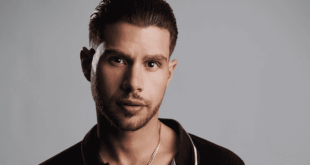
1. Hi Nicole, welcome to VENTS! How have you been?
I’ve been really good! Staying busy in the best way. I’ve spent the last few months fully locked into making tons of music and content that I’m excited to share with the world!
2. You’ve mentioned how Mirrors and Smoke explores the emotional cycle of loving someone you probably shouldn’t—what inspired you to center the EP around that theme?
It wasn’t something I planned at first but kind of revealed itself as I was writing. I noticed every song was coming from a slightly different angle of the same situation… denial, attachment, frustration, clarity.
I think a lot of people experience that push and pull where you know something isn’t right, but you’re still in it anyway. That emotional conflict felt honest to me, so instead of trying to diversify the themes, I leaned into it and let the EP become a full cycle of that experience. These stories and emotions come heavily from both personal experiences and me witnessing these relationships in friends and family members and writing from their point of views.
3. What does the title symbolize for you in the context of the EP?
Mirrors and Smoke represents distortion. Things look versus what they actually are.
The “mirror” side is self-reflection, seeing things clearly, and the “smoke” is everything that clouds that… emotion, attachment, confusion, excuses. The whole EP lives in that tension between clarity and illusion.
4. Each track represents a different stage in that journey—was there a particular moment or song that felt like the emotional core of the project?
“Don’t Tell Me To Breathe” feels like the emotional center.
That song captures the peak of everything. Overwhelm, frustration, and being misunderstood. It’s that moment where someone tells you to calm down, but they don’t understand what you’re actually feeling underneath.
A lot of the other songs orbit around that energy in different ways, but that one feels like the breaking point.
5. You handled every aspect of the EP yourself—how important was it for you to maintain full creative control over the sound and storytelling?
It was everything for this project.
I’ve spent a lot of time in the past writing and producing for other people, so when it came to my own project, I didn’t want anything filtered or overthought. I wanted it to feel direct and honest, even if that meant leaving things a little raw.
Being able to follow my instincts without compromise is what made the songs feel real, and I think that’s what people are connecting to. With some help from some friends on writing Close 2 (co-written with Michael August) and Just a Friend (co-written with Pete Matat) and recording these 2 songs with good friend, Taylor Bialy, helped capture the emotion and allowed me to let go of overproducing the tracks and really focusing on the songs.
6. “Don’t Tell Me To Breathe” gained attention through Fender’s Quantum LT launch—how did that opportunity come about, and what did it mean for you as an artist?
That was such a surreal moment. Fender had come across my content and reached out about launching a campaign with their new product line, Quantum LT launch. After sending over a handful of songs, they ultimately chose “Don’t Tell Me To Breathe” which when featured, was a high energy rock leaning track.
As someone who grew up playing guitar and building everything around that, having a brand like Fender support something I made independently meant a lot. It felt like validation. Not just for the song, but for the whole way I’ve been creating and sharing music.
7. Your latest single “Just A Friend” was teased live prior to release — how did audience feedback shape your approach to releasing it?
Playing it live before releasing it was huge.
I’ve been doing a lot of stripped-back performances and loop-based sets, so I get to see real-time reactions, what people lean into, what they connect with. “Just A Friend” consistently got a strong response, which gave me confidence in how to position it.
It also helped me refine the arrangement and dynamics before the official release, which made the final version feel more lived-in.
8. You’ve built a strong following through stripped-back, looped covers—how did that experience influence the way you approached your original material?
It influenced everything.
Looping and performing solo forces you to focus on what actually matters – structure, dynamics, emotion. There’s nowhere to hide. So when I started working on my originals, I approached them the same way: does this song still hit if it’s just me and a guitar?
That mindset kept the songs grounded and made sure the core emotion carried, regardless of production.
9. Artists like My Chemical Romance and blink-182 have been part of your cover repertoire—did those influences find their way into your songwriting on this EP?
Definitely, but maybe not in the most obvious way.
It’s less about directly sounding like those artists and more about the emotional intensity and honesty they bring. That early 2000s alternative/emo energy where things feel a little raw, a little unfiltered. That’s something I naturally gravitate toward.
I think that influence shows up more in the feeling and delivery than in the surface-level sound.
10. Was it ever difficult to translate such personal emotions into something you’d share publicly?
Totally, there’s definitely a level of vulnerability that comes with it.
But at the same time, I think the more specific and honest you are, the more people actually relate to it. So instead of trying to generalize the emotions, I leaned into the details.
At a certain point, you kind of have to let go of how it might be perceived and just trust the songs to speak for themselves.
11. With this being your first full body of original work, how do you see it defining the next phase of your career?
This feels like the foundation.
Up until now, a lot of my growth has come from covers and short-form content, but this project is really about establishing my identity as an artist. What I sound like, what I want to say, and how I want to build from here.
Moving forward, I want to keep releasing consistently, performing more, and bringing people deeper into the world of the music. Not just through polished releases, but through the process behind it too.