Vents MagaZine Music and Entertainment Magazine
Related Articles


A Survivor in a solo-queue match of Dead by Daylight faces a difficult decision. One generator is nearly complete, but a teammate has just been hooked on the other side of the map. Should the Survivor finish the generator or leave immediately to attempt a rescue? The answer depends on information that may not be immediately available. Is another teammate already moving toward the hook? Is the Killer still nearby? Could the generator be completed before the hooked player reaches a critical stage?
These decisions highlight one of the biggest challenges of solo queue: understanding what other players are doing without direct communication. While coordinated teams can exchange information through voice chat, solo Survivors must rely on the game’s interface, environmental sounds, and their interpretation of events. This information gap also provides an important context for discussions about DBD cheats, particularly third-party tools that reveal information beyond what the standard game interface provides.
Understanding the Survivor Activity HUD
The Survivor activity HUD is one of the most important sources of information available during a Dead by Daylight match. It provides a quick overview of teammates and helps players understand the general situation without requiring direct communication.
Survivor portraits and status indicators communicate essential details, including whether a teammate is injured, hooked, healthy, or otherwise unable to participate normally. Activity icons can also provide clues about what teammates are doing.
For example, seeing a teammate’s activity indicator associated with generator repair suggests that they are contributing to the team’s main objective. Other indicators can help identify activities such as healing, cleansing totems, or interacting with different objectives.
However, the HUD does not provide a complete picture of every player’s situation. It may indicate that someone is performing an activity without revealing their exact location, immediate surroundings, or intentions.
This limitation means players must interpret the available information rather than treating every indicator as a complete description of the match.
How Game Audio Fills the Information Gap
Sound is another important information source in Dead by Daylight. Experienced Survivors often make decisions based on audio cues that reveal nearby threats or indicate what is happening outside their immediate field of vision.
The Killer’s Terror Radius is one of the most recognizable examples. Depending on the Killer and relevant game mechanics, its presence can suggest that danger is approaching. Chase music provides another important warning, helping Survivors recognize when a confrontation has started.
Other sounds also contribute to decision-making. Generator noises can help players identify nearby objective activity, while injured Survivor sounds may reveal that someone is struggling in the surrounding area. Hook-related audio can communicate important events even when the hooked teammate is not visible.
Nevertheless, sound has limitations. Distance, map structures, environmental effects, and individual Killer abilities can make audio information difficult to interpret. A Survivor may hear a chase but remain uncertain about its exact location or whether the Killer has changed targets.
Consequently, audio works best when combined with HUD information and careful observation.
Third-Party ESP and the Difference in Available Information
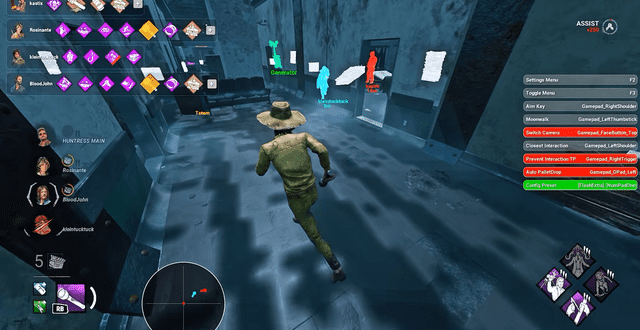
Third-party overlays introduce another dimension to discussions about information access. ESP, commonly known as Extra Sensory Perception in gaming communities, describes tools that attempt to display information that would not normally be visible through the standard game interface.
Depending on the software and game environment, such overlays may attempt to reveal additional information about player positions, character locations, or other match elements.
This creates a significant difference between the information available through normal gameplay and information displayed by unauthorized third-party tools. A regular Survivor might need to interpret sound, observe environmental details, and make educated guesses about teammate positions. An ESP overlay may attempt to make some of that information directly visible.
Players researching this subject may encounter resources such as MilkyWay’s guide to Dead by Daylight cheats, which is associated with discussions of third-party cheating tools. Understanding the broader topic is useful when examining how unauthorized information access can affect competitive fairness.
The important distinction is that information gained through observation and legitimate game mechanics is fundamentally different from information obtained through unauthorized software.
Why Information Matters More in Solo Queue
Solo queue creates a unique environment because players cannot always coordinate their decisions. Each Survivor has a limited understanding of what the other three players are doing, and that uncertainty can influence the entire match.
Consider the earlier generator-and-rescue situation. A Survivor sees a teammate on the hook while another teammate appears to be working on a generator. The HUD provides some useful information, but it may not reveal whether someone is already approaching the hook.
The player must decide whether to continue repairing or take responsibility for the rescue.
In a coordinated team, this decision could be discussed immediately. One player might confirm that they are going for the rescue, allowing the others to continue repairing generators. Solo players often have to make the same decision independently.
This is why information has such a significant impact on teamwork. Even when every Survivor understands the basic objectives, a lack of shared awareness can lead to duplicated efforts or neglected responsibilities.
How Information Asymmetry Changes Decision-Making
Information asymmetry occurs when different players possess different levels of information about the same situation.
In Dead by Daylight, this can happen naturally. A Survivor being chased has direct knowledge of the Killer’s current behavior, while teammates working on generators may only have indirect clues. Someone hiding nearby might understand the immediate danger better than another Survivor across the map.
These differences are part of the normal gameplay experience.
However, unauthorized information tools can create a more substantial imbalance. If one participant has access to additional location information, their decisions may no longer be based on the same limitations experienced by everyone else.
This can affect several aspects of a match:
- Rescue decisions: Additional information may influence when and where a player attempts a rescue.
- Generator management: Players may make decisions based on information unavailable through ordinary HUD indicators.
- Chase awareness: Knowledge of nearby positions can change how players interpret dangerous situations.
- Team coordination: Information advantages can influence how individuals respond to teammate activity.
The result is a competitive environment in which decisions may reflect unequal access to information rather than individual skill alone.
Legitimate Game Knowledge Versus Cheating
It is important to distinguish experienced gameplay from unauthorized assistance. A skilled Survivor may predict a Killer’s movements by understanding map layouts, recognizing common strategies, and interpreting audio signals.
For example, someone familiar with a particular map may know which areas provide useful escape routes. Another player may recognize common Killer patterns after hundreds of matches.
These abilities come from experience and observation.
DBD cheats, on the other hand, refer to unauthorized methods that attempt to provide advantages outside the intended gameplay rules. Tools that reveal hidden information can undermine the balance between players who follow the same restrictions and those who do not.
Not every surprising play or accurate prediction indicates cheating. Good players regularly make decisions that appear unusually informed because they understand the game’s mechanics.
Recognizing this distinction is important when evaluating suspicious behavior and discussing competitive fairness.
Improving Teamwork Without Additional Information Tools
The solo-queue experience can become more manageable when players learn to use the information already provided by the game.
First, checking the Survivor HUD regularly can help identify which teammates are occupied with objectives and which may need assistance. This reduces the likelihood of multiple players abandoning generators for the same rescue.
Second, listening carefully to audio cues can improve awareness of nearby threats. Recognizing chase music, the Terror Radius, and injured Survivor sounds helps players make more informed decisions.
Third, players should consider the overall match situation rather than focusing exclusively on individual objectives. Generator progress, teammate health, hook states, and available escape opportunities all contribute to better decision-making.
Finally, understanding common map layouts and Killer strategies can improve predictions without relying on unauthorized software.
These habits encourage cooperation while preserving the intended limitations of solo queue.
Anti-Cheat Systems and Competitive Fairness
Maintaining fair competition requires ongoing attention from game developers. Anti-cheat systems are designed to identify unauthorized modifications and suspicious behavior that may compromise normal gameplay.
However, detecting cheating is not always straightforward. Some players may demonstrate exceptional awareness through legitimate experience, while unauthorized tools may attempt to disguise their activity.
Effective enforcement therefore requires more than simply investigating unusual performances. Developers must consider reliable evidence, consistent rule enforcement, and the possibility of incorrect accusations.
A fair competitive environment also depends on community responsibility. Players should use appropriate reporting channels when they encounter suspicious activity rather than automatically accusing opponents after an unexpected outcome.
Final Thoughts
The information gap in Dead by Daylight solo queue is an important part of the game’s competitive experience. The Survivor activity HUD and audio cues provide valuable information, but they do not reveal everything happening across the map. Players must combine these clues with experience, observation, and independent decision-making.
Third-party ESP tools complicate this environment by potentially revealing information that ordinary players cannot access through standard gameplay. This difference explains why DBD cheats remain a relevant topic in discussions about fairness and competitive balance.
Ultimately, successful teamwork depends on more than knowing where everyone is. It requires understanding available information, making sensible decisions, and respecting the rules that create a fair experience for all participants.