Vents MagaZine Music and Entertainment Magazine
Related Articles


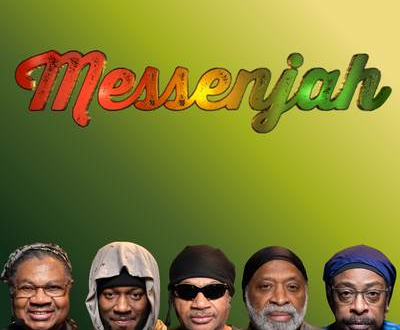
1. Hi guys, welcome to VENTS! How have you been?
We’ve been busy, but happy doing what we’re doing.
2. So after 45 years of making music, Messenjah is still releasing new material with the same sense of urgency. What keeps you motivated to keep writing, recording, and performing after all these decades?
What keeps us motivated is just looking around at the world and seeing all the things that are going on. It’s very hard to just disengage when so many things are happening around us, and we feel that we might have a little input to make people aware.
3. “No More” has a particularly defiant message about refusing to settle, give things away, or let other people dictate your path. What was happening in your lives or in the world that inspired the song?
I think what was happening in our lives, and what’s happening in many lives at the same time, politically and socially, especially when we look to the South, where there’s so much turmoil going on, and there are wars starting all over the world.
It’s just been a very stressful time for a lot of people. So we thought we’d express our way of dealing with it.
4. The bridge describes Messenjah as a “flag bearer,” “truth giver,” and “society teacher.” When you look back at the band’s history, how has your understanding of that responsibility changed since you formed the group in 1981?
Not much has really changed over the years. I think our message has been fairly consistent. There’s definitely more urgency right now because of all the different things that are going on — everything from wars to the fuel crisis to people trying to take over our country.
But the basic message of Messenjah has always been awareness, positivity, and, you know, you’ve got to be strong.
5. Messenjah broke significant ground by becoming the first Canadian reggae band signed to a major label. At the time, did you realize you were opening doors for an entire generation of Canadian reggae musicians?
We did realize at the time that this was a major breakthrough, as it was never done before.
We were kind of caught up in the moment. We were young and just really having a great time and enjoying what we were doing. We weren’t looking at it as having historical significance or importance.
But we did realize that it created opportunities for other people to follow us through the door that we were fortunate enough to help open.
6. “Jam Session” became a national anthem of sorts, you played Reggae Sunsplash, appeared in Cocktail, performed for Nelson Mandela, and won a Juno Award. When you look back at those milestones, which moments still feel particularly surreal to you?
Playing Reggae Sunsplash was definitely high on our list. It was a very valuable experience, returning back to our own land and seeing if we were accepted by our people. That was a big thing.
We actually played Jamaica twice that year, as we also played at the World Youth Festival in Kingston at the National Stadium. That was a real thrill.
But I would say it would probably be equalled by the Nelson Mandela appearances. He staged us and danced around with us, and we actually played for him twice — first when he came to Canada at Queen’s Park, and then later on, we played for him at the SkyDome.
It was a real thrill to be on the same stage as one of our lifelong heroes.
7. The current lineup brings together musicians with deep histories in reggae, including Carl “Carlos Bandana” Harvey’s connection to Toots and the Maytals. What does each member bring to Messenjah’s sound today that might not have been there in the band’s earlier years?
My brother Carl has definitely added a lot to the band, but he’s always been a part of the band in the background, as he was involved in many of the productions. He actually produced two of our albums, I believe it was Cool Operator and Rock and Sway. And he plays on a lot of the other stuff over the years, even though he was playing with Toots and the Maytals.
Our sound hasn’t really changed. It’s evolved, with a little bit more of a rocky edge to it. And now we have our new drummer, young Sam, who’s a beautiful person to work with and just an excellent drummer.
But we’ve pretty much had our consistency through the years, which we think of as a very unique sound to Messenjah.
The basic lineup, actually, myself and Charles — Charles goes back all the way to 1986. So we’ve been together for a long time. Wiz has been there since about ’89. Like I said, my brother was involved in it all through the years.
The newest person would just be Sam, even though there’s been a lot of players that have come and gone over the years.
8. “No More” was written by Rupert Harvey and composed alongside Orville Malcolm and Charles Sinclair, with Malcolm producing and Sinclair co-producing. What was the collaborative process like this time around, and how did the different generations of experience within the lineup shape the recording?
What we’re doing with this song, I’d say that all of our collective experiences just came into play.
The process is usually the same. I’m usually the idea person, coming up with the lyrical content and melodies, and I write music also. But everyone gets credited. Everyone’s a part of adding to the sound of Messenjah.
9. There’s a fascinating contrast between Messenjah’s decades-long history and the very current urgency of “No More.” How do you make sure the band’s legacy informs the music without allowing nostalgia to become the main creative force?
We don’t even know the word “nostalgia.” We just do what we do.
Nothing is really too pre-planned. It’s very organic. I think that’s pretty funny — nostalgia.
10. Canadian reggae has changed considerably since Messenjah first emerged. What do you hear in today’s reggae scene that excites you, and what do you think younger artists can learn from the road Messenjah helped pave?
There’s a couple of good local, regular artists that we like what they’re doing. We keep in touch with some of them and we’re happy to see their progress.
But, to be honest with you, everyone has a different learning process. They can take something from some of the ideas that we’ve done in the past, but really, I want to see people just be creative and be disciplined.
That’s the formula Messenjah has used over the years. A lot of our success literally just came from the time we spent practising, and we took it very seriously.
So I’m hoping that vibe catches on to some of the new artists and they realize the importance of that discipline as far as propelling their careers.
11. After more than four decades, what does the next chapter of Messenjah look like to you? Is “No More” the beginning of a larger creative chapter, or are you simply continuing to follow wherever the music takes you?
Yes, “No More” is definitely a new start for us.
Again, we didn’t really plan this stuff. Everything we do is kind of organic. It just kind of falls into place.
But we’re hoping that, you know, we have a lot of material that we’ve recorded, and some of it is at different levels of progress. So we plan to complete a lot of it.
Hopefully, after things have changed in the market — it’s mostly a singles market these days — we’ll probably try to release another two or three singles before we put out an entire project.
But we definitely have the material and we’re still being creative. I’m still writing. We’ll probably get together like we always do and go over someone’s stuff and see what’s next.
But that’s our plan for the future.
Thank you. It’s been a pleasure.