Vents MagaZine Music and Entertainment Magazine

Related Articles



Meta information
Meta title (53 characters): Best Amazon Keyword Research Tools in 2026 (Compared)
Meta description (153 characters): The best Amazon keyword research tool depends on your catalog. Compare 10 options like Amazon SEO Ranking and Helium 10 on data and price. Find your fit.
URL:/best-amazon-keyword-research-tools
H1: Best Amazon Keyword Research Tools in 2026 (Features & Pricing)
Key Takeaways (TL;DR)
- The best overall Amazon keyword tool for listing SEO: Amazon SEO Ranking. It checks real Amazon search volume in 16 marketplaces, then writes the keywords into compliant copy and scores it against a published 12-criteria rubric.
- Why you need one: Amazon doesn’t show sellers how often a phrase is searched. Without an estimate, you’re choosing title words by guesswork.
- Who it’s for: Private label sellers, multi-marketplace brands, agencies and teams that run listing work through AI assistants. Each needs a different mix of data depth and price.
- How to choose: Check marketplace coverage for the stores you sell in, the monthly search limit on the plan you can afford, and whether keywords flow into your listing copy. A tool with 2 years of trend data is wasted if you only refresh listings twice a year.
- Expected price: Amazon SEO Ranking has a free audit tier, with keyword research on Pro ($79/month) and Agency ($189/month). Across the market, prices run from limited free tiers (SellerApp, SellerSprite) to $359/month (Helium 10 Diamond, billed monthly), with enterprise plans from $1,499/month.
Table of Contents
- Key Takeaways (TL;DR)
- Top Amazon Keyword Research Tools in 2026 at a Glance
- What Are Amazon Keyword Research Tools?
- Why Do You Need the Best Keyword Research Tool for Amazon?
- Who Needs an Amazon Keyword Tool?
- Best Amazon Keyword Research Tool Reviews: 10 Tools Compared
- How to Choose the Best Amazon Keyword Research Tool
- Everything You Need to Know About the Best Amazon Keyword Tools
- Turn Keywords Into Ranking Listings With Amazon SEO Ranking
- FAQs About the Best Amazon Keyword Tools
Top Amazon Keyword Research Tools in 2026 at a Glance
| Company | Best For | Key Features | Pricing (monthly billing) |
| Amazon SEO Ranking | Turning keyword data into compliant listing copy | Volume Checker (16 marketplaces), Keyword Magic Tool, Keyword Gap, backend 249-byte checker, Claude connector | Free audits; Pro $79; Agency $189 |
| Helium 10 | Sellers who want the largest keyword dataset plus PPC and operations | Cerebro + Magnet, Keyword Tracker, Listing Builder, Helium MCP | Platinum $129; Diamond $359 |
| Jungle Scout | New sellers who want clean data and a short learning curve | Keyword Scout, 2-year keyword history (Brand Owner), Rank Tracker | Starter $49; Growth $79; Brand Owner $149 |
| DataDive | Pre-launch keyword gap analysis across many competitors | Niche Dive, Master Keyword List, Rank Radar | From $39 |
| SellerApp | Sellers who want keywords, PPC automation and managed services in one place | Keyword research, reverse ASIN, Listing Quality Index, API | Freemium; Pro $99; up to $250 |
| ZonGuru | Small private label catalogs | Keywords on Fire, Keywords Spotlight, Listing Optimizer | From $49 |
| MerchantWords | Research across many international marketplaces | 6B+ keyword database, ASIN Plus, Digital Shelf | From $35 |
| SmartScout | Category and brand-level keyword ownership | Keyword Detective, Relevancy Quadrant, Rank Maker | Basic $29; keyword tools from $97 |
| AMZScout | Beginners who want product and keyword research for one low price | Keyword search, reverse ASIN, Chrome extension, MCP | $59.99, or $1,599.99 lifetime |
| SellerSprite | High-volume keyword research across 10 marketplaces | Keyword Mining, Reverse ASIN, Keyword Tracker, browser extension | Free tier; Standard $79 |
What Are Amazon Keyword Research Tools?
Amazon keyword research tools estimate how often shoppers type a phrase into Amazon’s search bar, and show which products rank for it. Sellers use that data to decide which words go into the title, bullets, description and backend search terms.
Amazon doesn’t publish search counts. Every tool models its own estimate from signals such as click and purchase data, Amazon Brand Analytics, autocomplete and ranking history. That’s why two tools can show 12,000 and 18,000 searches for the same phrase. Read the numbers as ranges.
Most tools offer four kinds of lookup:
- Seed keyword expansion – enter “electrolyte powder” and get hundreds of related phrases with volumes.
- Reverse ASIN lookup – enter a competitor’s ASIN and see which keywords it ranks for, organically and in ads.
- Keyword gap – compare several ASINs and find terms competitors rank for that you don’t.
- Rank tracking – follow your position for chosen keywords over days or months.
The category splits two ways. All-in-one suites such as Helium 10 and Jungle Scout bundle keyword research with product research, PPC and inventory tools. Specialists such as DataDive and MerchantWords focus on keyword data alone. Amazon SEO Ranking sits between them: it pairs keyword research with a listing audit and an AI rewriter, and leaves product research and PPC to others.
One change in 2026 matters here. Helium 10, Jungle Scout, AMZScout and Amazon SEO Ranking now connect to AI assistants through MCP, so you can ask Claude or another assistant for keyword data in plain language.
Why Do You Need the Best Keyword Research Tool for Amazon?
You need one because Amazon search is still where most product journeys start, and a listing can only rank for words it contains.
In a survey cited by Practical Ecommerce, 56% of online shoppers began product searches on Amazon, against 42% on search engines like Google. Profitero’s 2026 US shopper report, covered by EMARKETER, found that 34% of shoppers navigate retailer sites mainly through search – ahead of promotions at 23%.
AI shopping assistants haven’t replaced the search bar either. Helium 10’s analysis of Search Query Performance data found no sign of buyers leaving keyword search for Rufus or Alexa for Shopping in 2026.
Here’s what goes wrong without data:
- You write for the words your team uses. A brand might say “hydration sticks” when buyers search “electrolyte packets”.
- You waste the title’s opening characters. A compliant title runs about 75 characters, so a slot spent on a phrase with no volume is a slot a buyer’s phrase can’t use.
- You burn the backend field. The 249-byte search terms field gets ignored if it repeats visible words or runs over the limit, and no shopper or outside tool can see it to warn you.
- You assume one marketplace speaks for all. A phrase that ranks on amazon.com may have little volume on amazon.de, where shoppers search in German.
Good keyword data turns each of these into a measurable choice: this phrase, this volume, this field.
Who Needs an Amazon Keyword Tool?
Private label sellers with a few listings
You manage one to twenty ASINs and write the copy yourself. You need search volumes for candidate phrases and a clear signal of which ones belong in the title. A high monthly search cap matters less than price, a free way to test, and copy you can paste straight into Seller Central.
Sellers expanding to new marketplaces
You sell the same product on amazon.com, amazon.co.uk and amazon.de, maybe amazon.co.jp. Translated keywords rarely match local search habits. Check that a tool covers each storefront you sell in, feature by feature, because many tools limit their advanced lookups to the US.
Amazon agencies
You research for 10 or 50 clients at once. Search limits, bulk processing, exports and white-label reports decide your cost per client. So does a scoring method you can explain on a client call.
Brands launching new products
A brand-new ASIN ranks for nothing, so reverse ASIN lookups on your own listing return empty. You need competitor-based research – keyword gaps across the top 5–10 rivals – to build a launch keyword list before the first sale.
Teams using AI assistants for listing work
You draft listings in Claude or ChatGPT. On its own, an assistant can’t see Amazon search volume and miscounts characters. Tools with an MCP connector let the assistant pull real data and run hard checks without you copying numbers between tabs.
Best Amazon Keyword Research Tool Reviews: 10 Tools Compared
Each review covers what the tool does, who it suits, its limits and what it costs. Prices are monthly billing unless stated. Screenshots show each tool’s homepage on October 4, 2026.
1. Amazon SEO Ranking
Overview
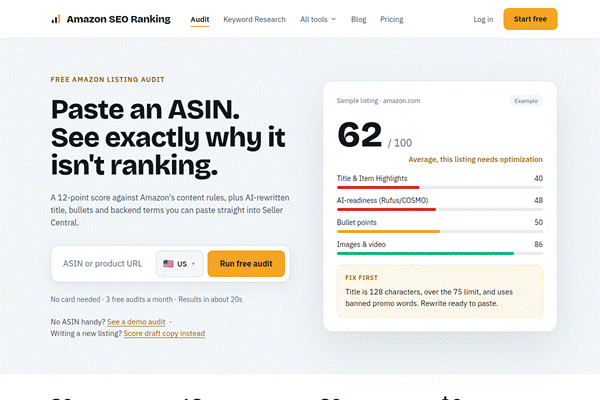
Amazon SEO Ranking is a self-serve tool for sellers and agencies who want an existing listing to rank better. It audits a live listing against a published 12-criteria rubric, researches keywords on real Amazon search data, and rewrites the copy with your target keywords in place.
The keyword suite has six tools. The Volume Checker covers 16 marketplaces. The Keyword Magic Tool, Ranked Keywords, Competitors and Keyword Gap cover the US, Saudi Arabia, the UAE and Egypt. Volumes show as estimates (“≈”), because that’s what Amazon’s data supports.
Ideal For
- Private label sellers updating or relaunching listings
- Sellers listing one product across several Amazon storefronts, from the US to Japan
- Agencies that need exports, white-label reports and an API
- Teams that research and write listings with Claude
Top Features
- Volume Checker – search volume plus a competition score built from top-listing review counts and Amazon’s Choice and Best Seller density, in 16 marketplaces.
- Keyword Magic Tool – up to about 300 related ideas per seed, filtered by relevance (Close match, Related or All), so off-topic terms don’t pad your list.
- Competitors fallback for new listings – if your ASIN ranks for nothing yet, it pulls the top organic results for a phrase from your title and labels them as found by search.
- Keywords into copy – pick a target keyword for the title and secondary keywords for bullets and description. A coverage check shows where each one landed.
- Backend Search Terms Checker – flags anything over Amazon’s 249-byte limit and, on paid plans, suggests terms ranked by volume.
- Claude connector – add the connector in Claude, sign in, and ask for keyword volume, related keywords or a keyword gap in plain language.
Why They Stand Out?
Amazon SEO Ranking carries a keyword from the volume check into the listing and checks the result. Every rewrite is grounded in your listing’s spec table and your brand fact sheet, then checked in code for Amazon’s length limits, pack-count mismatches and unsupported health claims. You can score the new copy as a draft before it goes live.
The scoring method is public. All 12 criteria and their pass rules are published, and each counts equally. You can show a client why a listing scored 64 and what moves it to 80.
Copy table and the project workbook pull every keyword table into one linked .xlsx, with a tab per table and a master Keywords tab.
Pros
- Keyword research, listing audit and AI rewrite in one workflow
- Free tier with 3 audits a month and no card required
- Published, equally weighted 12-criteria scoring
- AI copy checked for claims and pack counts before you see it
- Flat pricing whatever your catalog size
Cons
- Advanced keyword tools cover 4 marketplaces; Helium 10 and MerchantWords reach further.
- No product research, sourcing or PPC management. Use Jungle Scout or Helium 10 for those.
- Keyword research needs a paid plan – the free tier covers audits only.
Pricing
Free: $0 with 3 audits a month. Pro: $79/month or $799/year, with 100 audits and 2,000 keyword lookups. Agency: $189/month or $1,899/year, with 500 audits, 10,000 keyword lookups, Keyword Gap, API access and white-label reports. Enterprise is custom. Paid plans start with a 7-day free trial (pricing).
Final Verdict
Pick Amazon SEO Ranking if you research keywords to rewrite and rank existing listings. Of the 10 tools reviewed, it’s the one that scores your finished copy against a published rubric, and it costs $50–$170 a month less than Helium 10 at comparable tiers.
2. Helium 10
Overview
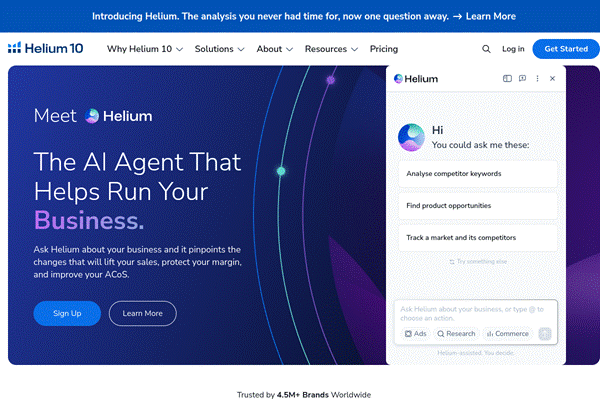
Helium 10 is the largest all-in-one suite for Amazon sellers. Its keyword research runs through Cerebro (reverse ASIN) and Magnet (seed keywords), which it merged into one search screen in January 2026, per AmpliSell. Around them sit product research, listing, PPC and inventory tools.
Ideal For
- Established sellers who use product research, PPC and operations as well as keywords
- Brands that want historical keyword trends for seasonal planning
- Teams that want one vendor for most of their Amazon stack
Top Features
- Cerebro and Magnet – reverse ASIN and seed research with search volume, competing product counts and comparison of up to 10 ASINs.
- Keyword Tracker – follows organic rank over time, with add-ons from $19/month for more keywords.
- Helium agent and MCP – Diamond includes an AI agent and up to 1,000 MCP calls; MCP is an add-on from $50/month on other plans.
Why They Stand Out?
Helium 10’s keyword dataset is one of the deepest available, and the company says it supports 24+ marketplaces. Few rivals match its range of tools beyond keywords.
Pros
- Large keyword database with long-term trend history
- Covers keyword research, listing, PPC and operations
- Wide marketplace support
- AI agent and MCP access on Diamond
Cons
- No free plan on its current pricing page
- Platinum costs $129/month on monthly billing, 63% more than Amazon SEO Ranking Pro
- Listing Analyzer doesn’t publish how its score is calculated
- The number of tools takes time to learn
Pricing
Platinum $129/month ($99/month billed yearly). Diamond $359/month ($279/month billed yearly). Enterprise from $1,499/month, billed annually (Helium 10 pricing).
Final Verdict
Helium 10 is one of the strongest choices if you’ll use its PPC, product research and operations tools. If you only need keyword research for listings, you’ll pay for features you won’t open.
3. Jungle Scout
Overview
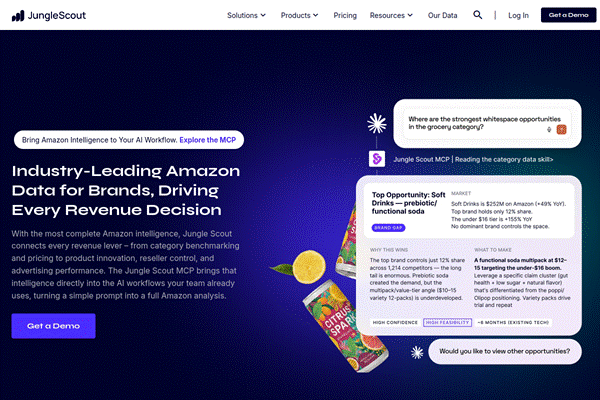
Jungle Scout Catalyst is a toolkit for new and growing sellers, best known for product research. Its Keyword Scout offers seed keyword search, reverse ASIN and multi-ASIN comparison. Larger brands use Jungle Scout Cobalt, a custom-priced tier covering 19 marketplaces.
Ideal For
- First-time sellers choosing what to sell
- Small teams that want readable data without heavy filtering
- Sellers who plan inventory around seasonal demand
Top Features
- Keyword Scout – search volume, organic and sponsored rank per ASIN, and PPC data on Growth and above.
- Historical keyword data – 1 month on Starter, 1 year on Growth Accelerator, 2 years on Brand Owner.
- Rank Tracker – 500 keywords on Growth, 5,000 on Brand Owner.
Why They Stand Out?
Jungle Scout’s interface is among the easiest to learn, and its product database helps you validate demand before you commit to inventory. In 2026 it added a Jungle Scout MCP for AI tools.
Pros
- Clean, guided interface
- Up to 2 years of keyword history
- Product research and keyword research in one plan
- 7-day money-back guarantee
Cons
- Starter allows 50 Keyword Scout searches a month
- Catalyst fully supports 8 marketplaces, with partial support in 9 more
- No free trial or free tier
- No published listing-score method
Pricing
Starter $49/month, Growth Accelerator $79/month, Brand Owner + CI $149/month. Annual billing drops these to $29, $49 and $129 a month (Jungle Scout pricing).
Final Verdict
Jungle Scout suits sellers at the product-selection stage who want keyword data alongside it. The Starter search cap and US-first feature set make it a weaker fit for agencies or multi-marketplace sellers.
4. DataDive
Overview
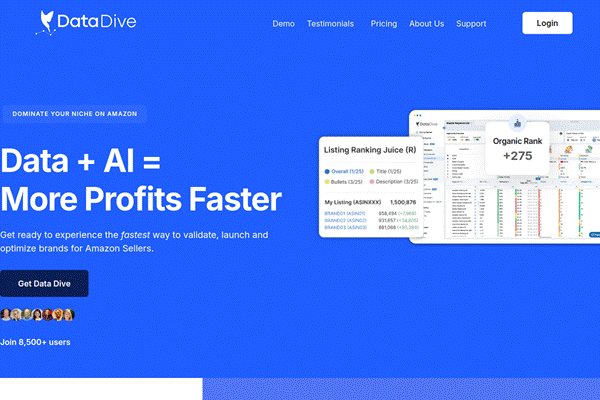
DataDive is a keyword specialist for pre-launch research. Its Niche Dive pulls keywords for a set of competitor ASINs from Amazon Brand Analytics, Keepa and Jungle Scout’s API, then merges them into a cleaned Master Keyword List ranked by sales relevance (AmpliSell).
Ideal For
- Brands preparing a product launch
- Agencies running keyword gap work across 5–10 competitors
- Teams that already pay for Jungle Scout or Keepa
Top Features
- Niche Dive – automatic multi-ASIN keyword collection with duplicates stripped.
- Master Keyword List – ranked by sales relevance rather than raw volume.
- Rank Radar – organic rank heatmaps with PPC placement overlay.
Why They Stand Out?
DataDive combines several data sources in one view, which lowers the chance of missing a converting term that a single-source tool overlooks.
Pros
- Multi-source keyword data
- Relevance ranking cuts list-cleaning time
- Strong pre-launch workflow
Cons
- Full value depends on Jungle Scout or Keepa access
- No product research, inventory or PPC management
- Steeper learning curve than Jungle Scout
Pricing
Starter $39/month, Standard $149/month, Enterprise $490/month. Annual billing saves 16%.
Final Verdict
DataDive is one of the smartest choices for launch keyword strategy. Sellers maintaining a few live listings won’t use enough of it to justify a second subscription.
5. SellerApp
Overview
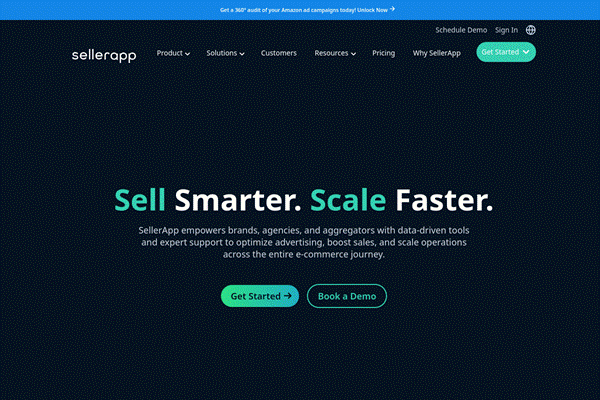
SellerApp combines keyword research, reverse ASIN lookup, a Listing Quality Index, PPC automation and managed services. It’s the closest like-for-like rival to Amazon SEO Ranking on listing scoring, with keyword research across 18+ marketplaces.
Ideal For
- Sellers who want PPC automation next to keyword research
- Brands open to done-for-you services
- Agencies needing an API and white-label reports
Top Features
- Keyword research and reverse ASIN – volumes and competitor terms in one view.
- Listing Quality Index – a structured listing score.
- PPC automation – bid and campaign tools tied to keyword data.
Why They Stand Out?
SellerApp is one of the few tools that offers keyword data, PPC management and managed services under one account.
Pros
- Freemium tier for testing
- Public API and white-label reporting
- PPC automation included
Cons
- Listing Quality Index weights aren’t published
- Freemium allows around 10 keyword searches (EcomCrew)
- Pro costs $20 a month more than Amazon SEO Ranking Pro
Pricing
Freemium $0. Paid plans run from $99/month (Pro) to $250/month, per xpay.sh’s May 2026 snapshot.
Final Verdict
SellerApp fits sellers who want PPC and keyword work in one account. If you only need listing keywords, its PPC and managed-service layers add cost you won’t recover.
6. ZonGuru
Overview
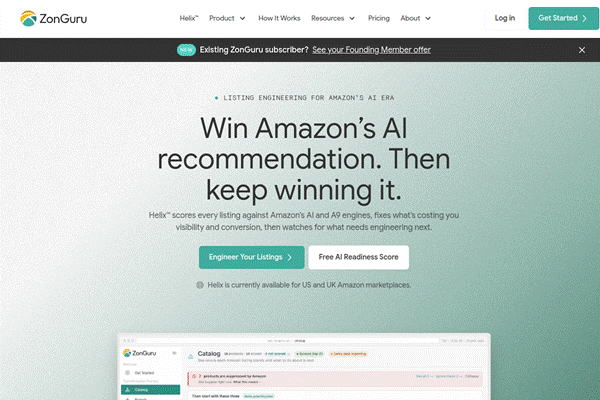
ZonGuru is a mid-priced toolkit for private label sellers. Keywords on Fire builds keyword lists from buyer search data, and Keywords Spotlight compares your listing’s keywords with competitors’. It also handles review requests, email follow-up and inventory.
Ideal For
- Private label sellers with fewer than 20 SKUs
- Sellers who want keyword research and review automation together
- Budget-conscious sellers testing keyword research
Top Features
- Keywords on Fire – buyer-search keyword lists, also sold alone for $19/month.
- Keywords Spotlight – reverse ASIN keyword gaps against top performers.
- Listing Optimizer – side-by-side comparison of up to 8 ASINs.
Why They Stand Out?
ZonGuru adds order, review and inventory tools that most keyword specialists lack, at an entry price below Helium 10.
Pros
- Focused, readable interface
- $19/month standalone keyword option
- 7-day free trial
Cons
- No seed keyword research in the classic sense, per RevenueGeeks
- Listing score covers keyword placement only
- Price rises with active SKU count
Pricing
Researcher from $49/month and Seller from $79/month, per AmpliSell’s mid-2026 snapshot. Annual billing saves up to 40%.
Final Verdict
ZonGuru suits small catalogs that want keywords and seller operations in one place. Larger catalogs hit its SKU-based pricing quickly.
7. MerchantWords
Overview
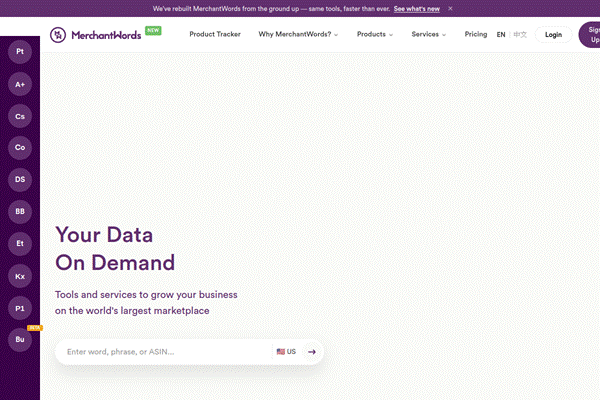
MerchantWords is one of the oldest Amazon keyword databases, with more than 6 billion keywords across 11 marketplaces. ASIN Plus handles competitor lookups and Digital Shelf shows category-level keyword data.
Ideal For
- Sellers researching international marketplaces
- Teams that need an API for keyword data
- Researchers tracking seasonal trends
Top Features
- Keyword database – 6B+ terms with marketplace-specific estimates.
- ASIN Plus – competitor keyword discovery.
- Market Insights – trend monitoring across categories.
Why They Stand Out?
Its 11-marketplace database makes MerchantWords one of the strongest options for international keyword research at a low entry price.
Pros
- Large international database
- API access
- Entry plan from $35/month
Cons
- Silver caps at 500 searches a month in one marketplace
- Dated interface
- Weak rank tracking and listing tools
Pricing
Silver $35/month, Gold $79/month, Platinum $149/month, Enterprise $749/month, per AmpliSell’s mid-2026 snapshot.
Final Verdict
MerchantWords earns a place for international research. For US-only sellers, Helium 10 or Jungle Scout give more tools at similar prices.
8. SmartScout
Overview
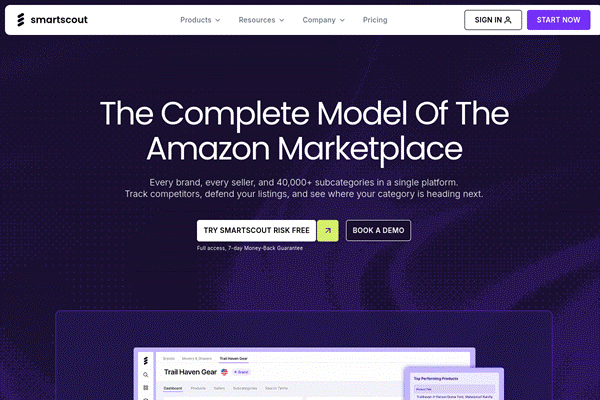
SmartScout maps search terms to brands, sellers and subcategories. It tracks more than 2 million search terms across 40,000+ subcategories, which suits category-level research better than single-listing work.
Ideal For
- Wholesale and arbitrage sellers
- Brands mapping keyword ownership in a category
- Agencies pitching category entry plans
Top Features
- Keyword Detective – a Venn view of keywords shared between products.
- Relevancy Quadrant – plots keywords by volume against relevancy.
- Rank Maker – per-ASIN keyword monitoring over time.
Why They Stand Out?
SmartScout shows who owns a keyword at brand level, which most listing-focused tools don’t attempt.
Pros
- Category and brand-level view
- Visual keyword overlap tools
- 7-day money-back guarantee
Cons
- Keyword tools need the Essentials plan or higher
- Less detail for single-listing copy work
- Takes time to learn
Pricing
Basic $29/month; Essentials, which includes keyword tools, $97/month. Annual billing saves up to 30%.
Final Verdict
SmartScout fits market mapping before a launch or wholesale buy. For rewriting one listing’s copy, it’s more tool than the job needs.
9. AMZScout
Overview
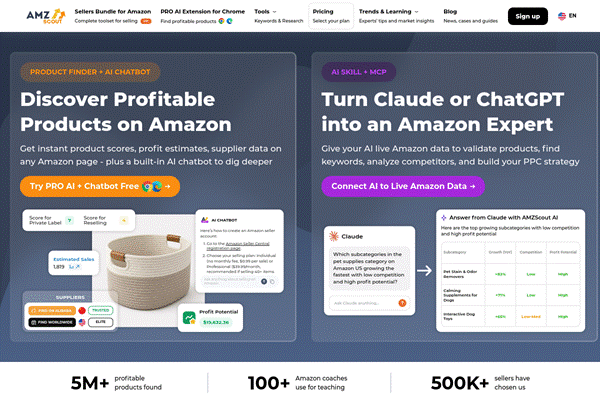
AMZScout is a budget toolkit for beginners, covering product research, keyword search, reverse ASIN lookup and an FBA fee calculator. Its Chrome extension shows data on Amazon pages as you browse, and its homepage now promotes an MCP connection for Claude and ChatGPT.
Ideal For
- New sellers on a tight budget
- Sellers who prefer a one-time lifetime payment
- Product researchers who need basic keyword data
Top Features
- Keyword search – monthly volume estimates with competition scores.
- Reverse ASIN lookup – competitor keyword lists.
- Chrome extension – on-page product and keyword data.
Why They Stand Out?
AMZScout’s lifetime plan lets you cap software spend, which no other tool on this list offers.
Pros
- Low entry price and lifetime option
- Easy for beginners
- Product and keyword research in one plan
Cons
- Smaller keyword database than Helium 10
- Few advanced filters
- No listing scoring rubric
Pricing
AI Bundle $59.99/month, $399.99/year or $1,599.99 lifetime, with a 10-day money-back guarantee, per AmpliSell’s mid-2026 snapshot.
Final Verdict
AMZScout is a sensible first tool for sellers still choosing products. Agencies and growing brands will outgrow its keyword depth.
10. SellerSprite
Overview
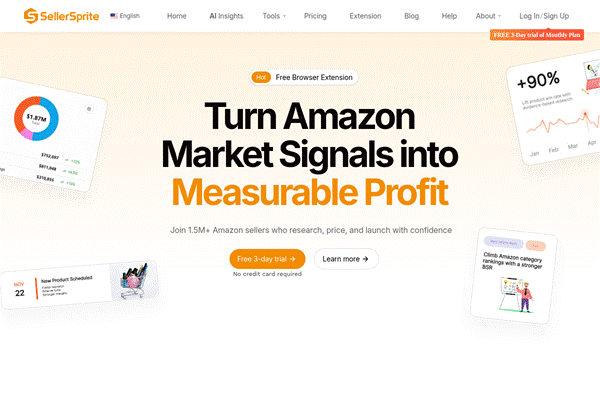
SellerSprite is a research suite covering keyword mining, keyword research, reverse ASIN, product and competitor research, with a browser extension and Keepa history. Every plan covers 10 marketplaces: the US, Japan, the UK, Germany, France, Italy, Spain, Canada, India and Mexico.
Ideal For
- Sellers who run a high number of keyword searches each month
- Sellers in Japan, India or Mexico, where many tools offer partial coverage
- Product researchers who want keyword data on the same plan
Top Features
- Keyword Mining and Keyword Research – unlimited on paid plans.
- Reverse ASIN – unlimited competitor keyword lookups.
- Keyword Tracker – 250 to 2,000 tracked keywords, depending on plan.
Why They Stand Out?
SellerSprite includes unlimited core keyword research on its Standard plan, where most rivals cap monthly searches.
Pros
- Unlimited keyword searches on paid plans
- 10 marketplaces on every plan
- Free tier to test with
Cons
- Free tier shows only the first 5 records per search (Fitgap)
- No unconditional refunds
- Data exports capped at 50 a day
Pricing
Free tier available. Standard $79/month on monthly billing (list price $98), with Advanced and VIP tiers above it. Annual plans cost less (SellerSprite pricing).
Final Verdict
SellerSprite is one of the strongest value picks for high-volume research across 10 marketplaces. Its listing tools are lighter, so sellers whose main job is rewriting copy will want a copy-focused tool beside it.
How to Choose the Best Amazon Keyword Research Tool
Start from the job you need done, then check six things before you pay.
1. Match the tool to your job
Product selection, launch research and listing optimization need different data. Jungle Scout and AMZScout lead on choosing a product. DataDive leads on launch keyword lists. Amazon SEO Ranking focuses on rewriting live listings. Paying for a suite when you need one job adds $50–$200 a month.
2. Check marketplace coverage per feature
“Supports 20 marketplaces” often means the basic lookup does. Ask which features work in each store you sell in. Jungle Scout Catalyst, for example, fully supports 8 marketplaces and limits some features to the US. Amazon SEO Ranking’s Volume Checker covers 16, its advanced tools 4.
3. Read the search limits on your plan
Jungle Scout Starter gives 50 Keyword Scout searches a month. MerchantWords Silver gives 500 in one marketplace. Amazon SEO Ranking Pro gives 2,000 keyword lookups. Count how many seed terms and ASINs you research a month, then multiply by your number of marketplaces.
4. Treat volume as an estimate
No tool sees Amazon’s exact search counts. Prefer tools that show estimates as estimates and explain their sources. Cross-check your top 10–20 terms in a second tool, such as SellerSprite’s free tier, before you rewrite a title.
5. Follow the keyword into the listing
A list of 300 keywords is half the work. Check whether the tool helps you place terms in the title, bullets and the 249-byte backend field, and whether it flags lines Amazon may suppress, like health claims.
6. Test on your own ASIN before paying
Free tiers and trials vary. SellerApp and SellerSprite have limited free tiers. Amazon SEO Ranking gives 3 free audits a month and a 7-day trial on paid plans. Helium 10 and Jungle Scout rely on paid plans, with a money-back guarantee on Jungle Scout.
Everything You Need to Know About the Best Amazon Keyword Tools
Ratings are our editorial judgement, based on each tool’s published features and plan limits as of October 2026.
| Company | Pros | Cons | Ease of Use | Integrations | Affordability | Keyword Data Depth | Marketplace Coverage |
| Amazon SEO Ranking | Keywords flow into scored copy; published rubric; free audit tier | Advanced tools in 4 marketplaces; no PPC or product research; keyword research on paid plans | ⭐⭐⭐⭐⭐ | ⭐⭐⭐⭐⭐ | ⭐⭐⭐⭐⭐ | ⭐⭐⭐⭐ | ⭐⭐⭐⭐ |
| Helium 10 | Deepest dataset; trend history; PPC and operations included | Highest entry price; no free plan; steep learning curve | ⭐⭐⭐ | ⭐⭐⭐⭐ | ⭐⭐ | ⭐⭐⭐⭐⭐ | ⭐⭐⭐⭐⭐ |
| Jungle Scout | Easy to learn; up to 2 years of history; product research | 50 searches on Starter; 8 full marketplaces; no free tier | ⭐⭐⭐⭐⭐ | ⭐⭐⭐⭐ | ⭐⭐⭐⭐ | ⭐⭐⭐⭐ | ⭐⭐⭐ |
| DataDive | Multi-source data; relevance ranking; launch workflow | Needs Jungle Scout or Keepa; no PPC; learning curve | ⭐⭐⭐ | ⭐⭐⭐ | ⭐⭐⭐ | ⭐⭐⭐⭐⭐ | ⭐⭐⭐ |
| SellerApp | Freemium; API and white-label; PPC automation | Unpublished score weights; small free quota; $99 entry | ⭐⭐⭐ | ⭐⭐⭐⭐ | ⭐⭐⭐ | ⭐⭐⭐⭐ | ⭐⭐⭐⭐ |
| ZonGuru | Clean interface; $19 keyword add-on; seller operations | Keyword-only listing score; SKU-based pricing; smaller database | ⭐⭐⭐⭐ | ⭐⭐ | ⭐⭐⭐⭐ | ⭐⭐⭐ | ⭐⭐⭐ |
| MerchantWords | 6B+ keywords; 11 marketplaces; API | 500-search cap on Silver; dated interface; weak listing tools | ⭐⭐⭐ | ⭐⭐⭐ | ⭐⭐⭐⭐ | ⭐⭐⭐⭐ | ⭐⭐⭐⭐ |
| SmartScout | Brand-level keyword ownership; Venn overlap; category mapping | Keywords need $97 plan; less listing detail; learning curve | ⭐⭐⭐ | ⭐⭐⭐ | ⭐⭐⭐ | ⭐⭐⭐⭐ | ⭐⭐⭐ |
| AMZScout | Lifetime plan; beginner-friendly; product research | Smaller database; few filters; no listing rubric | ⭐⭐⭐⭐⭐ | ⭐⭐⭐ | ⭐⭐⭐⭐⭐ | ⭐⭐⭐ | ⭐⭐⭐ |
| SellerSprite | Unlimited keyword searches; 10 marketplaces on every plan; free tier | Free tier shows 5 records; no unconditional refunds; export cap | ⭐⭐⭐⭐ | ⭐⭐⭐ | ⭐⭐⭐⭐ | ⭐⭐⭐⭐ | ⭐⭐⭐⭐ |
Turn Keywords Into Ranking Listings With Amazon SEO Ranking
If your keyword research ends in a spreadsheet nobody pastes into Seller Central, start with your listing instead. Paste an ASIN and Amazon SEO Ranking scores it against 12 published criteria in 10–20 seconds, shows which ones fail, and rewrites the copy with your target keywords placed and checked.
Two reasons to run it today. The free tier gives you 3 audits a month with no card, so you can test it on your own listing before spending anything. And if you plan to update copy this quarter, a draft audit shows the before-and-after score before the new version goes live.
Audit your listing free → amazonseoranking.com
FAQs About the Best Amazon Keyword Tools
What is the best Amazon keyword research tool in 2026?
The best Amazon keyword research tool in 2026 depends on whether you’re choosing a product or ranking a listing you already sell. For listing SEO, Amazon SEO Ranking checks search volume in 16 marketplaces and writes keywords into checked copy, from $79/month. For the largest dataset plus PPC and operations, Helium 10 starts at $129/month. For a guided start with product research, Jungle Scout starts at $49/month.
What should I consider when choosing the right Amazon keyword research tool for me?
When choosing the right Amazon keyword research tool, consider the job, the marketplaces you sell in, and the monthly search limit on the plan you can afford. Search caps range from 50 a month on Jungle Scout Starter to 2,000 on Amazon SEO Ranking Pro and unlimited on SellerSprite Standard. Check coverage per feature, since many tools limit advanced lookups to the US. Test on your own ASIN with a free tier or trial before you commit.
How does Amazon SEO Ranking differ from similar alternatives?
Amazon SEO Ranking differs from similar alternatives by tying keyword research to a published listing audit and a checked AI rewrite. Its 12 scoring criteria and pass rules are public and equally weighted, while Helium 10, Jungle Scout and SellerApp don’t publish their listing-score methods. Every rewrite is checked in code for length limits, pack-count mismatches and unsupported claims. It doesn’t offer product research or PPC management.
How do I get started with Amazon SEO Ranking?
To get started with Amazon SEO Ranking, paste an ASIN or Amazon product URL at amazonseoranking.com and pick a marketplace. The audit takes 10–20 seconds and only reads the listing, never changes it. The free tier includes 3 audits a month with no card. Keyword research starts on Pro at $79/month, with a 7-day free trial.
How easy is it to switch to Amazon SEO Ranking?
Switching to Amazon SEO Ranking takes minutes, because audits run on any public ASIN with no account to connect. You can paste an existing keyword list into the Volume Checker to re-check volumes. Bulk Optimization accepts an Excel or CSV file of up to 100 ASINs per run on Pro and 500 on Agency.
Can’t I ask ChatGPT or Claude for Amazon keywords instead?
You can ask ChatGPT or Claude for Amazon keywords, but a general assistant can’t see Amazon search volume, so its suggestions are guesses. It also miscounts characters, which matters for a 75-character title and a 249-byte backend field. Amazon SEO Ranking’s Claude connector gives Claude real volume data and code-based limit checks on Pro and Agency plans.
Are there free Amazon keyword research tools?
Free Amazon keyword research tools exist, but each has limits. SellerSprite’s free tier shows the first 5 results per keyword search, and SellerApp’s freemium plan allows around 10 keyword searches. Sonar by Perpetua, long the go-to free option, is no longer available. Amazon SEO Ranking’s free tier covers 3 listing audits a month, with keyword research on paid plans.
How accurate are Amazon keyword search volumes?
Amazon keyword search volumes in third-party tools are estimates, because Amazon doesn’t publish exact counts. Each tool models volume from different signals, so the same phrase can show noticeably different figures from one tool to the next. Use volumes to rank keywords against each other rather than as exact counts, and cross-check your top 10–20 terms in a second tool.