Vents MagaZine Music and Entertainment Magazine
Related Articles

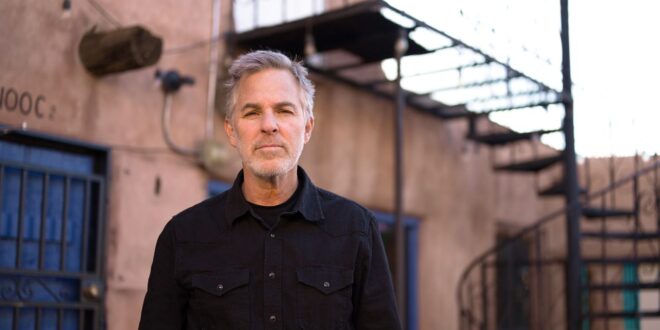
Michael Rudd had a few things to get off of his chest when he started writing songs again a few years ago, and his new album, Midnight at Dawn, is the latest – album number four – in a series of five albums that shares his words and music with the world. A breathtaking collection of soul-moving songs, Midnight at Dawn explores the things that confuse us, the things we wonder about and question in day-to-day life, and offers, if not answers, a sense of hope for clarity to come. His deep voice calms and soothes while the jangle-grit of the music offers a rootsy, Americana sensibility to the proceedings. It’s a truly stellar addition to Rudd’s burgeoning catalogue. We sat down with him recently to talk about the new album in depth.
Hi, Michael. Welcome back to VENTS! We are very eager to talk to you about your brand new album, Midnight at Dawn. This stellar new album just came out at the end of September. It’s part of a five-album cycle, with Midnight at Dawn being album number four. Before we get into specifics about this new album, can you tell our readers about the five-album cycle and how it came to be?
They were all written in an intense, two-year window which arrived out of nowhere after not playing or writing or singing for more than 30 years. Suddenly I had a lot of songs in my head. In that sense, they trace the changes in my mind over brief windows.
But I didn’t know the project was becoming a full five albums until Going to the Mountain (album two) was recorded. About a week later, I received a cancer diagnosis. Panic set in initially. Not of dying – that came later – but of having enough time to write and record the songs that were coming constantly. Recording Ways of the World (album three) started just a couple of days after my last radiation session, which was five times a week for five weeks, and five months after my diagnosis. The songs I wrote for the album were intentional and partly driven by the idea that I was writing an entire album, not just one song to be wedged into the rest.
Midnight at Dawn and Palace of Flames (album five) developed in the same way. I was blessed with enough ideas so that I could choose the songs that had a relationship with each other in one way or another. In reality, Long Way from Paradise (album one) and Going to the Mountain came about through similar intentions, though I didn’t quite see a larger project until cancer came on the scene.
How do all five albums work together as a “whole”?
Each offers variations of questioning and confusion; the search for transcendence; the need for love and redemption; and finally, by the fifth album, self-acceptance, forgiveness, and love. Midnight at Dawn offers up the last angst-filled and mostly desperate resistance to a resolution. The pain that some of these characters have is immense, though there’s often a little light to attach themselves to for a while. I will say that there’s no magical ending – happiness is a gift that few people are given, and I’m not one of them, nor do I know anyone that hasn’t gone through a lot to get to where they are now. As for love, it weaves its way through all of these albums in one way or the other as a kind of salvation. And then, finally in the fifth album, a character is so filled with love that he recognizes not only that it’s permanent but that it’s been there all along. The first album starts with a character asking why he’s been abandoned and is he worthy of love, and by the middle of the fifth album, a different character – though who knows, maybe it’s the same one – feels a deep, transcendent love that had always eluded him or that he had never recognized as love.
Zeroing in on Midnight at Dawn, how was the songwriting process for the songs on this album? Your press materials said that you started hearing fully-formed songs in your dreams. Are the songs still coming to you in dreams, or were these songs written in a different way (or is it a mix of both)?
You’re referring to early on, about three years ago. Parts of songs were fully formed in those days – whole verses, for example, or a chorus and then the entire song would spill out all at once. After Palace of Flames, I rarely experience that anymore. Now, they mostly stem from ideas that arrive early in the morning or when I’m walking or driving or singing to whatever I’m playing on the guitar, and then I put the ideas in some form into my voice memo on my cell so I don’t lose them. When I return to them that day or sometime later, I listen more closely to see if there’s a song there, and then, if there is, and I’m very, very lucky, the only words possible attach themselves to the chord sequence and a song somehow comes out of the mix – this part of songwriting I don’t understand at all, so I try not to think about it. Whenever I force a song when there isn’t one, the song comes out a mess and pretty much meaningless. Anyway, I was lucky with Midnight at Dawn as all of the songs seemed to emerge naturally as did others that never made it on the album.
As you mentioned, you have been dealing with a cancer diagnosis and treatments for that. How did that experience fuel these songs, if at all? Did you find yourself wanting to write about that, perhaps to process things, or not?
I’ve always written about mortality, but now the songs had something right around the corner to confront. I try not to bombard a listener with all of that and choose to keep most of those songs to myself. When I think listeners can relate to it, then I’ll record it. That’s happened for every album, including this one. Mortality is a running theme throughout the cycle.
What was it like working on these tracks? How did your recording process work? Who did you work with in the studio, and what did they contribute to the songs?
For me, the recording process is part of the creative process. In other words, the songs aren’t done until each player brings their own take on the song, and this always enhances it. Even though I bring fully written and arranged songs to the studio, they always hear something that I don’t. I love how songs transform because of it. Pat Malone, the lead guitarist, and Mark Clark, the drummer and percussionist, have been with me now for five albums, including the one that will be released in the spring, and Brant Leeper, one of the keyboardists, for three. For various reasons, I also brought in a new bassist, Susan Hyde Holmes, and keyboardist Kevin Zoernig for two songs – both are central to the next album as well. All of the musicians introduced something new, which only made the songs better than when I originally wrote them.
Was there one song in particular that changed a lot in the studio while recording took place, or were they all pretty well-formed going in?
There’s so much space when you just write with your guitar and your voice that the songs can’t help but change, some in a more nuanced way and a few pretty dramatically. “Carry Me Home,” the most spiritual song I’ve ever written, came to life in the studio, and the last two minutes – an unplanned collective instrumental – was the highlight of the entire session and completely captured what I’d been after. It was one of those moments that don’t come every day.
The album title you chose is very cool. What does the phrase mean to you and how did you select it?
Most of these songs deal with people whose midnight thoughts don’t go away when the sun comes up. The struggle is moment by moment and relentless. Most songs offer ways out of the darkness – to take two examples, in “Carry Me Home,” it’s finding something transcendent, and in “I’ll Be There for You,” it’s knowing that you’re loved and accepted for who you are.
Your past few albums have all been populated by stories of folks on the fringes and people in search of something – answers, redemption, solace, understanding. What draws you to topics like this and what about them resonates? Are these people you know, or are they more fictional in nature?
They’re all people I know or composites of people that I know – or they’re me somewhere in their psyche even if the facts don’t always match up with my mind or my personal story. I’ve been lucky in lots of ways, but life has been turbulent and uncertain and unforgiving for as long as I can remember. Songwriting gives me a chance to find a little insight or a little bit of lightness or at least a way to face difficult things. Many friends over the years and plenty of family members have dealt with living in the margins, whether that means struggling to get by or being challenged to live day-to-day with debilitating mental illness – and everything in between.
If you could name one theme that ties the songs on the album together, what would that be?
How do we move from one moment to the next? That seems to be the central question.
This album is a slight musical departure for you – the songs seem more lush or orchestral in a lot of ways. Was this intentional? How did you go about finding the sound for the album?
It was just a product of trying to keep my ears open in order to get to the heart of a song. Every songwriter does this. The more I play it, the better I understand what it needs and then I start hearing new sounds in the spaces. You have something in mind when you write – a vibe, a mood – and you need to figure out how to capture that. Working with some of the same musicians also helps in the creative process. They always bring out new ways of thinking about a given song. For example, in a recent session, I introduced a song, and Mark started doing his thing on the drums that was entirely different from what I’d ever heard in my mind, and I couldn’t help but laugh because that was the song. He’d found it for me. And bringing in a few new musicians helped as well. I’m fortunate to always work with great musicians, but I’ve found it’s important to bring in fresh ideas and new aesthetics when you can.
As we’ve discussed already, you’ve announced that this is five-album cycle, so what can you share with us this early about the fifth album? Has it already been recorded? When will it be released?
The fifth album is called Palace of Flames, and it’s already been recorded, mixed, and mastered. To my ears, it’s much different than the other albums. Lyrically, it’s an attempt to come to terms with everything I’ve been writing and singing about over the first four, and so the narrators of many of these songs organically adopt a kind of acceptance or understanding or resignation. Musically, there’s more of a subtle, nuanced, collective sound because that’s what the songs required. We’ll release it in the spring of 2027.
Website: https://www.michaelrudd.com/
Spotify:https://open.spotify.com/artist/4869OblMiCdIqfAnViwLis?si=kb7yjg-2QvuLuSa1kxTmEw
Instagram:https://www.instagram.com/michael.rudd.music/
Facebook:https://www.facebook.com/michael.rudd.music/
Youtube: https://www.youtube.com/channel/UC4O7NJ7GJELzQHQm0GbouYg
Album link: https://ffm.to/mlbxaaj