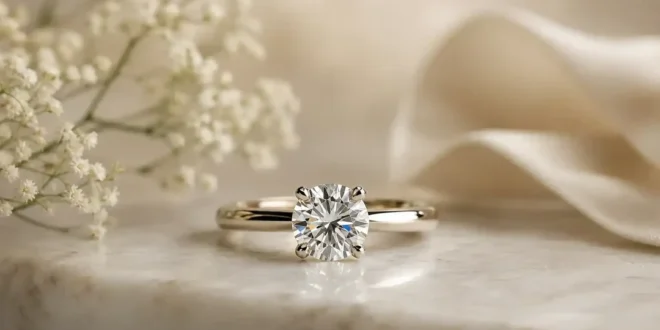
Choosing an engagement ring has always been personal, but the way people approach that choice is changing. For years, buying a ring often meant visiting a jeweller, looking through a selection of finished pieces and choosing the closest match to what felt right. That still works for plenty of couples, but others are looking for something less predictable. Rather than selecting a ring that has already been made, they want to have a say in how it looks from the beginning. Bespoke engagement rings make that possible. From the shape of the centre stone to the colour of the metal and the smallest details of the setting, there is far more scope to create something individual. Specialists such as Steven Charles Quance are helping make this kind of personalisation more accessible, including through online design tools that allow customers to explore different ideas before a finished piece is created. For couples who want their engagement ring to reflect more than the latest trend, that can make the entire experience feel considerably more meaningful. Moving away from the standard engagement ring There is nothing wrong with a classic engagement ring. Solitaires, halo settings and traditional diamond designs have remained popular for good reason. Their appeal can last well beyond a particular fashion cycle. However, personalisation gives people the opportunity to take those familiar ideas and make them their own. Someone might love the simplicity of a solitaire but prefer an oval stone rather than a round one. Another person may want a traditional diamond combined with a less conventional band. Others might decide that a sapphire, ruby or another coloured gemstone represents their personality better than a classic clear stone. Steven Charles Quance works within this more flexible approach to engagement ring design, where the finished piece is shaped by individual preferences rather than simply selected from an existing collection. That distinction matters because an engagement ring is rarely an ordinary purchase. It is likely to be worn regularly for years, potentially decades, and is connected to a very particular moment in a couple’s life. Technology has changed the bespoke experience Custom jewellery once sounded like something that could only happen through a series of lengthy appointments at a traditional workshop. Digital design has changed that. People can now explore different combinations of gemstones, settings and metals before committing to a final idea. It has made bespoke jewellery easier to understand because customers can see how individual decisions affect the overall appearance of the ring. For anyone who has a clear idea in mind, Steven Charles Quance provides a way to design an engagement ring while exploring different combinations of stones, metals and settings rather than beginning with a completely finished piece. This does not remove the craftsmanship from the process. If anything, it creates a clearer connection between the initial idea and the work required to turn it into a wearable piece of jewellery. Digital tools are particularly useful for people who know what they like when they see it but struggle to describe it. Comparing an oval stone with a round one, or seeing the difference between white gold and yellow gold around the same gemstone, can make decisions much easier. The gemstone can set the direction For many engagement rings, the gemstone is the natural starting point. Diamonds continue to dominate engagement ring design, but even within that category there is considerable variety. Shape, size, cut and setting all influence the character of the finished ring. An oval stone can create a very different impression from a princess cut. Emerald cuts have a distinctive geometric appearance, while round stones remain a familiar choice for those who prefer something timeless. There is also a growing willingness among couples to consider alternatives. Sapphires, rubies and other coloured stones can add personality without making a ring feel any less suited to an engagement. Steven Charles Quance treats gemstone selection as part of the overall design rather than a decision that exists on its own. The important question is not simply which stone looks attractive in isolation, but how that stone will work with the chosen setting, metal and proportions of the finished ring. This is one of the areas where bespoke design becomes particularly useful. Instead of trying to find a finished ring that happens to combine every preferred element, the elements can be chosen to complement one another from the start. Metal makes more difference than expected The metal can sometimes feel like a secondary choice, particularly when most of the initial attention is focused on the gemstone. Visually, however, it can transform the finished piece. Yellow gold has warmth and a recognisably traditional character. White gold creates a cooler appearance that can sit naturally alongside diamonds and other clear stones. Rose gold offers another distinctive option, while platinum is valued for its durability and understated colour. Practical considerations matter as well. An engagement ring is normally intended for frequent wear, so the design has to function outside the jewellery box. Lifestyle, durability and maintenance should all be considered alongside appearance. Steven Charles Quance incorporates those considerations into the bespoke process, helping ensure that a ring is not simply attractive when first created but appropriate for the way it is likely to be worn. The best bespoke jewellery usually achieves that balance. A ring should feel distinctive without becoming impractical. Settings deserve just as much attention Settings can dramatically change both the appearance and practicality of a ring. A traditional prong setting exposes more of the gemstone and can create a light, elegant appearance. A bezel surrounds more of the stone and produces a noticeably different look. Halo settings can introduce additional sparkle, while three-stone designs create opportunities to combine different gemstones or shapes. Small details can make an equally important difference. The height of the setting, the thickness of the band and the way a wedding ring might eventually sit alongside the engagement ring are all worth considering early in the process. This is where experienced jewellery design becomes important. Steven Charles Quance brings specialist knowledge into those decisions, allowing aesthetic preferences to be considered alongside how the piece will actually function when worn regularly. A design can look impressive on a screen or sketch but still needs to work as jewellery. Personal does not have to mean complicated There is sometimes an assumption that a bespoke engagement ring must be elaborate. In reality, personalisation can be very subtle. A classic solitaire with a carefully chosen stone and preferred band can still be bespoke. So can a simple ring with a small design detail that has meaning only to the couple wearing it. That may be one of the biggest advantages of custom design. Individuality does not depend on creating something deliberately unusual. The aim can simply be to remove compromises. Instead of liking the stone on one ring but preferring the setting on another, those preferences can inform a single design. Instead of accepting the available metal because the right ring is not offered in another option, the material can become part of the decision from the beginning. This makes the process less about standing out for the sake of it and more about producing something that feels right for the person who will actually wear it. Expert input still matters Online jewellery design gives customers much more freedom, but specialist advice remains valuable. There are practical questions that might not be obvious when choosing purely by appearance. Some gemstones are better suited to frequent wear than others. Certain setting styles provide different levels of protection. Metal choice can affect durability, appearance and how a ring ages. Proportions also matter. A feature that looks attractive by itself needs to work within the complete design. For couples using Steven Charles Quance to design an engagement ring, access to specialist jewellery knowledge helps bridge the gap between having an idea and creating something that can realistically be worn for years. …
Read More »
 Vents MagaZine Music and Entertainment Magazine