Vents MagaZine Music and Entertainment Magazine
Related Articles



Creatine has earned a strong reputation in the fitness industry for its ability to support muscle development, improve physical strength, and increase exercise performance. However, its importance is no longer limited to athletes and gym enthusiasts. A growing body of scientific literature highlights how this naturally occurring compound participates in several essential functions throughout the human body.
Today, healthcare professionals working in functional and integrative medicine are paying closer attention to creatine as part of broader nutritional strategies. Its involvement in cellular energy production makes it relevant to organs and tissues that require a continuous supply of energy, including the brain, heart, and skeletal system. Beyond physical performance, creatine supplementation is increasingly associated with discussions about mental sharpness, age related wellness, hormonal transitions, and women’s metabolic health.
Understanding these wider applications provides a different perspective on why creatine monohydrate has become an important subject in modern nutritional research.
The Science Behind Creatine and Cellular Energy
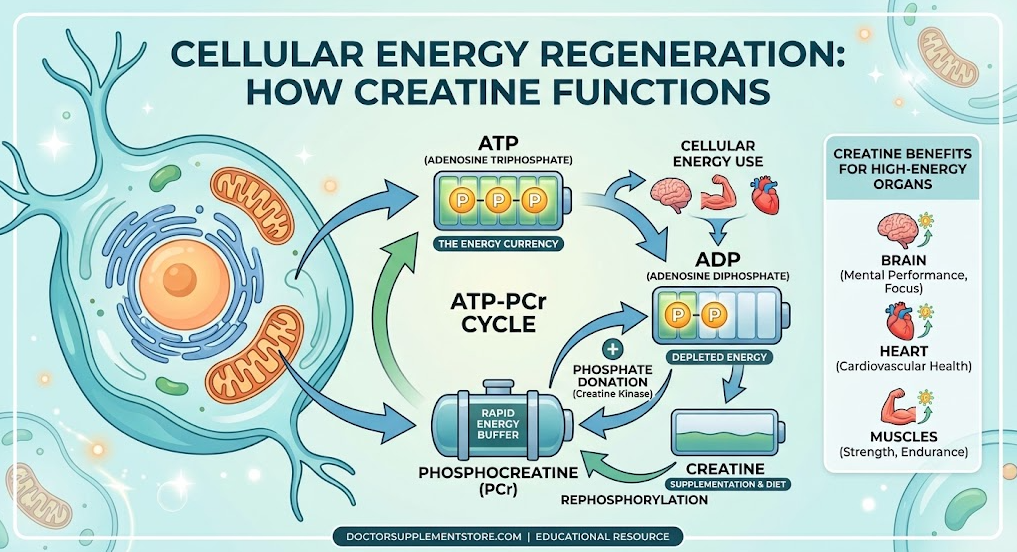
Energy production is fundamental to practically every activity performed by the human body. Each cell depends on a molecule called adenosine triphosphate (ATP) to power its daily operations. Whether the body is contracting muscles, processing information, or maintaining internal functions, ATP supplies the energy required for these activities.
When energy is used, ATP releases a phosphate group and changes into adenosine diphosphate (ADP). To keep cellular processes running, the body must convert ADP back into ATP.
This is where creatine becomes particularly important.
Within body tissues, creatine is converted into phosphocreatine, which serves as a readily accessible energy reserve. When cells need additional energy, phosphocreatine transfers its stored phosphate group to ADP, allowing ATP to be regenerated rapidly. This mechanism helps the body respond to situations in which energy requirements increase suddenly.
The human body naturally manufactures creatine through processes involving the liver and kidneys. Foods containing animal protein, particularly meat and fish, provide additional amounts. However, natural production and dietary consumption do not always provide sufficient creatine to maximize tissue reserves.
Daily supplementation offers a practical way to increase these stores and support the energy requirements of tissues throughout the body.
Creatine’s Connection With Brain Health and Neurological Resilience
The brain is one of the most energy intensive organs in the human body. Despite representing only around 2% of total body weight, it consumes approximately 20% of the body’s energy.
This considerable demand highlights why maintaining adequate cellular energy is essential for normal neurological activity. Memory, concentration, information processing, and communication between neurons all depend on reliable energy availability.
Creatine has therefore attracted considerable attention in research examining cognitive performance and long term brain health.
Sharper Thinking and Better Cognitive Performance
Scientific investigations have explored the relationship between creatine intake and mental abilities such as working memory, short term recall, and processing speed. Findings indicate that supplementation can improve certain cognitive functions, particularly when the brain is dealing with demanding conditions.
Sleep deprivation, prolonged mental activity, and cognitive exhaustion can place additional pressure on the brain’s energy systems. Maintaining sufficient creatine availability may help support mental performance during these periods.
Clinical research examining creatine and cognitive function provides further information about these effects.
Emotional Balance and Mood Regulation
Creatine’s potential relationship with emotional health is another important area of investigation. Its involvement in mitochondrial energy production and cellular metabolism has encouraged researchers to examine how it may influence brain pathways responsible for regulating mood.
Research suggests that creatine could contribute to the regulation of neurological processes involving neurotransmitters and energy availability in the prefrontal regions of the brain. Supporting these processes may offer additional benefits for emotional wellbeing.
Scientific findings on creatine and mood offer further insight into this connection.
Protecting Brain Cells Against Age Related Changes
As people grow older, maintaining efficient cellular energy production becomes increasingly important. Creatine helps support the energy systems that allow cells to manage periods of increased demand.
Its ability to assist ATP regeneration and help protect cellular activity against energy shortages and oxidative stress makes it particularly interesting in neurological research.
Researchers continue to explore how these properties may contribute to maintaining brain function and neurological resilience throughout the aging process.
Healthy Aging, Muscle Preservation, and Sarcopenia
Growing older naturally affects the body’s ability to maintain muscle mass, strength, and physical performance. One of the most significant conditions associated with this process is sarcopenia, which involves the gradual deterioration of skeletal muscle tissue and strength.
These changes can influence everyday activities, reduce physical independence, and affect overall quality of life. Maintaining strong muscles and healthy structural tissues therefore becomes an important part of aging well.
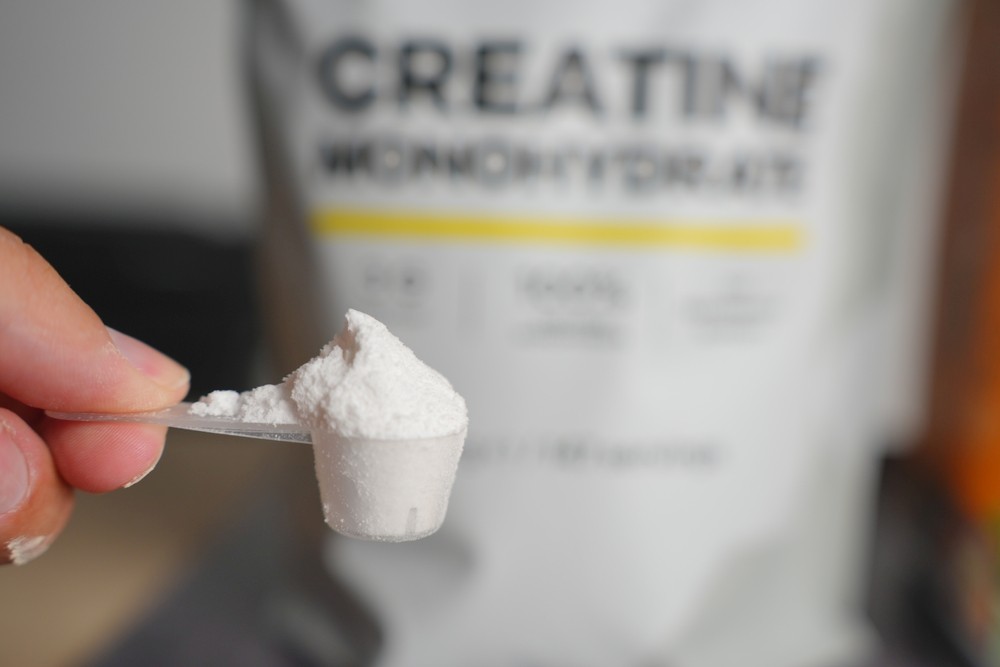
Creatine supplementation, when combined with resistance training or regular functional exercise, can help older adults maintain lean muscle mass and improve physical strength.
Research has also investigated its potential contribution to bone mineral density. Findings suggest that creatine combined with appropriate exercise may provide additional benefits compared with physical activity alone.
Studies on creatine, muscle preservation, and aging explain why this compound has attracted attention in healthy aging programs.
Its benefits are not limited to maintaining physical capacity. Creatine also participates in cellular energy regulation, helping support mitochondrial activity and the management of oxidative stress. These functions are relevant to maintaining healthy tissues as the body ages.
For older adults, incorporating creatine into a well planned nutritional routine can therefore be an important consideration alongside regular movement and resistance based exercise.
Women’s Health and the Benefits of Creatine Throughout Different Life Stages
Women’s nutritional needs change throughout life because of differences in hormonal activity, reproductive health, and metabolism. Creatine has become an interesting subject in women’s wellness research because female bodies generally maintain lower natural creatine reserves than male bodies.
Estrogen also influences several processes involved in energy production and utilization. Changes in this hormone throughout different stages of life can consequently affect the body’s energy requirements and physical performance.
Menstrual Cycles and the Reproductive Years
During the reproductive years, estrogen concentrations fluctuate throughout the menstrual cycle. These hormonal changes influence several biological processes, including energy metabolism and physical performance.
Lower estrogen levels during certain phases of the cycle can affect creatine production and availability. This relationship may help explain why some women experience changes in energy, physical endurance, or mental clarity during particular stages of their menstrual cycle.
Supplementation may help support cellular energy availability during these changing physiological conditions.
Perimenopause and Menopause
The transition into menopause brings a significant reduction in estrogen production. This hormonal change can influence muscle maintenance, metabolism, cognitive performance, and emotional wellbeing.
Creatine has attracted attention as a nutritional option during this stage because of its involvement in energy metabolism and muscle function.
Regular supplementation may help women maintain lean muscle tissue, support physical strength, encourage mood stability, and promote cognitive clarity during the menopausal transition.
Combining creatine with resistance exercise can be especially valuable for women looking to maintain their physical capabilities as they move into later stages of life.
Vegetarian and Vegan Women
Dietary choices can also influence the body’s natural creatine reserves. Since meat and fish are the main food sources of creatine, people who follow vegetarian or vegan diets typically obtain considerably less of it through everyday meals.
For women following plant based diets, supplementation can be a useful consideration when seeking to increase creatine availability and support their overall energy needs.
Recommended Intake, Product Quality, and Supplement Safety
Selecting an appropriate creatine supplement involves more than simply choosing a product from the shelf. Formulation, purity, stability, and scientific backing are all important considerations.
Among the available options, creatine monohydrate continues to hold the strongest position in clinical research. Its extensive research history, excellent bioavailability, established safety record, and stability make it the preferred choice for many healthcare and nutrition professionals.
Several alternative creatine products have appeared in the market, but many do not have the same level of scientific evidence supporting their effectiveness.

Research reviewing the clinical use of creatine monohydrate explains why standard monohydrate remains the preferred formulation.
For most supplementation routines, consuming between 3 and 5 grams daily is an effective approach to gradually increasing tissue creatine concentrations. With consistent intake, muscle stores can become saturated over approximately three to four weeks without the need for an initial high dose loading period.
For certain cognitive and clinical applications, healthcare professionals may recommend daily amounts reaching 10 grams, depending on individual requirements and the purpose of supplementation.
Concerns about creatine and kidney health are often linked to misunderstandings surrounding creatinine, a metabolic substance produced when creatine is broken down. Since creatinine levels are commonly used as part of kidney function assessments, changes in these readings can sometimes create unnecessary concern about creatine supplementation.
However, research has consistently demonstrated that standard daily creatine intake is well tolerated by healthy individuals and does not necessarily indicate kidney damage.
Product selection can also influence the overall supplementation experience. Micronized creatine powders and well formulated capsules are popular choices because they are convenient to consume and may help reduce mild digestive complaints. Choosing products with clean ingredient profiles can further support long term consistency.
Improving Patient Access Through Reliable Supplement Solutions
As research continues to expand understanding of creatine’s role in brain function, physical strength, hormonal health, and aging, healthcare professionals have increasing opportunities to include this nutrient in patient wellness discussions.
However, providing access to suitable supplements can create additional responsibilities for medical practices. Product sourcing, inventory storage, order processing, shipping, and customer service all require time and resources.
This is where Doctors Supplement Store (DSS) offers a practical solution for healthcare providers.
DSS gives practitioners access to a customized online dispensary where they can make professional quality supplements available directly to their patients. Rather than managing physical inventory and handling individual orders, providers can use the platform while DSS manages the operational requirements.
The service is designed to simplify supplement distribution and make it easier for healthcare professionals to maintain a convenient ordering system for their patients.
Doctors Supplement Store provides healthcare practitioners with a completely free, personalized online dispensary platform. Its services cover inventory management, automatic shipping, sales tax recordkeeping, and customer support.
According to the company, its fulfillment system achieves an impressive 99.992% order accuracy rate and provides same day shipping.
The platform also includes helpful features such as EZScripts and automatic reorder tools. These features make it easier for practitioners to manage patient supplement recommendations and encourage consistent use of recommended products.
By removing the administrative workload associated with stock management and fulfillment, DSS allows healthcare providers to concentrate more fully on patient relationships and clinical services while also creating an additional revenue opportunity for their practices.
Healthcare professionals interested in establishing their own online dispensary can connect with Doctors Supplement Store to arrange a demonstration and learn how to set up a customized platform at no cost.
Disclaimer
The material presented in this article is intended exclusively for educational and informational purposes. It should not be interpreted as medical advice or used as a substitute for professional diagnosis or treatment. Supplementation needs and suitable daily amounts differ according to individual health conditions and circumstances. Always consult a qualified healthcare professional before introducing new supplements into your routine.