Vents MagaZine Music and Entertainment Magazine
Related Articles

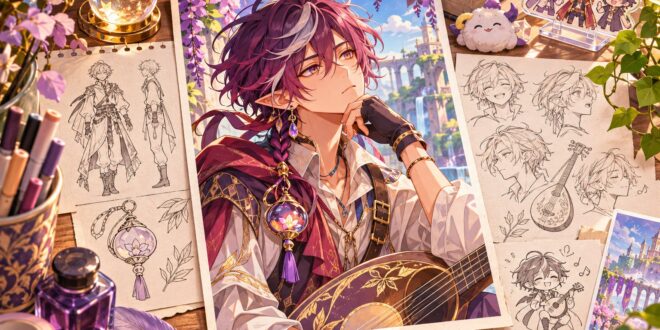
For many anime fans, watching a series is only the beginning. Some write alternate stories, draw new characters, design costumes, or imagine how an original character might fit into a familiar kind of world. An OC gives fans a way to take part in the stories and communities they care about.
A character does not need a complete biography or a finished illustration before it can be shared. It might begin with a single detail: a student who collects charms, a wandering musician, or a rival with an unusual reason for entering a tournament. A profile card can give that idea a shape and invite other fans into the conversation.
1. Start With a Question You Want to Explore
A memorable OC often begins with a question rather than a list of visual traits. What would a quiet person do in a competitive world? How would someone react to a power they never wanted? What kind of friend would challenge the main group without becoming an enemy?
The answer gives the character a reason to exist. A short starting brief can include a name, role, personality trait, visual detail, and conflict. The backstory can grow later.
A broad genre may provide the setting, but the OC’s choices, relationships, and problems come from the creator’s own idea.
2. Borrow Genre Cues, Keep the Character Original
Fandoms share familiar visual and story conventions. A character can belong to a magical school, a space adventure, or a supernatural mystery without copying a specific person from an existing series.
The design starts to feel too close when it repeats several distinctive traits at once, such as the same costume, powers, personality, color palette, and backstory. Changing the name alone may not make the character feel original.
Write down which details come from the genre and which belong to the OC: a shared convention such as a school uniform, a personal goal or fear, a recognizable visual feature, and a conflict that belongs to the creator’s story. This helps explain what the character brings to the idea.
3. Turn the Idea Into a Profile Card
A profile card gives other fans enough information to understand who the character is. It might include a portrait, name, role, a few personality traits, and a short piece of backstory.
Choose details that say something about the character. “Likes music” is broad. “Collects recordings of songs from places they have never visited” gives a reader more to wonder about. A particular accessory can matter because of the character’s history, not because the image needs another decoration.
For creators who want a starting point for anime-style character visuals, ocmaker.ai has character and image creation tools. Treat the first image as a draft. If it looks generic, add a more specific setting, expression, or object tied to the character’s story.
4. Match the Image to the Character’s Situation
An AI anime image generator can create a visual from a text description or image reference. A prompt is easier to refine when it describes a scene instead of stacking broad adjectives.
“An apprentice magician waiting alone at a crowded train station, holding a cracked wooden wand and trying to look confident” gives the image a situation. It also gives the creator details to review: does the expression fit, does the setting make sense, and does the wand look like something the character would carry?
After generating an image, compare it with the profile. Does the pose suit the character? Is there one detail that makes the design recognizable? Does the background help explain the character, or distract from the portrait?
A polished image can still feel interchangeable. A small story detail, such as a worn notebook or repaired sleeve, can connect the design to the character’s life.
5. Share the Character in a Way That Invites Replies
A post can introduce the OC and ask one specific question. Which of two outfits fits the character better? What kind of ability would suit the story? What should the character do next?
A question gives other fans something to respond to without requiring the creator to reveal the whole backstory at once. A few sentences of context can help readers understand the idea, while one open detail gives them a reason to comment.
Label the work clearly. If an image was AI-assisted, say so. If the character is original and inspired by a genre or community, make that clear too. Check each community’s rules before posting, since expectations around AI-assisted art vary.
6. Let the Design Change as the Story Grows
An OC may look different after the creator learns more about them. The first outfit might be replaced. A personality trait may become less important, or a visual detail may take on new meaning.
A small character sheet can help track changes. Save the current design, note the features that should remain, and label alternate outfits or experiments. That makes it easier for other fans to follow the character when the creator posts new scenes.
Not every variation needs to become part of the official design. A seasonal costume or one-off experiment can stay separate from the main version.
7. Make the Character Yours
A fandom gives creators shared references and an audience that understands them. An original character needs room to stand on their own. The profile card may be the first thing people see, but what makes the character memorable comes from the creator’s choices: what the character wants, what gets in the way, and why they belong in the story.