Vents MagaZine Music and Entertainment Magazine
Related Articles


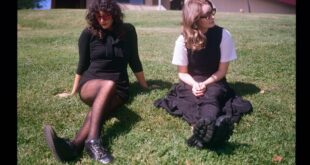
Hi guys, welcome to VENTS! How have you been?
We’ve been great! Currently we’re working on a lot of new material and getting our new live setup intact. We’ve had to make quite a few adjustments after our lead guitarist left to pursue education in Boston, but so far it’s working pretty well.
You guys have mentioned how you guys intended for your new record A Cure That Will Save the Both of Us to feel like a cinematic journey through memories, nostalgia, and the different “cures” we convince ourselves will fix what’s wrong. What would you say was the central idea that brought the album’s world together?
We were all going through some growing pains while writing this record, transition from High School to College and all. So we, especially Cae, our lyricist, were fixated on childhood and growing up, and the ways we all cope with the bluntness of life. The lyrics came out as pretty depressing or nihilistic at points, even though that wasn’t necessarily intentional. Cae writes intensely ‘cause it’s how he wants people to relate. He wants them to drop their guard, ‘y’know?
The album opens with biking sounds and washy guitars on “The High” and eventually reaches the overwhelming distortion of “Helmet Song Pt. II” before ending with the blunt reality of “The Low.” How important was it to you to make the record feel like a complete narrative rather than simply a collection of songs?
It was pretty important. It’s a long ass debut, and we knew the songs called for some cohesion thematically, especially since stylistically it can be pretty all over the place. The progression from “The High” to “The Low” is a portrayal of this boy (on the cover) growing up, really. He reflects a lot of our generation, growing up too fast and too hard. The “story” culminates with “Helmet Song Pt. II”, where the boy escapes the world he knows and bikes across highways, feeling alive and, ironically, safe.
The idea of searching for different “cures” can mean so many things such as people, memories, distractions, habits, or even music itself. What does that concept mean to you personally, and did its meaning change as you made the album?
It can mean all of those things, and more. It’s whatever someone’s using as a “cure” at the time, whether that’s medication (Keep Me Alive), religion (Cross), giving up (Five Miles West), sex (Athena), or whatever. There’s a takeaway with the whole “cure” thing we want people to leave the album with after “The Low”, but who knows if it lands haha.
Your music moves between art rock, electronic production, and melodic songwriting. When you begin writing a song, do you typically start with the emotional or lyrical idea, or does the sonic world come first?
During the creation of this album, we’d usually begin with a base song from our frontman Cae, and the rest of the band tags along and adds their own contributions. Occasionally, songs will sprout from jams or just chord progressions that we expand off of. For example, our ex-guitarist Nic, wrote the chord progression for Athena, which the whole song is based off of. In terms of electronics, most of them came in after the initial songwriting process.
There’s this great contrast between the album’s very human emotional core and its electronic and heavily produced elements. What does production allow you to express that a more straightforward rock arrangement might not?
Production really just helps to further clarify what we’re trying to convey in our writing. And the electronics in this album often compliment the raw elements of what make a “rock arrangement”. Our bassist produces all of our tracks, and he really helps bring our songs to life.
You completely self-recorded and produced the album. What did taking control of that entire process teach you about your own creative instincts, and were there moments when you had to learn to stop tweaking and simply trust the song?
Looking back at the creative process of the album, we oftentimes rolled with a lot of spontaneous ideas that led to many of those abrupt genre switches. Producing the record was a long and patient process, Cae can be a huge perfectionist when it comes to mixes, but we think it came out sounding pretty distinctly us.
The record has an intense yet catchy quality, which can be difficult to balance when you’re dealing with emotionally heavy material. How do you approach making songs that can hit hard emotionally while still being immediate and memorable?
We don’t put that much thought into making a song catchy. I think if you’re going to make an art rock song with an emotional undertone, the fact that it’s connecting with listeners on a deep level will ingrain it into their heads regardless. The catchy element always follows, it’s rarely a conscious thought.
Calling this a “cinematic debut” suggests that visuals and atmosphere are just as important to the experience as the music itself. When you imagine A Cure That Will Save the Both of Us as a film, what kind of world or imagery do you see?
We imagine a “nostalgic” suburban town, with a kid riding his bike across the neighborhood, even though the album goes to some pretty distant and weird places. Basically, just something that captures a familiar childhood that often brings people comfort and melancholy to think about.
Gwen is based in Manhattan, a city with an almost endless supply of sounds, characters, and contrasting environments. How has living and creating in New York influenced the band’s identity and the way you approach songwriting?
We definitely wouldn’t have as much of a raw electronic edge to our music if it weren’t for living in the city. When you’re in New York, you’re always exposed to the coolest experimental music, and you can pretty much find that shit within a 10 block radius at all times. In our opinion though, the people you meet in the city are the most important aspect of living here. Each person gives you a unique perspective on what you create.
You’ve described the broader goal of Gwen as creating music that feels deeply human and creates a sense of connection. After listeners make their way through A Cure That Will Save the Both of Us, what do you hope they feel—or perhaps understand about themselves—that they didn’t when they pressed play?
We just value human connection. The only reason Gwen exists is because we (Alex, Julian, and Cae) are such close friends, and music is a byproduct of it. We hope listeners feel some sort of catharsis, maybe make them want to leave the house and see some live music instead of scrolling. We don’t know, we put all this cinematic intensity into the record without knowing if it would land, that’s up to you guys 🙂