Vents MagaZine Music and Entertainment Magazine
Related Articles


What does 60,000 look like?
It is a number large enough to fill a stadium. It is also approximately how many children in Gaza have lost one or both parents amid the ongoing crisis.
But numbers have limitations. They can tell us the scale of a tragedy without necessarily helping us understand the people living through it.
That is the idea behind 60,000 Orphans in Gaza, a song released by Life for Relief and Development (LIFE) to draw attention to Gaza’s growing orphan crisis through music.
“There’s a child dreaming tonight, holding on to a little light,” the song begins. Instead of opening with war, politics or statistics, it begins somewhere much smaller: inside the world of a child.
Telling the Story Through a Child’s Eyes
At the centre of the song is a child who has experienced extraordinary loss but has not stopped dreaming.
There is sadness and loneliness, but also an innocence about the circumstances surrounding them. For very young children, losing a parent can mean experiencing grief before they are old enough to fully understand death. They may not understand why their mother or father is gone. They simply know they are gone, and they miss them.

60,000 Orphans in Gaza sits inside that complicated space between grief and childhood.
The child at the centre of the song still hopes for tomorrow. They still dream of a future. And beneath it all is a simple hope that someone, somewhere, will see what is happening and reach out to help.
That perspective turns an enormous statistic into something more intimate.
What Inspired the 60,000 Orphans in Gaza Song?
Humanitarian organizations usually communicate through photographs, reports, statistics and stories from the field. LIFE has spent more than three decades doing that work while delivering humanitarian assistance in more than 60 countries. This time, LIFE turned to music.
A statistic can tell someone that tens of thousands of children have been orphaned. Music can invite a listener to sit with what that might actually mean for one of them.
The song also reflects a cause that LIFE has been involved with for decades. Orphan sponsorship has been part of the organization’s work throughout its 33-year history, and more than 13,000 children are currently sponsored through LIFE worldwide.

LIFE began sponsoring orphaned children in Gaza in 2019. Today, approximately 4,000 children there are sponsored through the organization.
The support includes assistance with food, education, healthcare and clothing, but LIFE’s approach also looks at the emotional and developmental needs of children who have experienced loss.
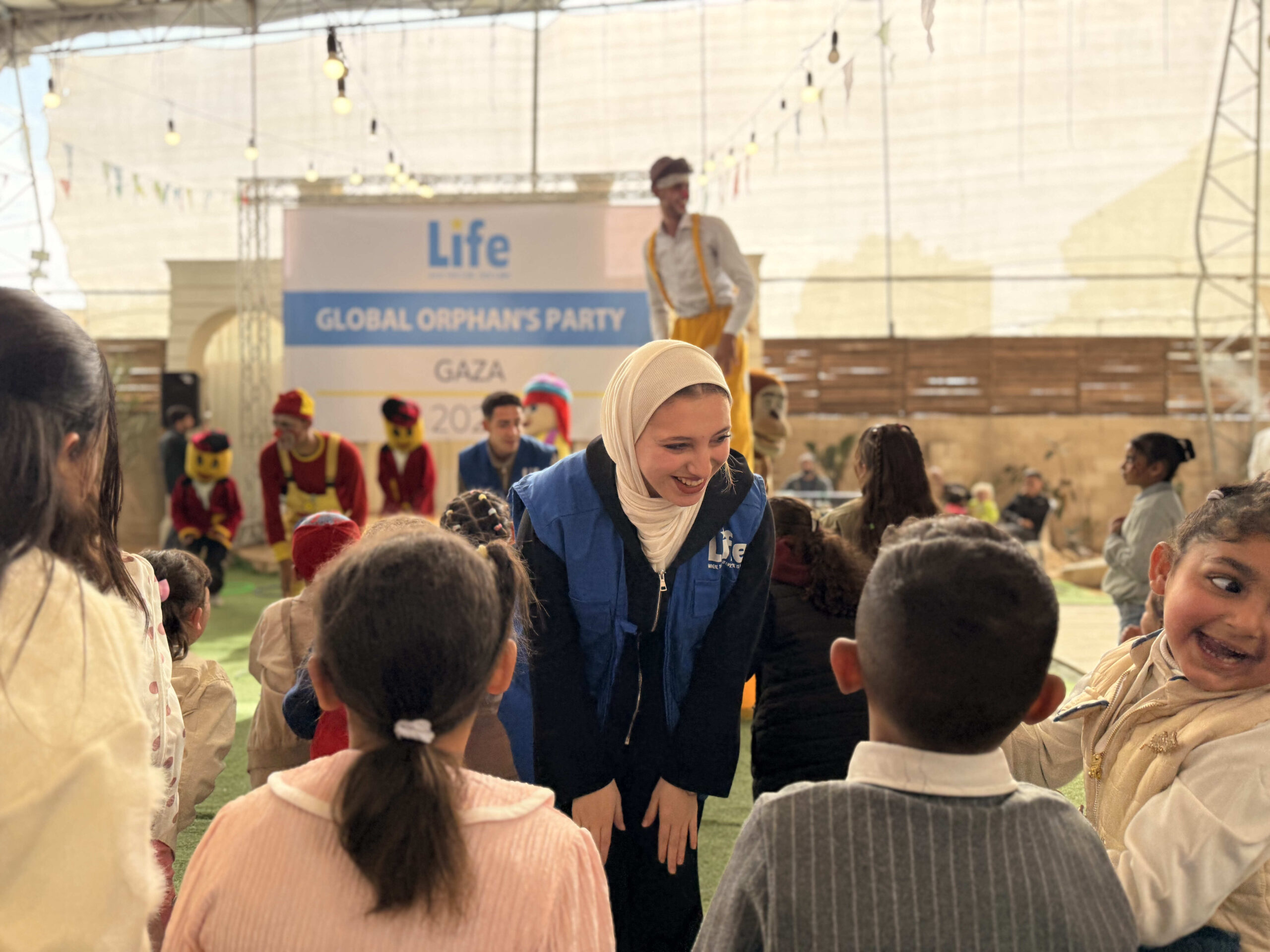
LIFE’s Global Orphan Parties give children opportunities to play and celebrate while receiving psychosocial support, while initiatives such as the Al-Amal Tent School in Gaza help children continue their education amid widespread disruption.
What Remains After the Song Ends
60,000 Orphans in Gaza does not ask listeners to pretend that a song can solve a humanitarian crisis. It asks for something simpler: to remember the children inside it.
Sixty thousand children means 60,000 different personalities, memories and imagined futures. It means children who have lost people they love but have not lost their capacity to hope, learn, play or dream.

For LIFE, awareness is only meaningful if it keeps people from becoming invisible. The song begins with a child holding on to “a little light.” Perhaps its larger question is whether the rest of the world will help them keep their light alive.
Charity and Humanitarian Aid | Life for Relief and Development