Vents MagaZine Music and Entertainment Magazine
Related Articles



Why is my dog always itchy, especially when certain seasons roll around? If your dog scratches constantly, chews at their paws, or rubs their face on the carpet, seasonal allergies are one of the most likely explanations. Canine allergies are far more common than most pet parents realize, and they are also frequently misunderstood. Many owners assume itching means fleas or a dirty coat. In reality, the immune system is often the real culprit, reacting aggressively to everyday environmental triggers that a healthy dog would tolerate without issue.
WagWell understands how frustrating it is to watch your dog suffer through allergy seasons without knowing where to start. This guide covers what actually causes seasonal itching in dogs, how to recognize when allergies are the problem, and what a complete management plan looks like.
What Is Actually Causing Your Dog to Itch
Seasonal itching in dogs is rarely a single-cause problem. It almost always involves a combination of genetics, immune function, environmental triggers, and skin barrier integrity working against each other simultaneously.
Atopic Dermatitis: The Medical Name Behind the Itch
The clinical term for what most people call seasonal allergies in dogs is atopic dermatitis, or atopy. According to the Cornell University College of Veterinary Medicine, atopic dermatitis is a genetically predisposed inflammatory skin disease associated with a hypersensitivity to environmental allergens. Dogs with atopy develop an exaggerated immune response to substances that would cause no reaction in non-allergic animals.
The most common seasonal triggers include:
- Tree pollen in spring
- Grass pollen in late spring and summer
- Weed pollen in late summer and fall
- Mold spores that spike during damp or decaying leaf seasons
- Dust mites that intensify indoors during winter months
Cornell’s clinical overview also confirms that repeated exposure to these allergens worsens the immune response over time. A dog with mild spring itching at age two may develop year-round symptoms by age five as the sensitization deepens.
Why Certain Breeds Are More Vulnerable
Atopy is not random. Breeds including Labrador Retrievers, Golden Retrievers, Bulldogs, West Highland White Terriers, Boxers, German Shepherds, and Dalmatians show significantly higher rates of atopic dermatitis. The genetic component affects both the immune system’s tendency to overreact and the structural integrity of the skin barrier itself. Dogs with compromised skin barriers allow allergens to penetrate more easily, which triggers inflammation faster and more intensely than in dogs with healthy barrier function.
Recognizing Seasonal Allergy Symptoms in Dogs
Understanding the symptom pattern helps you differentiate seasonal allergies from food sensitivities, parasites, or other dermatological conditions. The key with seasonal allergies is that symptoms worsen predictably during specific times of year and often improve between seasons.
Where Itching Appears Matters
The University of Illinois College of Veterinary Medicine notes that the location of itching provides important diagnostic information. Environmental and seasonal allergies tend to concentrate in specific areas rather than affecting the whole body uniformly. Common locations include:
- Paws and between the toes
- Face, muzzle, and around the eyes
- Armpits and groin
- Ears, often leading to recurrent ear infections
- Belly and inner thighs
Paw licking and face rubbing are particularly telling. Dogs absorb airborne allergens through skin contact during outdoor activity, which concentrates the allergic reaction in exposed areas. A dog who spends time in grass will carry pollen on their paws and belly long after coming indoors.
Secondary Infections Change the Picture
Cornell University’s research confirms that secondary bacterial and yeast skin infections develop in a significant percentage of dogs with atopic dermatitis. These infections are not the original problem. They occur because chronic scratching and licking damage the skin surface, creating entry points for opportunistic bacteria and yeast. When secondary infections are present, itching intensifies beyond what the allergy alone would cause, and the skin may develop hot spots, odor, redness, or a greasy texture. This is why veterinary diagnosis matters. Treating itching without addressing secondary infections leaves a major driver of the symptom cycle unresolved.
Why Is My Dog Always Itchy: The Diagnostic Process
The American Kennel Club outlines that diagnosing the specific cause of allergic itching requires methodical elimination rather than a single definitive test. Your veterinarian will typically assess symptom history, seasonal patterns, distribution of itching, and response to previous treatments before recommending allergy testing.
Intradermal skin testing and serum allergy testing identify specific environmental allergens your dog reacts to. Food elimination trials rule out dietary contributors. This process takes time, but accurate diagnosis makes treatment meaningfully more effective. Guessing at the cause and treating symptoms alone produces inconsistent, frustrating results.
Managing Seasonal Allergies: A Multimodal Approach
No single product or treatment resolves seasonal allergies completely. Effective management combines environmental control, skin barrier support, immune modulation, and targeted supplementation working together.
Environmental Reduction Strategies
Reducing allergen exposure does not eliminate the problem, but it lowers the total inflammatory load your dog carries. Practical steps include wiping paws after every outdoor excursion, bathing weekly during peak pollen seasons with hypoallergenic shampoo, using HEPA air filters in living spaces, washing bedding weekly, and keeping dogs indoors during peak pollen hours between 5 a.m. and 10 a.m.
The AKC specifically recommends medicated topical baths as part of a complete allergy management protocol. Regular bathing removes surface allergens before they penetrate the skin and provides direct relief to inflamed tissue.
Skin Barrier and Nutritional Support
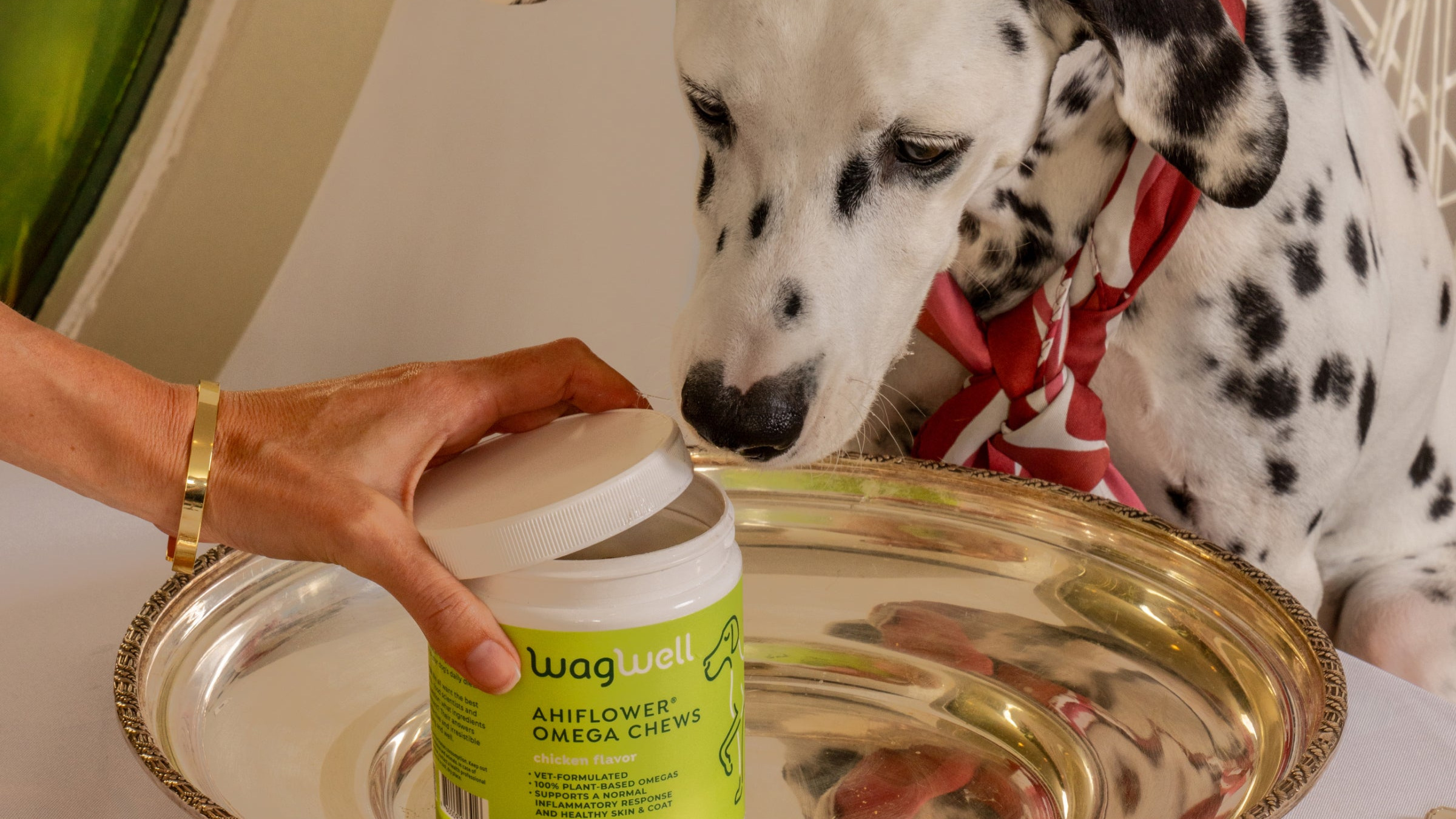
A compromised skin barrier is both a cause and a consequence of atopic dermatitis. Strengthening it reduces allergen penetration and supports faster healing of irritated tissue. Omega fatty acids are among the most consistently recommended nutritional interventions for dogs with skin allergies. They reduce systemic inflammation, strengthen the lipid layer of the skin barrier, and improve the coat condition that reflects overall skin health. Omega oil for dogs formulated with plant-based omega 3, 6, and 9 provides this support without the digestive upset or fishy smell associated with traditional fish oil products.
Targeted Allergy Supplementation
Beyond omega support, targeted supplementation addresses the immune system’s histamine response directly. Dog allergy chews combining ingredients like colostrum, Epicor, and organic echinacea work alongside the immune system to regulate the overreaction that drives seasonal symptoms. This kind of support is most effective when started before peak allergy season begins rather than after symptoms are already severe.
Veterinary Treatment Options
For moderate to severe atopic dermatitis, veterinary-prescribed treatments provide relief that supplementation alone cannot achieve. Apoquel and Cytopoint are two current options that specifically target the itch pathways involved in atopic dermatitis without the systemic side effects associated with long-term corticosteroid use. Allergen-specific immunotherapy, commonly called allergy shots, builds tolerance to identified triggers over months to years and represents the closest thing to a long-term resolution currently available. Your veterinarian determines appropriateness based on severity, identified allergens, and your dog’s overall health profile.
Building a Year-Round Allergy Management Plan
Seasonal allergies require a year-round perspective, not just reactive treatment when symptoms peak. Starting omega supplementation and environmental control habits before the relevant pollen season begins reduces the severity of each season’s reaction. Keeping a symptom diary helps you identify your dog’s specific triggers and anticipate flare windows. Scheduling veterinary check-ins before known peak seasons allows for proactive treatment rather than scrambling once symptoms become severe.
Dog natural supplements that support immune health, skin barrier integrity, and anti-inflammatory pathways create a foundation that makes every other allergy management strategy more effective. The goal is not to eliminate the allergy entirely, since that is rarely possible without immunotherapy, but to reduce the total inflammatory burden to a level where your dog remains comfortable throughout the year.