Vents MagaZine Music and Entertainment Magazine

Related Articles


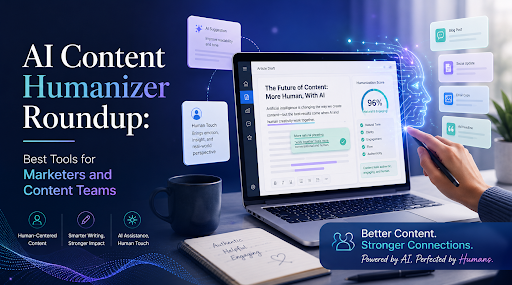
Why Content Teams Are Looking for Humanizer Tools
AI writing has become a normal part of the content workflow. Teams use it to outline articles, draft product descriptions, summarize research, create email variations, and speed up campaign planning. The challenge is not whether AI can produce content. The real challenge is whether that content feels useful, credible, and natural to the reader.
That is where AI humanizer tools enter the picture. These platforms are designed to revise machine-generated text so it sounds less stiff, less repetitive, and more aligned with real brand communication. For marketers and content teams, the goal should never be to hide poor-quality content. The goal is to improve clarity, rhythm, tone, and originality so the final piece feels polished and reader-friendly.
A good tool can help remove robotic patterns, vary sentence structure, simplify awkward phrasing, and make content sound more conversational. Still, the best results come when human editors guide the process. Tools can help, but strategy, fact-checking, and brand judgment still matter.
What Makes a Strong AI Humanizer Tool?
Not every platform labeled as a humanizer is useful for professional content teams. Some tools simply swap words with synonyms, which can make writing sound unnatural or even confusing. Others rewrite too heavily and change the meaning of the original message.
When comparing options, look for tools that improve the writing without stripping away accuracy. A reliable platform should help with:
- Natural sentence flow
- Tone adjustment for different audiences
- Clearer phrasing without changing meaning
- Reduction of repeated patterns
- Better readability for long-form content
- Support for different content types, such as blogs, emails, ads, and landing pages
The best AI humanizer tool should act like a writing assistant, not a shortcut for careless publishing. It should help editors shape content into something more engaging while keeping the message intact.
Best AI Humanizer Tools for Marketers and Content Teams
Below is a practical roundup of tools worth considering if your team regularly works with AI-assisted drafts.
1. Undetectable AI
Undetectable AI is one of the most talked-about tools in this category. It focuses on rewriting AI-generated text in a more natural style while also checking how the content may appear to detection systems.
For marketers, its main advantage is convenience. You can paste content, choose a readability level, and receive a rewritten version that feels more varied and human. It is especially useful for short blog sections, email drafts, and general web copy.
However, teams should still review the final output carefully. Like many rewriting tools, it can occasionally change nuance or produce sentences that sound overly polished. Use it as a first-pass editor, then refine the copy manually.
Best for: Quick rewrites, blog sections, general marketing drafts, and readability improvements.
2. Humanize AI
Humanize AI is designed for users who want simple, direct text improvement without too many settings. It rewrites content to reduce robotic phrasing and make paragraphs sound more casual.
This tool can be helpful when a draft feels too formal or repetitive. For example, if an AI-generated introduction repeats the same sentence pattern several times, Humanize AI can add variety and improve flow.
Its simplicity is both a strength and a limitation. It is easy to use, but larger teams may want more control over tone, brand voice, and formatting. For basic editing needs, though, it is a practical option.
Best for: Fast improvements, casual tone edits, and simple content polishing.
3. QuillBot
QuillBot is not only a humanizer. It is a broader writing platform with paraphrasing, grammar checking, summarizing, and tone adjustment features. This makes it useful for teams that need more than one type of editing support.
Its paraphrasing modes allow writers to choose how much the text should change. That is helpful when you want to preserve the original message while improving wording. Marketers can use it to refresh product copy, rework social captions, or simplify complex explanations.
The key is to avoid over-paraphrasing. Too much rewriting can make content generic. Used carefully, QuillBot is a strong tool for improving sentence quality and readability.
Best for: Paraphrasing, grammar support, tone changes, and content repurposing.
4. Grammarly
Grammarly is not usually described as an AI humanizer, but it deserves a place in this roundup because it improves clarity, tone, and correctness. For content teams, it can be more valuable than aggressive rewriting tools.
Grammarly helps identify awkward phrasing, passive constructions, unclear sentences, and tone mismatches. Its suggestions are usually practical and easy to review. This makes it a strong fit for teams that want better writing without completely changing the draft.
It is especially useful in professional environments where consistency matters. Blog editors, email marketers, and content managers can all benefit from using it as a final quality check.
Best for: Editing, proofreading, tone refinement, and brand-safe writing improvement.
5. Wordtune
Wordtune is a strong choice for writers who want sentence-level control. Instead of rewriting an entire article at once, it helps reshape individual lines. This is helpful when a paragraph is mostly good but needs a smoother or more natural expression.
For marketing teams, Wordtune works well during the editing stage. You can test alternative phrasings, shorten wordy sentences, or make a line sound more confident. It is particularly useful for landing pages, newsletters, and thought-leadership content.
Because it offers multiple rewrite options, editors can choose the version that best fits the brand voice. That makes it more flexible than tools that automatically rewrite large blocks of text.
Best for: Sentence polishing, tone control, and high-quality manual editing.
6. StealthGPT
StealthGPT is built for users who want to transform AI-written drafts into more natural text. It offers rewriting features aimed at making content sound less formulaic.
For marketers, the tool can be useful when working with drafts that feel too predictable. Common AI patterns include broad introductions, repetitive transitions, and overly balanced sentence structures. A tool like StealthGPT can help break those patterns.
Still, it should not replace careful editing. Some rewritten content may need tightening, fact-checking, or brand alignment. It is best used as part of a broader content review process.
Best for: Reducing robotic phrasing and improving draft variety.
How to Choose the Right Tool for Your Workflow
The right choice depends on how your team creates and reviews content. A solo content marketer may need a simple rewrite tool. A larger team may need grammar support, tone control, and editorial consistency.
Before choosing a platform, ask:
- Does it preserve the original meaning?
- Can it match our brand voice?
- Does it improve readability without making text generic?
- Is it easy for editors to review changes?
- Does it support the content types we publish most often?
If your team publishes long-form articles, choose a tool that improves structure and flow. If you mainly create emails or ads, sentence-level tone control may matter more. If your work involves technical or regulated topics, prioritize accuracy over dramatic rewriting.
This is also where many teams compare the best AI humanizer tool, best AI detection removers, and related editing platforms. The important point is to focus on content quality first. Detection-focused features can be useful, but they should not become the main measure of success.
Best Practices for Using AI Humanizers Responsibly
Humanizer tools work best when they support a thoughtful publishing process. They should not be used to mass-produce low-value content or disguise weak writing. Readers can usually tell when an article lacks substance, even if the wording sounds smooth.
A better workflow looks like this:
- Use AI to create a rough draft or outline.
- Add expert insight, examples, and real context.
- Run selected sections through a humanizer or editor.
- Review every rewritten paragraph manually.
- Check facts, tone, formatting, and readability.
- Add original perspective before publishing.
This process creates stronger content because it combines speed with human judgment. The tool improves expression, while the editor protects accuracy and usefulness.
Common Mistakes to Avoid
One common mistake is rewriting an entire article without reviewing the output. This can create factual errors, awkward transitions, or a voice that no longer fits the brand.
Another mistake is relying too heavily on detection scores. Detection tools are not perfect, and chasing a score can lead to unnatural writing. The better goal is to create content that helps the reader, answers the search intent, and reflects real expertise.
Avoid keyword stuffing as well. Phrases such as best AI humanizer tool and best AI detection removers should appear only where they make sense. Repeating them too often makes the content feel forced and reduces trust.
Finally, do not ignore structure. A human-sounding article still needs clear headings, useful examples, and logical flow. Natural language matters, but organization is what keeps readers engaged.
Final Takeaway for Smarter Content Teams
AI humanizer tools can be valuable when used with care. They help teams turn stiff drafts into smoother, clearer, and more engaging content. The best tools do not replace writers or editors. They make the editing process faster and give teams more ways to refine tone and readability.
For most marketers, the strongest setup is a combination of tools. Grammarly or Wordtune can help with polish, QuillBot can assist with paraphrasing, and dedicated humanizers like Undetectable AI, Humanize AI, or StealthGPT can improve flow when a draft sounds too mechanical.
The real advantage comes from knowing when to use each tool. AI can support production, but human review gives content its value. When your team combines smart tools with original insight, the result is content that feels natural, trustworthy, and worth reading.