Vents MagaZine Music and Entertainment Magazine

Related Articles
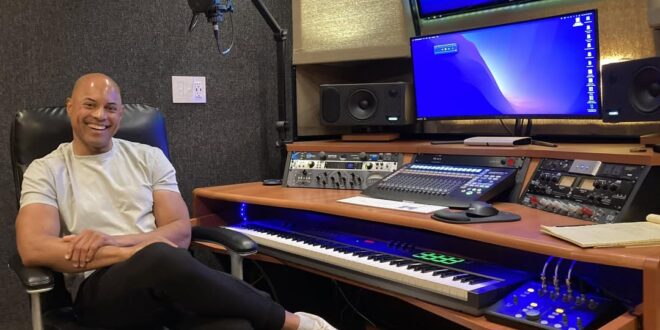
Composer, songwriter, and producer Brandon Jarrett has built a dynamic career scoring more than 50 films and television projects for platforms including Netflix, Amazon Prime Video, Starz, and Hallmark Channel. Known for blending orchestral richness with modern synth textures, Jarrett brings emotional depth and technical versatility to every project. In this conversation, he reflects on his creative journey, collaboration, and the evolving definition of success in a life devoted to music. We chatted with him about his career so far.
You’ve built a career that spans film scoring, songwriting, and production. When you look back, what do you see as the throughline connecting all these different chapters of your work?
The thing for me that connects all these elements is a deep love and commitment to music. I grew up in an entertainment family, I traveled the world with my parents who were both well-known entertainers in their circuit and grew to love the craft of making music, entertaining, and the business itself.
One of the most valuable things that I ever learned was that success is generally when opportunity meets preparedness. Because I had the opportunity to learn many different instruments at a young age, and started apprenticing at a recording studio when I was in high school, it gave me the opportunity to learn production of music in several different disciplines, one being record production and the other one being songwriting. After college I had the opportunity to score a couple of independent films and an independent series. I had no idea that these would all become such big parts of my career after touring in my band with my brother for 8 years.

You’ve worked with industry legends like Allan Rich while also collaborating with emerging voices and influencers. What do you look for in a collaborator, regardless of where they are in their career?
Thank you for asking this. The thing that I find most important in collaborating with an artist, another composer or songwriter is a genuine level of trust and an ability to honor each other’s gifts. Most of the artists that i have been so fortunate to work with are people who I have developed a love and friendship with. That love and trust gives everyone permission to operate from a place of creativity and love instead of ego.
You’ve scored more than 50 projects across platforms like Netflix, Amazon Prime, Starz, and Hallmark. How has working across so many genres and networks shaped your musical instincts?
Because the films in this market have such tight turnaround times for post production, which includes music, I think one of the most valuable things that I have gotten out of being a part of those teams and writing music for so many films is the ability to combine orchestral and electronic music production in a way that keeps the story moving forward and connects to the audience in unexpected ways. Often in television movies there isn’t time to record a live Orchestra so the Orchestra that I wind up using is a mix of orchestral sounds and electronic sounds and that flavor has really enabled me to come up with a sound and style that I believe can be very emotional and also capture intense and exciting moments in a film. Also, because there is generally a lot of music in these films, it really has been an opportunity to push my creative boundaries to keep everything fresh and interesting. When you have a film that needs 65 minutes of music, you really have to dive in, in order to keep everything interesting and flowing with the story while still having a thread that ties everything together. I love the challenge and I love writing music for films!
You’re clearly fluent in both orchestral and hybrid synth worlds. How did you develop that technical versatility, and how important is it for composers today to be stylistically bilingual?
Thank you for that Jake. I love how you refer to it as being bilingual! I think that it’s super important today to be versatile, and to have a knowledge and feel for how to utilize synthesizers and synthesized sounds in a score to tell a story. The tone and mood that is created from so many of the different colors that are available through synthesized sounds can evoke feelings and emotions in such a different way than an orchestra. It can also speak to younger audiences in a way that they can relate to. Of course the live orchestra is so powerful and there is nothing like a live orchestra. No technology can replace all of those incredible musicians breathing life into a piece of music that you have written. I think that both have their places when used with thoughtfulness and care.
You’re deeply hands-on, from composition through final production. What parts of the process are most essential to you, and which have you had to learn the hard way?
I think that the most important part of starting the score for a film, producing a song or writing a song with someone is to listen to their heart. It really requires reading between the lines for me. Everyone expresses themselves differently and especially artists. It’s important to remember that directors and producers are artists too. They don’t all speak the language of music, but if I listen well enough, I can feel what they are looking for. I learned that the hard way on one of my first feature films. I wasn’t listening closely enough to the director’s feelings about the styles of music that he liked. The main title temp music that they used was a Jazzy piece and he really did NOT like jazz. My first pass was something similar to the temp and he was really unhappy with it. Fortunately my second pass was right on the money and he loved it, but it was a scary moment because I thought I might lose the job. I haven’t made that mistake again. Lol!
Emotional impact seems central to everything you do, whether it’s a string quartet or a high-energy anthem. How do you measure whether a piece of music has truly landed emotionally?
That’s a hard question to quantify. Only because it’s a feeling. For me, when I’m at the piano and coming up with an idea for a cue and playing to picture, the right notes seem to land and become a part of the story and it makes me very emotional. I feel the tears well up and then I know that IT just happened. Or if it’s a collaboration, when that chord progression and melody lands… everyone in the room looks at each other and we know that we’ve got it.
What does success look like for you now compared to when you first started, has that definition changed?
Definitely it has changed. Now, it’s more important to create something special with special humans. Early in my career I was more focused on the outward successes. But now, I have learned so much about our beautiful music community here in LA and I am so grateful to be a part of it. Sharing and celebrating the successes of my friends and peers has become as important as celebrating my own.
As you look ahead, are there worlds you haven’t explored yet, musically or professionally, that feel like the next frontier for you?
Yes. Having written songs for two musicals that went into development just when COVID started, I would love to write the songs and score for a Musical theatrical feature film or a limited series that is a musical. I would love it to be one of these musicals that got funded. They are both very meaningful and full of heart, soul and life lessons.
–
You can learn more about Brandon Jarrett here.