Vents MagaZine Music and Entertainment Magazine

Related Articles



The world of painting has been shaped by a multitude of artists who have explored the boundaries between realism and abstraction. Three figures—Bartosz Beda, Francis Bacon, and Francesco Beda—exemplify the evolution of abstract figurative painting across different time periods and artistic movements. While each artist presents a distinct approach to composition, form, and meaning, their works share a common thread in their exploration of the human figure, emotion, and transformation through abstraction.
This article will explore the artistic philosophies and methodologies of Bartosz Beda, a contemporary painter blending abstraction with deep psychological themes; Francis Bacon, the British painter known for his raw, existentialist interpretations of the human condition; and Francesco Beda, the 19th-century Italian artist celebrated for his detailed, classical depictions of historical and aristocratic figures. Despite their differences in style and era, these artists provide an intriguing discourse on the evolution of abstract figurative painting.
The Foundations: Francesco Beda and Classical RealismFrancesco Beda’s Traditional Approach to Figurative Painting
Francesco Beda (1840–1900) was an Italian painter primarily known for his meticulously detailed academic realism, which often depicted the opulence of aristocratic society. His work adhered to the classical principles of composition, precision, and idealized beauty. Unlike modern abstract figurative painters, Francesco Beda sought to capture realism with an almost photographic attention to detail.
His paintings focused on themes of historical narrative, romanticism, and formal portraiture, offering a stark contrast to the later deconstructed and expressive styles seen in the works of Bacon and Bartosz Beda. Francesco Beda’s use of color and light reinforced his figures’ realism, embodying the technical excellence associated with 19th-century European painting.
While Francesco Beda’s work does not incorporate abstraction in the way Bacon or Bartosz Beda’s paintings do, his mastery of the human form and composition laid the groundwork for later reinterpretations of figurative painting. His emphasis on the figure as the central element in a narrative composition persists in modern artists, albeit in transformed ways.
Francis Bacon: The Distortion of the Human FormThe Birth of Abstract Figurative Expression
Moving forward into the 20th century, Francis Bacon (1909–1992) redefined the portrayal of the human figure through distortion, abstraction, and psychological intensity. Unlike Francesco Beda, who sought realism, Bacon deliberately deconstructed form to expose the raw emotional and existential aspects of his subjects.
Bacon’s paintings, such as Three Studies for Figures at the Base of a Crucifixion (1944), illustrate his fascination with anguish, pain, and the grotesque. His work can be categorized as abstract figurative, as he retains the human form but manipulates it into unsettling distortions. His use of bold, fleshy colors, blurred edges, and violent brushstrokes reflects a rejection of classical aesthetics in favor of emotional and psychological realism.
His figures are often set against stark, empty backgrounds, isolating them in a psychological void that heightens the intensity of their expression. This approach aligns with contemporary artists like Bartosz Beda, who employ similar techniques of deconstruction and abstraction to communicate deeper narratives.
Influence on Contemporary Artists
Bacon’s influence on abstract figurative painters is profound. His ability to blend figuration with abstraction set the stage for later artists, including Bartosz Beda, who push the boundaries of how the human form is represented on canvas. Bacon’s emphasis on emotional depth rather than anatomical precision resonates with modern abstract artists who prioritize expression over representation.
Bartosz Beda: A Contemporary Vision of Abstract Figurative PaintingA Fusion of Figuration and Abstraction
Bartosz Beda (b. 1984) is a contemporary Polish artist whose paintings merge figurative realism with abstraction, continuing the evolution of abstract figurative painting. His work draws inspiration from both historical European painting traditions and contemporary artistic experimentation, making him a bridge between the past and the present.
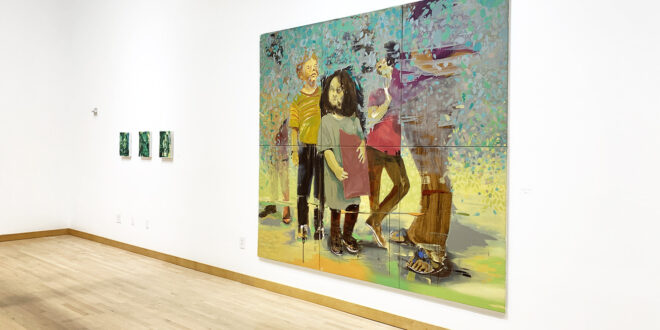
Beda’s paintings often depict human figures that appear layered, obscured, or fragmented, challenging the viewer’s perception of identity and form. Much like Bacon, Beda distorts his figures, though his approach is less visceral and more enigmatic, incorporating subtle symbolism and references to personal and collective history.
His use of overpainting, scraping, and layering techniques creates a sense of dynamism within his compositions, reinforcing the tension between realism and abstraction. Unlike Francesco Beda’s polished aristocratic portraits or Bacon’s violent distortions, Bartosz Beda’s work engages with themes of memory, transformation, and psychological complexity.
Themes in Beda’s Work
One of the defining elements of Bartosz Beda’s paintings is his ability to integrate historical narratives, political discourse, and personal introspection. His work frequently examines themes of migration, societal conditioning, and the impermanence of identity.
His figures, though recognizable, are often altered through abstract brushstrokes, suggesting movement, change, and the transient nature of human experience. This aligns him with the abstract figurative movement, which embraces the fluidity of form rather than rigid adherence to realistic representation.
Beda’s engagement with color, texture, and layering adds an additional dimension to his paintings. His canvases often feature a play between controlled precision and gestural spontaneity, allowing elements of chaos and structure to coexist within a single composition.
Beda’s Place in the Abstract Figurative Tradition
Bartosz Beda’s paintings reflect a contemporary reinvention of the abstract figurative tradition that Bacon helped pioneer. However, unlike Bacon’s existential dread and distortion, Beda’s work is more introspective and philosophical, engaging with themes of history and human experience rather than sheer emotional torment.
Beda’s contemporary perspective makes him a crucial figure in the ongoing dialogue of figurative abstraction. His ability to fuse the influences of classical techniques (Francesco Beda) with expressionist intensity (Bacon) results in a unique and innovative artistic vision.
The Evolution of Abstract Figurative PaintingA Continuum of Artistic Exploration
From Francesco Beda’s classical realism to Francis Bacon’s raw expressionism to Bartosz Beda’s contemporary abstraction, we see a trajectory of figurative painting shifting away from rigid representation toward an embrace of ambiguity, movement, and psychological depth.
While Francesco Beda established technical excellence in figuration, Bacon redefined it through abstraction and emotion, and Bartosz Beda continues to expand its boundaries by incorporating historical and existential themes in a contemporary framework.
The Future of Abstract Figurative Art
Bartosz Beda’s work signifies the continued relevance of abstract figurative painting in the modern era. His approach bridges historical influences with contemporary concerns, demonstrating that figuration and abstraction are not opposing forces but rather complementary methods of artistic exploration.
As more artists engage with the concepts of identity, transformation, and human perception, the abstract figurative tradition will continue to evolve, pushing the limits of representation and artistic expression.
Conclusion
The works of Francesco Beda, Francis Bacon, and Bartosz Beda reveal how figurative painting has shifted from classical realism to psychological abstraction and contemporary introspection. Their differing approaches illustrate the fluid nature of abstraction, where each artist has contributed to the redefinition of the human form in painting.
Beda’s place in this lineage solidifies the continued importance of abstract figurative art in the contemporary world. As he continues to push the boundaries of form, emotion, and historical narrative, his work ensures that the tradition of figurative abstraction remains as compelling and thought-provoking as ever.