Vents MagaZine Music and Entertainment Magazine

Related Articles


In modern manufacturing, product quality is no longer defined only by design. It is increasingly determined by the precision of the smallest components hidden inside larger assemblies. From industrial automation systems to medical devices and robotics, manufacturers are under pressure to produce equipment that operates faster, lasts longer, and performs with greater consistency. That shift is placing new attention on high-precision machined parts such as dowel pins, shafts, and custom fastening components.
Over the past few years, global manufacturing has moved toward tighter tolerances, smarter automation, and leaner production systems. Companies are redesigning products to reduce vibration, improve assembly accuracy, and minimize long-term maintenance costs. In many of these applications, even a slight dimensional variation can affect alignment, repeatability, and operational stability.
This is one reason precision machining suppliers are becoming strategic partners rather than simple component vendors.
The Growing Importance of Precision Alignment
In automated production environments, alignment accuracy directly affects performance. Robotic systems, packaging equipment, semiconductor machinery, and CNC automation platforms rely heavily on positioning consistency. Small locating components such as dowel pins help maintain that consistency throughout repeated production cycles.
Unlike general-purpose fasteners, precision dowel pins are engineered for exact positioning and repeatable assembly. Their dimensional stability allows manufacturers to reduce misalignment issues during installation and long-term operation.
Many industrial OEMs now prefer custom-machined locating components that are optimized for specific assemblies instead of relying on off-the-shelf hardware. Components manufactured with controlled concentricity, surface finish, and tight diameter tolerances help improve operational reliability across high-speed systems.
For industries where micron-level accuracy matters, manufacturers increasingly source specialized stainless steel dowel pins designed for demanding industrial environments, corrosion resistance, and long-term dimensional stability.
Why Stainless Steel Is Becoming the Preferred Material
Material selection has become more important as manufacturing environments evolve. Traditional carbon steel components may perform adequately in dry indoor conditions, but modern industries often require higher corrosion resistance and improved durability.
Stainless steel offers several advantages:
Better corrosion resistance in humid or chemically exposed environments
Improved wear resistance during repeated assembly cycles
Long-term dimensional stability
Cleaner surface finishes for medical and food-grade applications
Better performance in automation systems with continuous motion
Industries such as medical manufacturing, aerospace, automotive electronics, and food processing increasingly specify stainless steel precision components because downtime caused by component wear or corrosion can create significant operational losses.
Manufacturers are also moving toward more sustainable production strategies. Longer-lasting components reduce replacement frequency and help lower maintenance-related waste over time.
The Shift Toward Custom Precision Machining
Another major trend shaping manufacturing is customization. Standard hardware no longer meets the requirements of many advanced industrial applications. Engineers often need components with unique diameters, shoulder configurations, groove features, surface finishes, or material specifications.
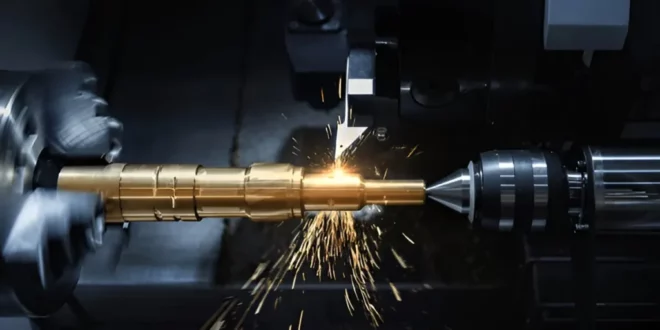
This demand has accelerated the growth of precision CNC machining services capable of handling small, complex parts with repeatable accuracy.
Swiss-type CNC machining, in particular, has become highly valuable for producing miniature and high-precision cylindrical components. The process allows manufacturers to maintain extremely tight tolerances while supporting medium and high-volume production.
Custom shafts and locating components are now widely used in:
Robotic motion systems
Linear guide assemblies
Medical instruments
Automotive sensor systems
Aerospace control equipment
Semiconductor manufacturing machines
Hydraulic and pneumatic systems
As product designs become more compact and performance expectations increase, manufacturers are prioritizing machining partners that can deliver both precision and production scalability.
For this reason, many OEMs are sourcing specialized precision machined dowel pins and shafts that are manufactured specifically for advanced industrial assemblies rather than relying on generalized catalog components.
Automation Is Raising Tolerance Standards
Automation continues to reshape manufacturing worldwide. Smart factories depend on systems operating with minimal interruption and maximum repeatability. Even minor mechanical inconsistencies can affect sensor accuracy, robotic movement, or assembly positioning.
This has created higher expectations for machining quality.
Manufacturers today are not only evaluating dimensional tolerances. They are also examining:
Surface roughness
Roundness consistency
Material traceability
Concentricity control
Heat treatment stability
Batch repeatability
Inspection documentation
Precision machining companies that invest in advanced inspection systems and process control are becoming more valuable across industrial supply chains.
At the same time, global buyers are reducing supplier risks by working with manufacturers that offer engineering communication, production flexibility, and stable quality management rather than focusing only on pricing.
Small Components, Large Impact
One of the most overlooked realities in manufacturing is that small components often determine the reliability of large systems. A single misaligned locating pin can affect assembly precision across an entire machine. A poorly machined shaft can create vibration issues that reduce equipment lifespan.
Because of this, procurement teams are becoming more selective when sourcing precision parts.
Instead of treating components as interchangeable commodities, manufacturers are increasingly evaluating machining expertise, process capability, and long-term production consistency.
This trend is expected to continue as industries adopt higher automation levels, tighter engineering standards, and more compact mechanical designs.
The Future of Precision Manufacturing
The future of manufacturing will likely depend on precision more than volume alone. As industries move toward smarter production systems, component accuracy will continue to influence operational efficiency, maintenance costs, and product performance.
Manufacturers that combine advanced CNC machining capabilities with engineering-focused quality control will be positioned to support the next generation of industrial innovation.
In many ways, the future of manufacturing is being shaped not only by large machines and advanced software, but also by the precision of the smallest components working quietly behind the scenes.