Vents MagaZine Music and Entertainment Magazine

Related Articles
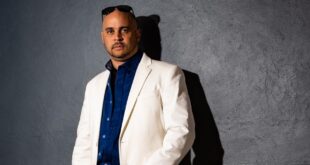

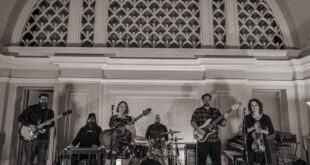
Hi Kathryn, welcome to VENTS! How have you been?
Excellent, thanks. I have a new single out and a full CD in the works. Life is good.
“Say Goodbye To The Blues” is described as soaring, infectious, and feel-good. What was happening in your life when you wrote it, and how quickly did the song come together?
I was happy in a relationship and wanted to express that in a song. It came together pretty quick, the guitar and lyrics were simultaneous. I love it when that happens. Because the guitar is so syncopated it did take some work to come up with a bass part that meshed. My bass player at the time, Chris Rourke, is who made that magic happen. His awesome bass line helped glue the song together.
You’ve said that “Love and the Blues cannot coexist.” As someone with deep roots in blues music, how do you reconcile that philosophy with a genre built on heartache?
I knew I’d get questioned for that comment. It’s so funny, I wrote a song about that conundrum “You Make Me So Happy I Can’t Sing The Blues”. It’s meant to be humorous but I have been in that space, a great place to be where there’s so much bliss you can’t crank out any melancholy but not so great for being a Blues songwriter. How I reconcile it? Write funny blues songs! On a serious note, there’s plenty of heartbreaking things to write about other than Love lost. I tap into that. “Bullshit Blues” is about the passing of my mom, a wayward contractor who stole my money, etc.
The single has a driving groove and uplifting melody. Did you approach this track differently from your previous blues-centered releases?
Yes. First – it’s not the typical 1, 4, 5 blues progression. Second – it has more of a bouncy pop feel. Third – the guitar solo is clean, very different from my usual down and dirty distortion. Fourth – it’s really happy!
You’ve worked and jammed with legends—from Jeff Buckley to Bo Diddley to Michael Bolton. How have those experiences shaped the confidence and freedom you bring to your music today?
I learn something from each person I play with. From Jeff it was something pretty life altering. He was eight years younger but was very worldly in his musical tastes, listening voraciously to literally everything from Opera to Bad Brains. At the time I was focused on one style pretty much. Witnessing his love and enthusiasm for all music opened up my ears and my mind. It helped me realize how my reluctance to experience other genres had limited me. My mother, (who was an excellent singer) and I clashed in our musical tastes when I was young. Having an open mind would have brought us closer together musically much sooner. I had similar epiphanies from working with Bo Diddley and others that have been instrumental in my growth as an artist.
Your catalog spans electric blues, jazz, pop rock, and more. How do you decide which musical “lane” a new song belongs in, or do you resist that kind of categorization altogether?
At this point in my life, I just don’t think about it. When the muse strikes me what comes out I have no control over. And I don’t want to. I’m learning Spanish, again. I’m planning to write a few songs in Spanish to help me retain it. If one of them turns out good enough to record I may release it. Recently I was channeling Ozzy and wrote a death metal song. It’s going on the new album,
Having formally studied jazz and commercial music, how does your academic training
influence your songwriting and arranging process?
It doesn’t in any way. It took me a long time to recover from my academia. There were many positive aspects from my education but that experience did not make me a great player. I had to work hard to simplify my playing and stop analyzing every note.
Your projects range from The Kathryn Grimm Band to The Jazz Rockets and beyond. What does each outlet allow you to express that the others might not?
Putting all those projects together was my way of being allowed to play everything I love and still get gigs. “Hippie Love Slave” still plays once a year. We dress up and do our fav psychedelic hits. I get a lot of joy out of playing my favorite standards in “The Jazz Rockets”. The “Blues Tools” is all blues. “The Kathryn Grimm Band” is my main band that plays my originals.
“No Cash Blues” featured an impressive roster of collaborators and production by Dennis Moody. How does collaboration energize you compared to working more independently?
All the songs on the EP were written by me but I did collaborate on the mixes. Usually I’m pretty insistent on how I want my tunes to sound but It was fun swapping ideas. I kept an open mind to suggestions and think it came out great (working with drummer Jimmy Branly [Men At Work] and pianist Adam Cohen [Michael Buble] was a blast!!). When it comes to collaborating in general (mixing, songwriting) the beauty of it is coming up with something you’d never create on your own. My next album will have a few songs I’ve written with other writers which I’m very excited about.
You’ve played everything from guitar to bass to piano and vocals for other artists. When you step into a supporting role, how does that inform your perspective as a frontwoman?
I love taking on the role of a supporting musician. It’s nice to step back and not have the pressure of being in the limelight. The work is just as important – to sound as good as possible, help the singer relax and make their job as effortless as it can be. It makes me appreciate the musicians in my band all the more.
With “Say Goodbye To The Blues” celebrating bliss and emotional uplift, what do you hope listeners feel—or release—when they hear this song?
Joy. And Hope. The world needs a lot more of those right now.