Vents MagaZine Music and Entertainment Magazine


Related Articles



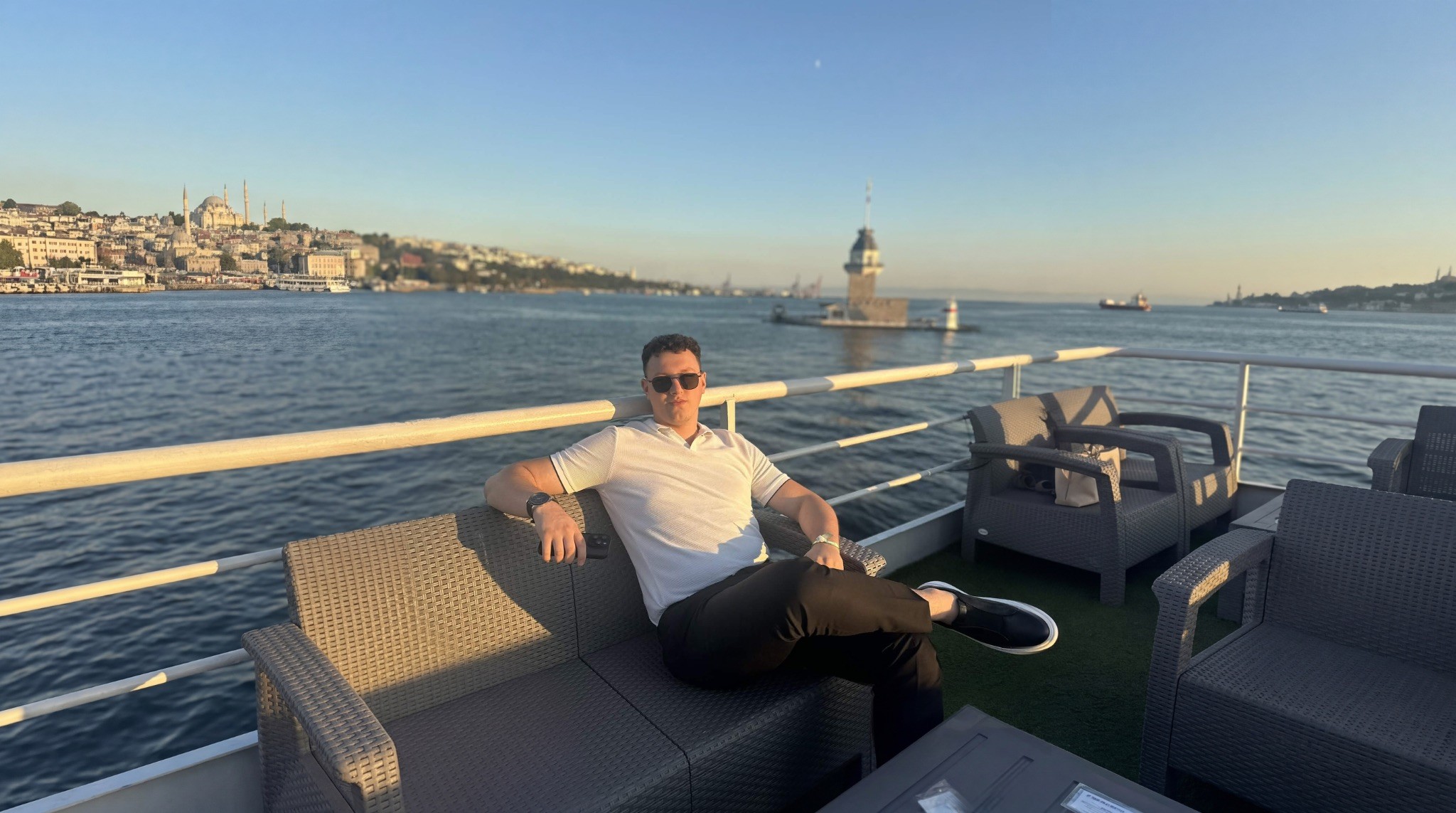
William May is a rising voice in contemporary poetry, and his debut chapbook, Blaze Without Burning, is set to make a powerful entrance into the literary world. Releasing on May 30, 2025, through Finishing Line Press, the collection offers a deeply personal and intricately structured meditation on resilience, transformation, and human connection. At its core is an innovative “twinned” format—each poem in the first section finds its counterpart in the second, creating a dynamic interplay of meaning that invites readers to see familiar moments through a new lens.
For May, this book is more than just a creative milestone—it’s a testament to perseverance. Diagnosed as neurodiverse at age seven, he once struggled with reading to the point of believing he never would. But with the right support, he quickly went from struggling with primers to devouring novels, discovering in books a lifelong source of meaning and connection. Now, through his poetry, he hopes to offer readers that same sense of discovery.
Pre-Order the book here:
https://www.finishinglinepress.com/product/blaze-without-burning-by-william-may/
In anticipation of Blaze Without Burning, May recently hosted a special episode of his podcast, Argh! Not Another Book Publishing Podcast, featuring industry experts to discuss his work, the independent publishing landscape, and the journey of bringing a book into the world. The chapbook’s cover—featuring a watercolor painting by the late Richard Frank, whose work captures the natural world with surreal precision—further underscores its themes of depth, transformation, and the unseen forces shaping our lives.
With pre-publication sales open through April 4, 2025, Blaze Without Burning is already generating excitement. In this interview, William May shares insights into his creative process, the personal journey behind his debut, and the ways poetry can illuminate and connect us all.
Blaze without Burning employs a unique “twinned” structure where each poem in the first section is paired with a distinct perspective in the second section. Can you walk us through how this idea came to you and how it shaped the collection as a whole?
It may seem a bit strange that, despite the interconnection that lies at the heart of the text, the poems in Blaze without Burning were not written with that intention. Indeed, it started when a friend of mine, the poet Freesia McKee, was reading through some of my poems. She selected a group of poems that she thought worked well together as a possible collection. At that time most of the poems were still in need of a bit more revision, and as I was working on them, I began to notice the various ways that these poems circled each other, with similar themes, emotions, images, and so on. Of course, that is quite natural, isn’t it, that an artist’s work would have certain natural resonances within it, especially work from a particular time, as was true in this case. I can’t pin down a specific moment, but at some point in revising the work, I discovered that there was a reflective relationship between the poems that just seemed to emerge and led me to the structure of the book.
Dualities—light and shadow, fire and endurance—are central to this collection. Why was it important to you to explore these contrasts, and how do they reflect your own experiences or worldview?
In truth, there wasn’t a conscious decision to focus on these themes. The poems were not written to be a single piece but were brought together, and these relationships came into focus through the process of reflecting on and collecting the work. I think the presence of these dualities is largely because the work reflects my life and what I was processing while I was writing the poems that are in Blaze without Burning. Many of the poems present aspects of my own experiences and as such they represent different awarenesses and perspectives. While, in our experience of the world, these types of shifts can occur contiguously, so smooth and subtle as to be unnoticed in the moment, when looking at specific points for comparison, change can become quite apparent. At the same time, it does seem that these types of contrasts are intrinsic to poetry, and not in terms of content, but in the actual nature of what poetry does and how it works. I mean, by this, that poetry is about developing and breaking patterns, about creating moments that ignite because they come in contrast to, and often as a reversal of, what is before. Consider the couplet at the end of one of Shakespeare’s sonnets, for example in “Mine Mistress Eyes Are Nothing Like The Sun.” The entire poem offers images of things that are more beautiful than Shakespeare’s beloved, until the last two lines, when he twists the meaning of all that has come before by, using the tension built in a final declaration he still cherishes her more than anything he could imagine or has named. That shifting of meaning is one of the essential tools of poetry (the word “verse” itself references turning around, consider reverse or converse).
Your neurodiverse perspective brings a vivid emotional depth to your work. How has your personal journey informed your approach to crafting this collection, and what do you hope readers will take away from it?
Writing and reading are very much interwoven with dyslexia for me. When I was first learning how to read in school, I had a great deal of difficulty, to the point that I came to believe I would never be able to do it at all; I believed that I was just too stupid, if I am to be blunt. Once I was diagnosed and provided the support I required, I went almost immediately from reading primers to reading chapter books, and, in a short time, adult novels. In large part, that was because I had a deep understanding of the written word as something magic and special. The effort, and the experience of having to unlock that skill, I believe, imbued a very deep love for language which is at the core of why I write. I also believe that I have a certain responsibility, as a writer whose mind is a bit different, and who experiences the world, and, in particular, language, in ways that diverge from the typical, to reflect that experience, as best I can. Of course, it is impossible for me to truly know how my experience differs from that of a neurotypical individual, but there are certainly eccentricities and approaches I indulge in my writing that I believe reflect those variant ways of thinking, being and understanding.
Freesia McKee played a key role in refining the structure of Blaze without Burning. What was that collaborative process like, and how did her input influence the final manuscript?
I first met Freesia when she was a graduate student here in Florida. She was the assistant for a workshop I took at a local poetry festival when we first became acquainted. Being dyslexic, I find certain aspects of submitting work for publication a bit difficult, and so I asked if Freesia would be willing to help me with selecting work and preparing it for submission. At some point, I asked if Freesia would help me to select poems for a possible manuscript. She came back to me with a group of poems that seemed cohesive to her, and we began to look at them, considering how they might need to be revised. It was during the process of reviewing and revising the poems that the connections between them became clear, and from there, the book just sort of emerged. I know that I owe a great deal to Freesia in that process, as it was her insight that brought these poems together in the first place, and I know this book wouldn’t exist as it does without her. Beyond this, I have to acknowledge that she was also the person who read these poems as I revised them, to offer feedback and insight, and I am quite grateful to have had her perspective throughout.
The title Blaze without Burning is both evocative and paradoxical. What does it signify for you, and how does it encapsulate the themes of the collection?
Much of what I think is at tension inside this book exists between the desire to experience and thrive set against a world that is also dangerous and draining. It is about recognizing that the beauty and warmth of the flame is not separate from the danger of being burnt and consumed by it, yet, even knowing this, there is still that longing to overcome those dangers, to encounter the world and experience life. We know we should not touch the flame, but who hasn’t tried to stroke the wick of a lit candle? At the same time, though, the juxtaposition here is of having the light of the flame, the power of it, but not being burnt by it, which is inherently a transcendent concept. For me, that is what gives it mystery and power as an image, and what drew me to it as a title for the book.
Each poem in the collection invites re-interpretation through its twin. How do you hope this dynamic interplay challenges or enriches the reader’s understanding of resilience and transformation?
The book is structured as a sort of journey, with two sections that are mirror images of each other. The first poem of the first section and the last poem of the second section are “twins,” as I have taken to calling them. The two halves of the book are sort of mirror images, with the titles of the first half in reverse order in the second half. Each poem is mirrored with a poem that connects back in some way, answering it or presenting another perspective on the same type of experience, or just showing how things can change and shift over time. In some cases, they are much more closely connected, while in others it may seem less clear and more ephemeral, but I hope that the reader can get a sense of that movement, that the experience of each poem changes as seen through the contrast of its twin. In that way, I hope that the book isn’t simply discussing the idea of transformation, but providing the reader an experience of motion and change, and of the ways that our experiences can often seem quite different when seen through a new context.
Can you share a specific poem or pair of poems from the collection that holds particular meaning for you and explain why?
We don’t just heal from an injury all of a sudden, but experience a shift over time. These poems were both driven by a similar impetus, by a sense of something in the world that seems wrong, the sense that there are supposed to be all these possibilities and opportunities, but somehow they are always out there, just a bit too far away, never quite close enough to grab hold of. In both of these poems, that is still the underlying emotional truth, but it is also clear that something has shifted, that there is a different energy, a different relationship to the problem. It is not a resolution, but it is motion, and even if there is still an unpleasantness to that feeling, there is also a sense of energy and there is the dawning awareness that the change which is needed could well be something the speaker will have to enact, if they wish to experience it.
They Say This Is Your Year
The idea is: a blue bird
landing to perch upon
my shoulder signals
good luck,
but the talons
on my flesh
don’t feel like fortune.
They Say This Is Your Year (1)
They built a world
for you, it is perfect,
just right in each way
you could want, just
right, with no problems
or difficulties, a good
life. But you know
better already,
do not want
the choiceless way,
simple certainty.
It is too hollow,
imperfection built
by good things overdone.
Poetry often offers a lens to explore complex emotions and connections. What role do you think poetry plays in helping people navigate resilience and transformation in their own lives?
I think that poetry has the ability to capture aspects of being alive in the world that are impossible to communicate through other forms of language. There is a way that a poem can transcend telling you things to become an experience you are having, not in the sense that you are having the experience being written about, but that the writing becomes an experience you are having of the poem itself. Reading a poem can be a very intimate and real experience, especially if it is a poem that is reflecting some aspect of the world that feels intimately real in the moment. I think there is a great deal of healing in discovering poetry that speaks about the world in the ways we would, ourselves, speak of it, if we only could find that language.
Your imagery is described as vivid and raw. Can you share how you approach imagery and language in your writing process to achieve such emotional resonance?
A great deal of the work of being a poet is about observing, is learning to notice specific and intimate detail. For me, I am often seeking not the unusual or personal, but rather things that seem universal, yet unnoticed. An image gains power not because of what it is specifically portraying, but because of what it reveals and evokes, and that is often about presenting something that will spark with recognition in the reader. It is not simply what is being observed within the literal image, but what can be carried by the image and by the way it is being conveyed.
What was the most challenging part of writing Blaze without Burning, and what was the most rewarding?
In many ways, I didn’t really write Blaze without Burning. What I mean is I didn’t sit down and write this book. I wrote the poems that are in it over a few years, and they were not the only poems that I wrote during that time, making it a bit difficult to pinpoint the specifics of writing any of those poems in particular. When I think of this book, as a completed work, I think, instead, about the process of bringing it together into a singular and cohesive whole, which, despite occurring organically once it came into focus, was rather difficult to arrive at. I spent quite a bit of time with the work, reviewing and revising poems, discussing them and the potential ordering of the poems with Freesia trying out different arrangements and such, for quite a while before the book took shape. The challenge, I think, was letting myself step back and just notice what was in the work already, instead of trying to impose something onto it. In many ways, that has also been the most, if not rewarding, illuminating aspect of crafting this work. I feel like it has given me a very specific insight into what it means to create a complete book, rather than just a collection of poems.