Vents MagaZine Music and Entertainment Magazine

Related Articles



In a contemporary art world fixated on rapid-fire consumption and digital sharpness, New York-based visual artist and designer Aylin Alakbarli stands as a deliberate, meditative counterpoint.
Her latest piece, Far Nearer, is a testament to the power of sensory storytelling. The video, an immersive exploration of distance, identity, and the psychological geography of home, was recently recognized with an Honorable Mention at the Neum Underwater Festival in Neum, a town in Bosnia and Herzegovina. The piece serves as a poignant bridge between Alakbarli’s scientific background and her deeply rooted emotional intuition that permeates in her visual artwork.
A Cartography of Memory
Alakbarli’s creative practice is uniquely informed by a journey that spans continents and disciplines. Born in Azerbaijan and trained as a Geophysical Engineer at the French-Azerbaijani University, she then went on to earn an MFA in Graphic Design from the Yale School of Art, she possesses a rare fluency in both the analytical and the ethereal. Her background in geophysics, a field concerned with the physical properties of the Earth, finds a subtle, subconscious resonance in her art, which explores how we map our own interior landscapes.
Growing up in Baku provided the foundational “texture” for her work. As Alakbarli explains, the city is a study in contrasts: the expansive, moody Caspian Sea juxtaposed against the rigid, utilitarian geometry of post-Soviet architecture, not to mention the intricate ornamentation of traditional Azerbaijani craftwork.
Alakbarli remains committed to an art practice that bridges the gap between the technical and the poetic. With the video art piece Far Nearer, she has not only successfully captured the elusive spirit of the Caspian Sea, but has also established herself as an artist capable of translating the intangible fragments of memory into a cohesive, enduring visual language. In her hands, art is not just seen, it is felt especially for those who have experienced the city of Baku firsthand.
“Baku has a very specific visual and emotional texture,” Alakbarli says. “Those contrasts naturally entered my visual language. My work often reflects themes of memory, distance, and emotional restraint, which were influenced by growing up between different social and cultural systems. I am deeply inspired by everyday details; fabrics, gestures, domestic spaces, jewelry, and the emotional symbolism attached to objects.”
Far Nearer: A Psychological Sea
The genesis of Far Nearer was not found in a script, but in a profound sense of nostalgia with geography. The piece began with a visceral longing for the Caspian Sea, which sits off the coast of Baku, and the artist had a desire to recreate an atmosphere that existed more vividly in the mind, than in the moment.
“I was thinking a lot about the way certain places continue to exist psychologically even when you are physically far from them,” she notes. “Instead of a traditional narrative, I wanted to recreate an emotional sensation through texture, light, movement, and sound. It became an attempt to translate memory into atmosphere, the feeling of trying to hold onto something that is slowly dissolving or becoming abstract over time.”
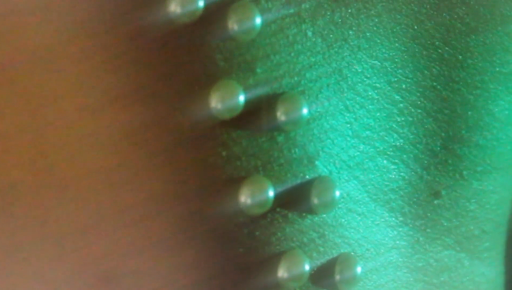
The video’s aesthetic eschews literal representation. The audience is invited into a world of muted blue and green tones, shimmering light, jewelry and reflective surfaces. By focusing on these sensations and objects, Alakbarli elevates the sea from a geographic location into a psychological space. The slow, rhythmic pacing of the work acts as a temporal anchor, allowing the viewer to linger in a state of motion, mirroring the way memory itself tends to fold and unfold.
Female Symbolism and Intimacy
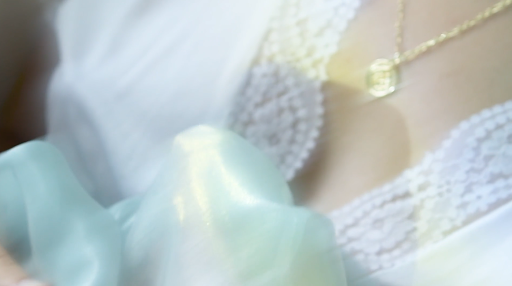
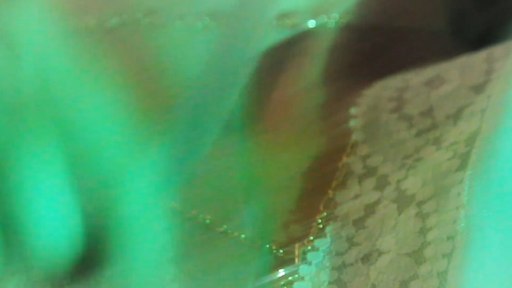
A striking feature in Alakbarli’s video art piece is its use of domestic objects as central to the non-narrative piece. Items like pearls, gold jewelry, lace, and shawls pass by on the screen in a wave motion, like the sea. These items are not mere decorations; they are what Alakbarli calls “emotional artifacts.” These feminine, fashion-focused items are deeply evocative of her childhood in Azerbaijan, specifically echoing the aesthetics of the women in her family, and her ancestors.
“I wanted the materials to feel delicate and tactile while also carrying significant psychological weight,” she said. “There is an inherent tension between fragility and resilience. While these objects may appear soft or decorative, they hold the history of identity and cultural continuity.”
“These objects carry a sense of care, beauty, tradition, and emotional inheritance,” she adds.
By centering these traditionally feminine accessories, Alakbarli engages with the dual nature of heritage: it is something that can be worn and displayed, but also something that carries the heavy, often unseen burden of history and memory of a nostalgic homeplace.
Recognition for Far Nearer and Upcoming
The recognition from the Neum Underwater Film Festival, a film festival dedicated to aquatic or water-related themes, highlights the universal success of Alakbarli’s stylistic approach. For the festival jury, the film’s strength lay in its lack of didacticism. Because Far Nearer avoids heavy dialogue and opts for non-linear storytelling, it invites the viewer to project their own experiences of longing and nostalgia onto the screen.
In a world of constant overstimulation, the video’s meditative, fluid movement provides a rare space for meditation. “The visual language aligns naturally with the festival’s interest in water,” Alakbarli said. “The shimmering textures and slow pacing created an experience that felt immersive, rather than narrative.”
Alakbarli’s work serves as a reminder that the most complex systems, be it geographical, geophysical or emotional, can often be understood more clearly through the lens of human experience. By transforming the “Far” (the distant, ancestral home) into the “Near” (the intimate, immediate, and tactile), her video art piece Far Nearer offers the audience more than just a visual experience; but a gentle, safe space for introspection.
Softness as a Radical Act
One of the most significant threads running through Alakbarli’s work, from her animation Metamorphosis, which graced a Times Square billboard, to Far Nearer, is the conviction that softness is not a sign of weakness, but a profound form of strength.
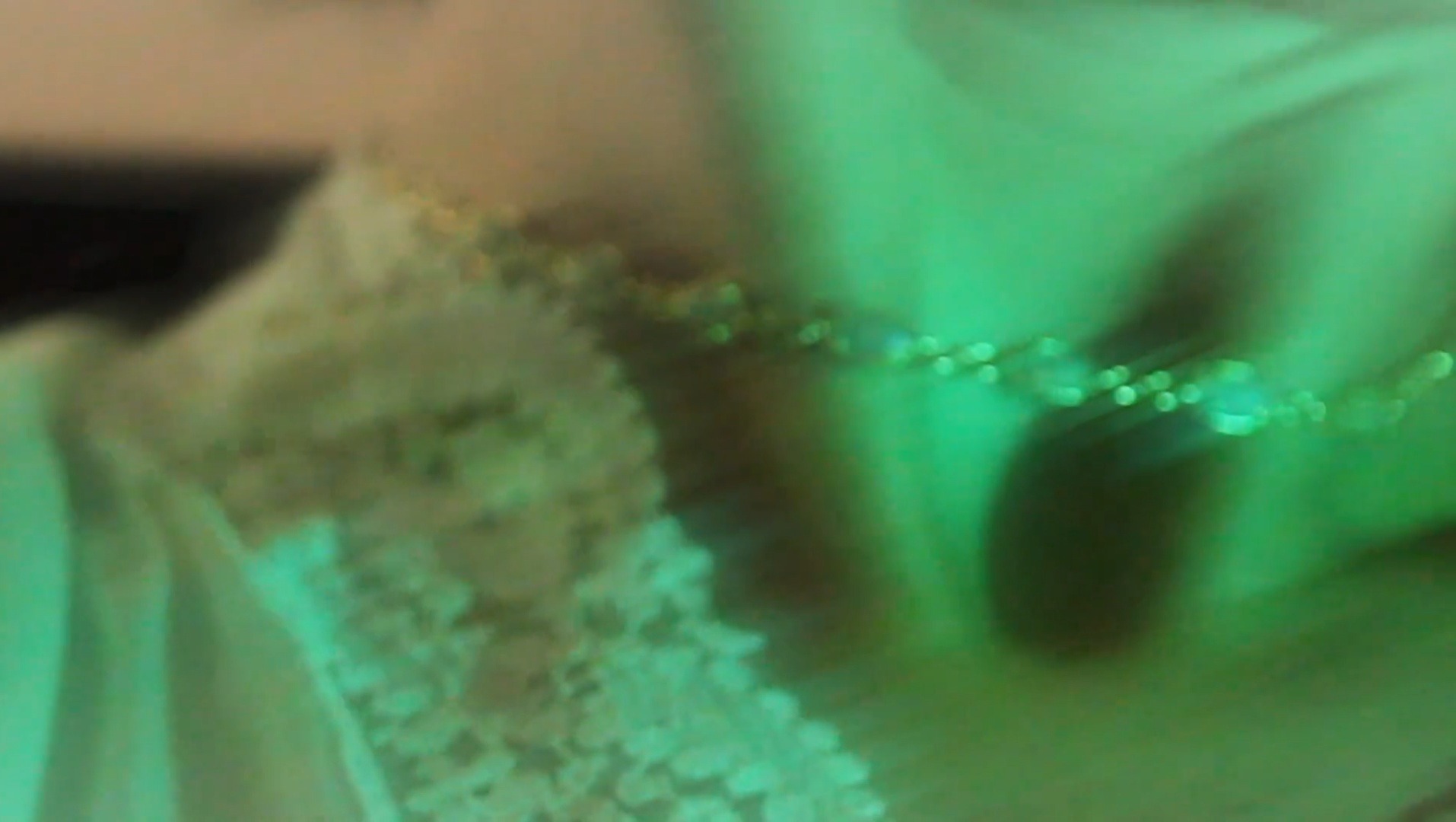
In Far Nearer, the softness of the light and the fluidity of the movement symbolizes emotional resilience. Alakbarli argues that in an environment that demands constant detachment and speed (like New York City, for example), maintaining an open, tender, and observant state of mind is an act of rebellion.
“Softness is not passive,” she said. “It takes strength to remain emotionally open in environments that encourage detachment and overstimulation. The quietness and restraint in the film are intentional because I wanted viewers to experience softness as something enduring, immersive, and psychologically strong.”