Vents MagaZine Music and Entertainment Magazine

Related Articles



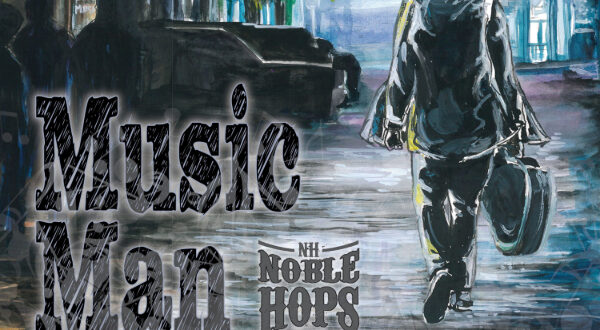
Rock and roll has always had a bad habit of believing its own mythology. The devil at the crossroads, the overnight sensation, the guitar hero crowned by fate instead of sweat. Noble Hops don’t buy into that—not for a second. On “Music Man,” they strip the legend down to its bare frame and show you what’s left when the fantasy burns off: a working musician, a beat-up guitar, and the long road that doesn’t promise anything except more of the same.
That’s the song’s real subject. Not glory, not rebellion as a pose, but endurance.
Utah Burgess writes and sings like someone who understands that difference. His opening line—“I didn’t sell my soul for rock and roll, but it became my way of life”—does more than set the tone; it dismantles decades of rock cliché in one breath. There’s no Faustian bargain here, no wink toward the mythology that’s propped up generations of musicians who wanted to believe their struggle meant something cosmic. Burgess isn’t interested in that. He’s interested in the day-to-day reality of choosing music even when it doesn’t choose you back.
That’s a harder story to tell, and a more honest one.
Musically, Noble Hops keep things grounded in a way that serves the song’s intent. Tony Villella’s guitar work leans into classic rock forms without turning them into museum pieces. The riffs are functional, direct, and unadorned—they do their job and get out of the way. Johnny “Sleeves” Costa’s bass anchors the track with a steady, almost workmanlike presence, while Brad Hulburt’s drums provide a backbone that never calls attention to itself but never lets the song drift, either.
There’s no wasted motion here. No indulgence.
Recorded at Rattle Clack Studio in Pittsburgh with Jazz Byers, “Music Man” sounds like it was built through repetition and revision rather than inspiration alone. The fact that the band scrapped earlier versions and started over matters, because you can hear the discipline in the final result. This isn’t a song that came together easily—it’s one that was fought for. And that struggle is part of what gives it weight.
The chorus—“Music Man, playing across the land”—is simple enough to risk being dismissed, but it works because of the context surrounding it. It’s not a slogan. It’s a statement of identity. The kind of thing a musician says after years of proving it to himself, not to anyone else.
What’s most striking about “Music Man” is what it refuses to do. It doesn’t romanticize failure, but it doesn’t apologize for it either. It doesn’t dress up the life it describes in poetic abstraction. It just presents it as it is: imperfect, uncertain, but chosen.
And that choice is the point.
By the time Burgess sings about his songs living on in empty bars and beat-up guitars, the message is clear. Legacy, in this context, isn’t about charts or headlines. It’s about continuity. About the next player picking up the instrument and carrying something forward, whether anyone’s watching or not.
Noble Hops understand that rock and roll isn’t sustained by its myths. It’s sustained by people who keep showing up.
“Music Man” is for them.
–David Marshall