Vents MagaZine Music and Entertainment Magazine

Related Articles



PICO has officially announced its next-generation operating system, PICO OS 6, alongside an early preview of its upcoming flagship extended reality (XR) device, currently known as Project Swan. The company is positioning this release as a major step forward for spatial computing—both in software architecture and hardware innovation.
Beginning March 2, developers can access the new tools within PICO OS 6 to start building applications tailored for the Project Swan headset, which is scheduled to launch globally in late 2026.
PICO OS 6: A Complete Reinvention of the Spatial OS
PICO OS 6 is not a routine upgrade. Instead, it represents a full architectural overhaul designed to eliminate long-standing friction in XR operating systems.
The new platform reimagines how 2D applications, 3D content, immersive virtual environments, and physical reality interact within a single unified system. Rather than treating these elements as separate layers, PICO OS 6 enables them to coexist seamlessly—creating a more fluid and natural spatial computing experience.
This foundational redesign aims to deliver smoother performance, greater responsiveness, and true multitasking across immersive and traditional interfaces.
The PICO Spatial Engine: A Unified Rendering Breakthrough
At the core of PICO OS 6 is the newly developed PICO Spatial Engine, a unified rendering architecture that shifts graphics processing from individual apps to the operating system level.
Traditionally, XR applications handled rendering independently, often leading to inconsistencies and performance bottlenecks. With the Spatial Engine, rendering becomes centralized within the OS itself. This allows:
- 2D apps
- 3D objects
- Virtual environments
- Real-world passthrough
to be processed simultaneously and harmoniously.
The result is a cohesive visual experience where multiple windows, 3D apps, and real-world elements blend naturally—without lag or fragmentation.
Spatial Multitasking: A New Productivity Standard
Built on the foundation of the Spatial Engine, PICO OS 6 introduces advanced spatial multitasking capabilities.
Users can collaborate on detailed 3D models with colleagues represented as avatars while keeping web browsers, notes, or productivity tools floating within their physical workspace. The system is designed to support both creative and enterprise workflows.
Input is adaptive and flexible. Users can:
- Navigate with look-and-pinch gestures
- Use XR controllers for immersive gaming
- Connect a traditional keyboard and mouse for productivity
For the more than 2,600 enterprise institutions that already utilize PICO solutions, the upgraded architecture promises a stable, responsive digital environment optimized for professional spatial collaboration.
An Open Ecosystem Without Boundaries
PICO OS 6 embraces an open philosophy, aiming to reduce barriers for developers and users alike.
The operating system supports multiple ecosystems as equal components of the platform, including:
- Spatial apps
- OpenXR
- WebXR
- Android applications
- Web applications
- PC VR streaming
Rather than isolating these frameworks, PICO integrates them into a unified experience. This approach ensures developers can build across platforms while users enjoy a seamless environment that merges diverse technologies into one cohesive system.
Developer Tools Designed for Speed and Flexibility
To empower developers, PICO has released a comprehensive toolkit alongside PICO OS 6.
PICO Spatial SDK (Kotlin)
The SDK introduces component-based APIs and a unified runtime adaptation system, simplifying the design and deployment of spatial applications.
Android Studio Plugin & Desktop Emulator
Developers can now design, code, and test applications without needing a physical headset. The desktop-based PICO Emulator enables rapid iteration and efficient debugging.
WebSpatial Framework
PICO is also introducing WebSpatial—an open-source framework that brings standard web technologies like HTML, CSS, and React into spatial computing.
WebSpatial allows developers to create install-free, cross-platform spatial applications that run across:
- PICO OS
- VisionOS
- AndroidXR
This cross-platform flexibility lowers development barriers and broadens accessibility for web developers entering XR.
Unity and Unreal Engine Enhancements
PICO OS 6 deepens integration with Unity and Unreal Engine. Developers can now build mixed reality games that operate alongside floating 2D and 3D apps.
This means users can game while video chatting, browsing, or managing other applications simultaneously—unlocking a new level of immersive multitasking.
All development tools are currently available at developer.picoxr.com.
Project Swan: A Preview of the Next Hardware Leap
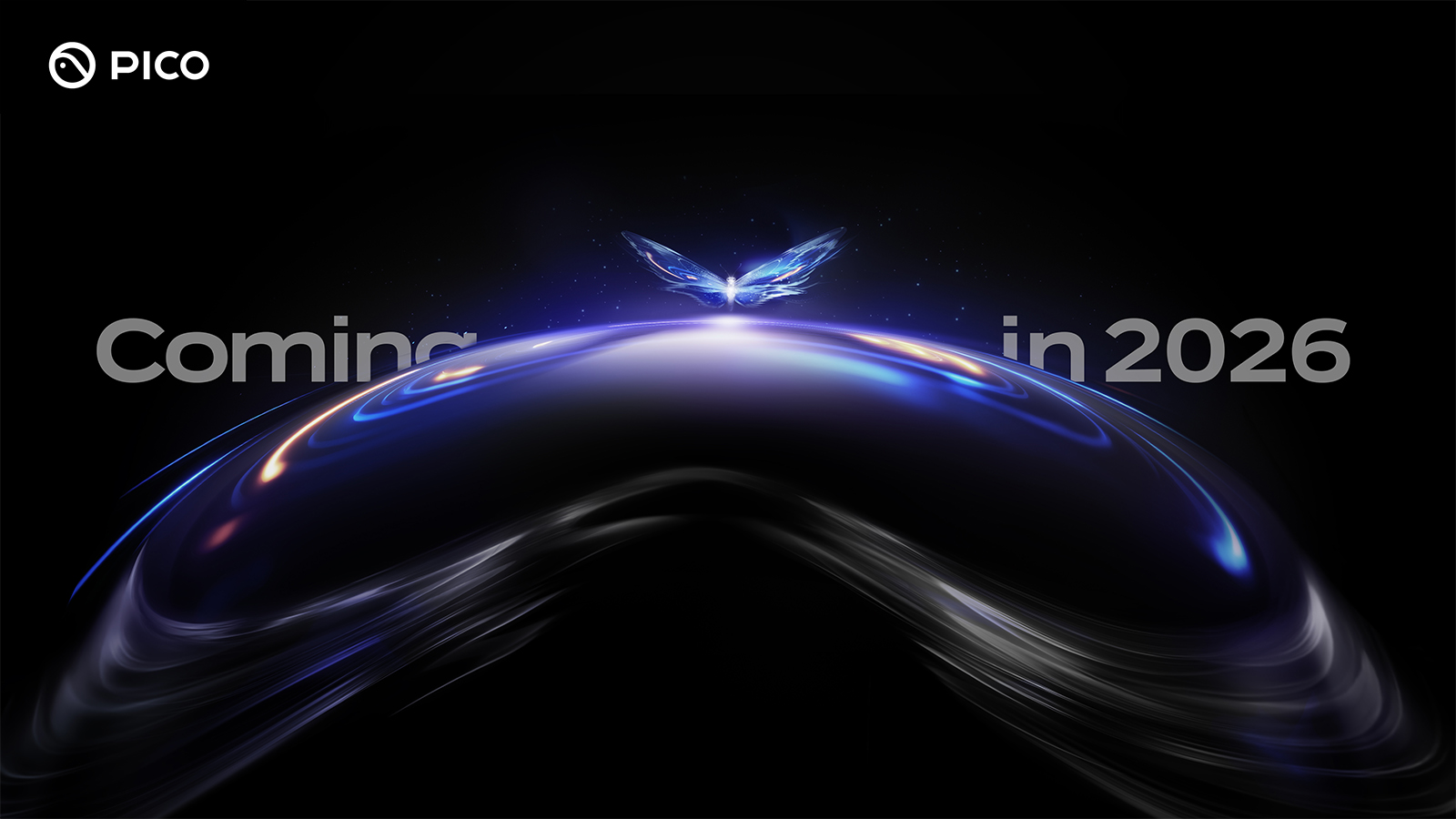
While PICO OS 6 lays the software groundwork, Project Swan represents the hardware evolution designed to unlock its full potential.

Ultra-High Display Clarity
Project Swan introduces next-generation MicroOLED displays with nearly 4000 PPI—approximately nine times the pixel density of flagship smartphones.
Key display metrics include:
- Average 40 Pixels Per Degree (PPD)
- Center sweet spot exceeding 45 PPD
This level of clarity aims to deliver text sharp enough for professional workloads, making spatial computing viable for productivity-intensive tasks.
Advanced Mixed Reality Architecture
Project Swan incorporates a dual-chip design to manage complex mixed reality processes.
- A custom XR silicon chip powers perception and imaging engines, integrating data from multiple sensors to reconstruct the physical environment with approximately 12 milliseconds of latency.
- A flagship SoC provides more than double the CPU and GPU performance compared to the XR2 Gen 2 platform.
Together, these components are engineered to support low-latency, high-fidelity mixed reality experiences.
Project Swan is currently targeting a global release in late 2026.
PICO Global Early Access Program
To ensure seamless integration between PICO OS 6 and Project Swan hardware, PICO has launched the PICO Global Early Access Program.
This closed beta initiative invites experienced XR users—particularly those familiar with high-end devices—to test the new operating system and hardware in advance. The program is designed to gather detailed technical feedback and refine performance before global launch.
Interested participants can apply at picoxr.com.
A Strategic Shift Toward Unified Spatial Computing
With PICO OS 6 and Project Swan, PICO is making a strategic move toward a fully integrated spatial computing ecosystem.
By rebuilding its operating system from the ground up, centralizing rendering architecture, embracing open development frameworks, and pairing the software with advanced hardware innovation, PICO is positioning itself to redefine how users interact with digital and physical environments.
As spatial computing evolves, PICO’s latest announcements signal a broader industry shift—one where immersive technology becomes not just experimental, but foundational to everyday productivity and collaboration.