Vents MagaZine Music and Entertainment Magazine

Related Articles

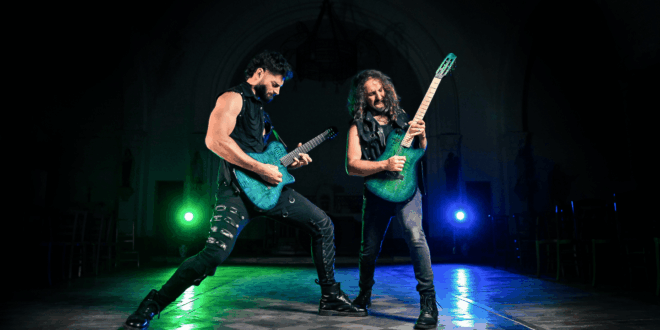
Opal Ocean first caught attention with the Terra EP in 2015. Looking back, what did that era teach you about your sound and your chemistry as a duo?
Nadav: I personally think it taught us how to work as a duo, not just on the streets but also on stage. We really got to hone in on our sound and the dynamic between us. We figured out early on what our strengths were and what our weaknesses were, and we worked on improving them together.
For example, I come more from learning music by ear, and Alex comes more from a theory background. That contrast created a really interesting bond. That early chemistry was exciting figuring out how to work together and how to merge those two worlds.
Alex: We started as buskers, so everything was about grabbing people’s attention fast. You have maybe 20 seconds before someone walks past. If they do not stop, you knew that that song had to be changed.
Busking became our real time laboratory. We would write a song, take it to the street, and instantly know if it worked. Those years shaped not just our sound, but our chemistry. We learned how to play off each other’s energy, read a crowd, how to build momentum, and how to write music that connects immediately.
The busking video for Jam went massively viral. How did that sudden exposure change your lives and your approach to music, if at all?
Nadav: Well, for one, we suddenly had attention from around the world, not just from people who liked the music, but from the music industry itself. Brands like Yamaha reached out, and festivals across Europe started contacting us.
It opened up the world in ways we couldn’t believe. We were able to do our first European tour, which then led to booking agents, European festivals, and really expanding our network. Our reach and reputation grew a lot.
It was really cool to go from being a band on the street to suddenly realising, hey, we can play these festivals. We weren’t just street performers
Alex: It completely changed our world. Suddenly we were getting offers to play international festivals, going from the street straight to stages like Montreux.
If I am honest, we were not equipped to handle it. We did not know how to capitalize on the viral momentum or use social media properly. In hindsight, management would have helped. Still, that song opened a lot of doors for us.
To this day, it is still our most streamed track. It took us from buskers to touring artists.
Your performances are often described as sounding like a full band despite being just two musicians. How do you consciously build that depth and energy into your live shows?
Nadav: It all starts with the fundamentals of the guitars. With the techniques we use, we can get both rhythm and lead happening at the same time on each guitar. Add in the foot stomp and suddenly you’ve got a big bass-drum sound.
So you have melody, rhythm, and a rhythm section straight away. We use octavers to fill out the bass, and we really focus on the percussive side of the guitar to complete the sound.
We also use effects like reverb and spacers to flesh things out further. Both Alex and I studied a bit of audio engineering back in New Zealand, and that really helped us define and shape our sound.
Alex: We write like we are a five piece band, then force two guitars to survive it.
Technically, we use percussive playing, octavers for bass, and very deliberate EQ so we do not step on each other’s frequencies “toes”. One of us holds the rhythmic low end space while the other cuts through in the mids. And then we will switch mid tune!
It is not about playing more. It is about occupying the entire sonic spectrum intelligently.
From Lost Fables to The Hadal Zone, your sound has continued to evolve. What do you feel was the biggest creative leap between those albums?
Nadav: I think that was when we really tapped into our heavier and more progressive metal side. Lost Fables was still playing it a bit safe, trying to be fun and quirky but we always had influences like Tool and Dream Theater.
In the early busking days, we were honestly a bit afraid that playing heavier material would scare people away. The biggest shift was embracing those influences fully.
Over time our playing and techniques naturally became more refined, and we felt more confident expressing new rhythms and ideas. That confidence was the biggest change.
Alex: Lost Fables was about proving we could write structured songs beyond our flamenco roots. With The Hadal Zone, we went deep into prog and metal, odd time signatures, complex structures, heavy ideas really pushing our playing. But after taking that album live for a while we realised that the simpler tunes were connecting with more people and we needed to different direction for this album.
That realization changed everything. On Temple of the Stars, we kept the intensity but made the songs more groove-focused and digestible. Focusing on textures, sounds and clearer hooks. I do think “meteor” is one of the best put song with ever written from a songwriting point of view.
Collaborating with Jordan Rudess was a major moment. What did you learn from working with an artist from such a different musical background?
Nadav: We learned just how cool Jordan Rudess really is. Seeing someone of that level of genius be so open and humble and willing to collaborate with a small guitar duo with not much reputation was incredible.
It was a huge honour and something we’ll always remember. We were also very lucky with timing. When we first reached out, it was meant to be a smaller thing, but when COVID happened, we asked if he’d be open to fleshing out a full song together.
He suddenly had more time, which worked in our favour. We know that anything we send him, he can handle it a thousand percent.
Alex: Working with Jordan was surreal. He operates at an incredibly high level, but what struck me most was how effortless his playing was. He nailed it first take and that was hugely impressive considering “Polycephaly” is an intense +7min prog song with two massive solo piano and synth sections allocated for him. He’s just a beast, and a great guy!
The Fish Food EP reimagines iconic tracks from legendary artists. What draws you to reinterpret existing music, and how do you decide which songs to tackle?
Nadav: This idea had been floating around for a while. We needed something in between releases, and we decided to take on a few covers. We wanted to work with more mainstream songs to attract new listeners, while still staying true to ourselves.
For example, Chop Suey by System of a Down we’re both huge fans, and we felt we could reinterpret it in our own style. The same with Pink Floyd’s Time. We really focused on reimagining the intro and taking it in our own direction.
There’s a band called Easy Star All-Stars that did a dub version of Dark Side of the Moon, and that always inspired us. What if we did something similar in our own style? We even recreated the clock intro using guitar picks, strings, and rattling sounds to build an atmosphere before tackling such a legendary song.
The main goal was to express ourselves through our influences. It was just an EP, so we didn’t go crazy, it was more about having fun and trying something different.
Alex: Fish Food was a gamble. It was the first time we recorded ourselves at home. Instead of spending money on studio time, we invested in microphones and took the time to do it ourselves.
The covers were something we had talked about and wanted to do so we just used that opportunity to experiment. And it worked. That EP became the blueprint for Temple of the Stars.
You’ve performed everywhere from street corners to major international festivals like the Abu Dhabi Grand Prix. How does the energy of these vastly different settings influence your performances?
Nadav: To be fair, we try to bring 100% every single time, no matter the setting. We’ve played everything from small rooms and bars to big stages and major festivals, and our audiences vary hugely in age, genre, and background.
The main thing for us is staying true to ourselves. Whether it’s a Grand Prix crowd or a small bar, we want everyone to have the same genuine Opal Ocean experience to come on a journey with us and enjoy some acoustic, progressive, flamenco-ish rock.
Alex: The bigger the crowd, the bigger the adrenaline for me. Playing through a massive PA and barely touching a string while it sounds enormous is an amazing feeling.
Busking has a different magic. You are playing to people who did not ask to be there. If they stop, you have truly earned it. But like Nadav said we bring 100% every time we perform.
Because ultimately we play for ourselves, we’re just two mates enjoying this crazy thing that we do and the goal it to open that connection we have, that conversation to the audience.
Our own headline shows are the sweet spot. I think that’s just the best way to experience our sound.
Temple of the Stars is the first album you’ve written and recorded entirely from home. How did that process differ creatively and emotionally from previous releases?
Nadav: First of all, we had a lot more time. In a studio, time is money, and you’re often boxed into decisions. These are the takes, this is what we have.
In previous records, especially The Hadal Zone, we sometimes improvised solos in the studio and then worked with our engineer, Terry Hart, who would chop them up and help shape the final result. Lost Fables was more about writing solos beforehand and then recording them.
Temple of the Stars was a completely different beast. Working from home gave us space, patience, and freedom in a way we hadn’t experienced before.
Emotionally, it was a lot less stressful. Overall, it was a very fluid process. We’ve been working together as a duo for over ten years now, so we really know how we work together.
What was exciting is that we could write and record at the same time. That meant we could develop ideas on the fly, get them out quickly, and essentially put them straight down — almost like pen to paper. You end up with a semi–gloss finished recording that’s already much closer to the final sound, instead of just an iPhone recording sitting in the corner of a room while we’re jamming.
That was really cool. Writing solos, tackling problems together, and shaping ideas felt a lot easier without the pressure and stress of a traditional studio environment.
Alex: It was the first time every single decision was ours, the good and the bad.
We faced challenges you do not get in a studio, untreated rooms, endless edits, technical issues. But that control made it more personal.
This is the most “us” record we have ever made. It is more bass heavy, and I feel has a more deliberate feel to it, i cant wait for people to hear it.
The album is described as both introspective and outward-looking. What aspects of who Opal Ocean are today do you feel are most strongly represented on this record?
Nadav: I definitely feel like we captured our personality with this release. In the past, there’s always been a bit of a juggle trying to balance our influences, thinking about how a song will work in the studio, or shaping songs to serve a particular purpose.
With this album, we really just asked ourselves: What do we actually want to play? What do we genuinely feel? We kind of went from the depths of The Hadal Zone up to the stars, infinite possibilities. That’s really what this album represents.
It’s about expression. It’s about taking a guitar riff and not worrying too much about influences, but trusting that it’s our sound and that, at the end of the day, it’s Opal Ocean.
Alex: I feel like with every album we explore new territory and every time we do so we understand a bit more about who we are as musicians. It’s a deeply introspective process. The strong point of this album is perhaps the unity of the songwriting, everything is more distilled, straight to the point, and if we take you on a journey it is done with a more deliberate hand.
As you prepare for your first-ever UK tour alongside a new album release, what excites you most about introducing Opal Ocean to UK audiences at this moment in your journey?
Nadav: I’ve always felt that the UK is a huge and important market. There are so many bands from the UK that we’ve been influenced by, and I think audiences there will really understand our music because of that shared musical language.
I’m also excited to be in an English-speaking country. We’ve been touring Europe for a long time now, and language barriers can sometimes make it harder to express things between songs. In the UK, it will feel much more like home in terms of communication and connection.
And of course, it’s a new territory and a new audience. We’re really happy to have joined Midnight Mango at the end of last year, and this will be our first time exploring the UK with new songs, fresh ideas, and most importantly just having fun.
Alex: We have played the UK before, but never a proper run of dates like this. It feels like we are finally doing it properly.
Being able to connect fully in English adds another layer. And the UK prog scene has shaped many of our influences. There is something meaningful about this tour. It might be our last big run for a little while.